New Weather Station at South Fork

Marc Hirrel, Docent

2016 marks a new beginning at SFNC with the installation of a weather station in one of the milkweed plots east of the cabin. This site was chosen over the cabin because the station will monitor soil temperature at a six inch depth. Data collected at this site will help to correlate spring green-up and flowering of our milkweeds with both soil and air temperature along with rainfall.

We could just rely on the internet weather sites such as Weather Underground maintained by the Weather Channel (http://www.wunderground.com/). Such sites compile data from hundreds of locations across the country and the world. For us at South Fork, we could use data from nearby reporting stations in Clinton and Heber Springs. Even though Clinton is only 5 miles from us, our weather can be quite different. Greers Ferry Lake influences the weather on our peninsula, especially rainfall. This past year, rainfall monitored at the milkweed plots showed an inch more rain for the eastern plots compared to the western plot. Thus, the importance of on-site monitoring.

The instrumentation consists of two data acquisition units. One tracks daily maximum and minimum soil and air temperature for six days. The other is a tipping bucket rain gauge that stores rainfall for nine days. The units are housed in a weather proof plastic box that provides easy access to each unit. Both instruments were inexpensive with a combined cost of under $100.

Below is a summary of weather for two reporting periods in 2016. As one would expect the soil temperatures never got below 32F and variation was less than 10 degrees. By comparison air temperatures varied 30-40 degrees. There were 9 out of 11 days with minimum air temperatures below 32F.

  AIR TEMPERATURE (F) SOIL TEMPERATURE (F) RAINFALL (in.)
Jan 8-13 Max Min Max Min Cumulative Total
Range 68.9-39.5 37.3-16.3 49.0-44.2 47.9-42.1 0.74
Jan 15-19          
Range 73.3-35.2 43.7-19.6 48.1-41.4 45.4-41.3 0.78

Because the units can store only a limited amount of data and opportunities to retrieve it, there will be gaps in the data. In the near future, there will be a training session for docents to learn how to retrieve and record the data, so gaps in the data will be minimal.
Monarchs in Winter: Where are they now?

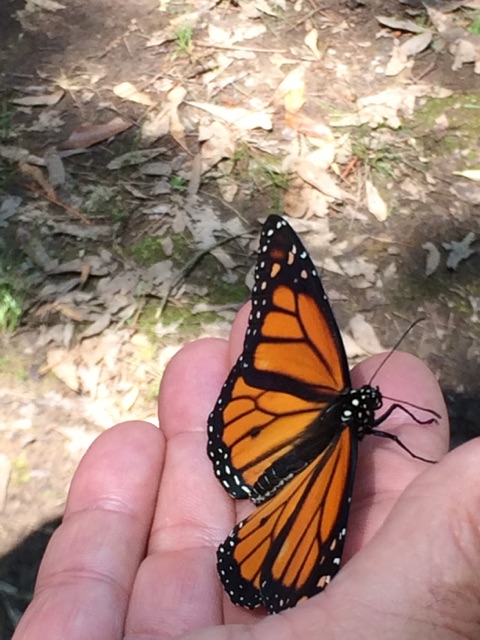
South Fork Nature Center partnered with the U.S. Fish and Wildlife Service in 2015 to create a monarch habitat as part of its Glade Restoration project. Volunteers, including docents and community members, worked together for many hours to plant and maintain milkweed plants needed by the monarchs to fuel their migration north during the spring months and their southern migration during the fall. This newly created habitat will also supply a much-needed breeding habitat that will allow the multi-generational migration to be successful.

Monarch Butterflies at South Fork in Clinton AR

Where do they spend their time during North America’s winter season?
Most monarchs’ Over-Wintering season is spent in Mexico. There are approximately 12 Butterfly sanctuaries in Mexico.


TIP:

Go to Learner.org: Journey North and view a great map of these sanctuaries. Visit other sites listed below to learn more about the migration patterns of the monarchs and some of the partnering organizations working toward their preservation.


Many organizations are collecting and sharing information to help protect the monarchs and other pollinators in the United States.

Some of the monarch threats are:

  • Breeding habitat loss
  • Over-wintering habitat loss
  • Climate change
  • Pesticides
  • Natural enemies

South Fork Nature Center is committed to join the ranks and should have monarch activity to report this spring and late summer. Scientific observations will be recorded and shared. Hopefully some of our local students will be participating in this hands-on scientific data collection. Our highly trained docent staff stands ready to join with local educators to extend the classroom learning and create “field based” experiences for students of any age.
Milkweed flowers - Brent Baker

Click here to go to our educational page to schedule your class, club or organization field trip.

Educators!

Check This Out!
The educational website “Journey North” has a learning unit available on the Monarch’s Winter Habitat in Mexico. Be sure to click on the “Teachers Guide” to access all the resources such as lesson plans, print-outs, pictures, videos and ideas for creative journaling, scientific process, and assessing your students.
Don’t miss this incredible resource!
Journey North

Learner.org: Journey North →

See Also:

USDA Forest Service Monarch Report
US Fish & Wildlife Service: Monarch Conservation
Monarch Watch
(also follow them on Facebook: https://www.facebook.com/monarchwatch

More from South Fork:

Monarch Conservation at South Fork
Grow, Baby, Grow!

Master Naturalists Take to the Trails

Central Arkansas Master Naturalists January Trail Cleanup at the Nature Center

Phil Wanzer, January 3, 2016

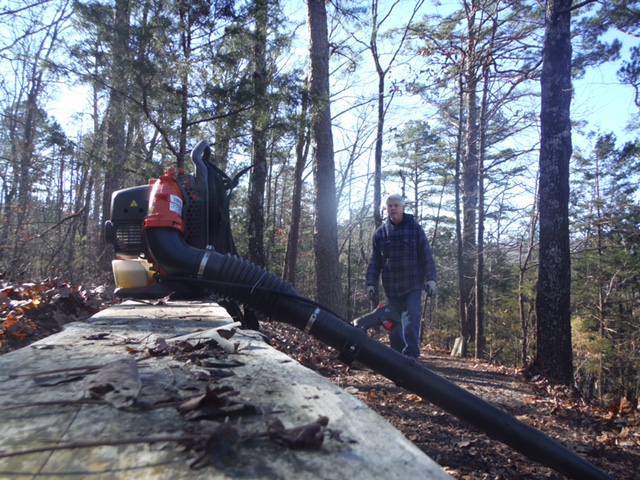
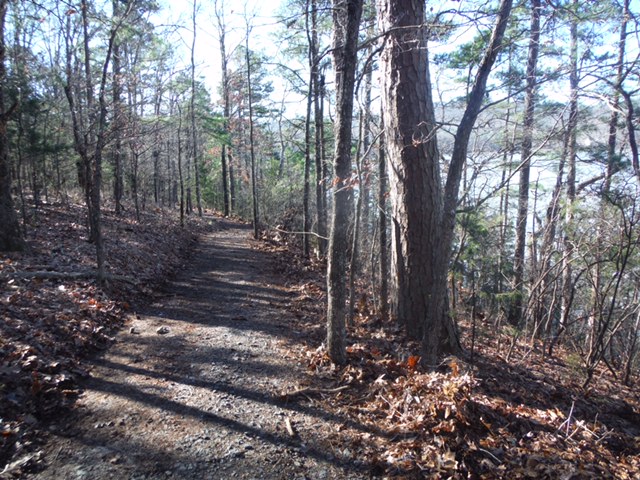
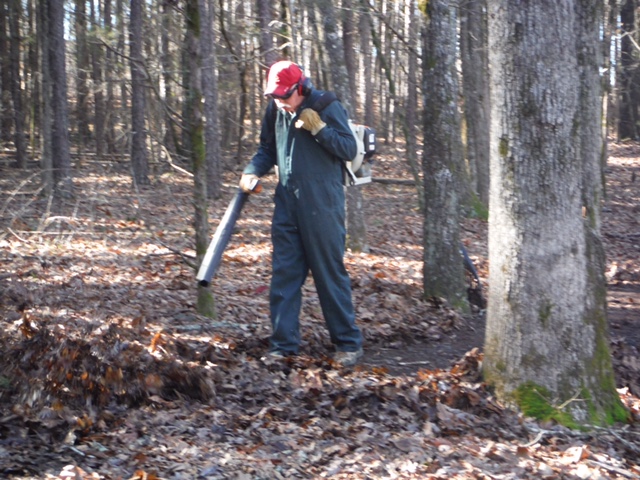
Today, Larry Price and I went to South Fork Nature Center to clear the leaves from as many trails as we could. Most of the trails are a crushed gravel type that disappear under many fallen leaves.

If you don’t know of this nature center, it is a gem along the banks of Greers Ferry Lake. Throughout the school year, school children and other groups are bused out to the center to go on a hike and hear of nature’s wonders. Some stay back at the pioneer cabin and learn about insects, for example, with plenty of microscopes for everyone to look through. Some days they have events that the general public is invited to attend. This is all done with volunteer docents. Teachers (often retired) and other willing volunteers can easily contact the center and become a docent or guide to help lead these tours. After all, isn’t that what it is all about – getting youth (and adults) interested in nature’s beauty?
image

image

image
Eventually, Larry & I managed to get 80% of the trails blown and raked off. We ran out of gas about the same time as we ran out of stamina for the first round. It would have been great if we had just two more people with us. We got this all done in 3 ½ hours which included us sitting down on a picnic table at the cabin and eating a enjoyable lunch. A great time it was.

So next time you see an event there, please mark it down and show up!

“Exploring Mighty Fortresses”

Marc C. Hirrel, Leopold Education Project (Arkansas)

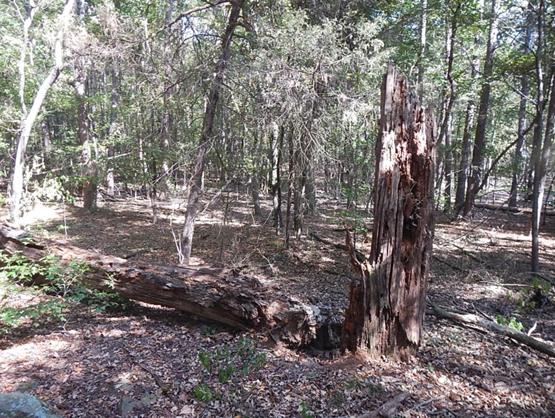
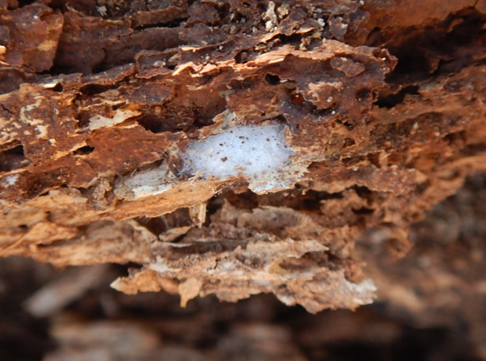
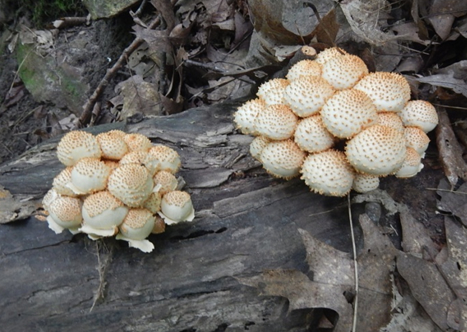
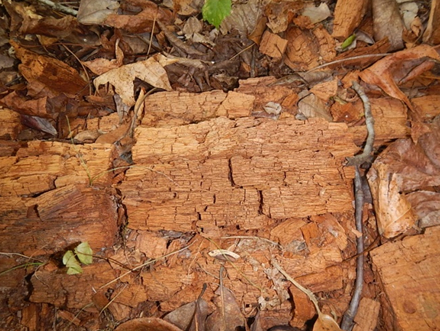
Late Autumn mornings are times to go on a hike and follow red lanterns to new discoveries. Fall is when deep breaths bring a chill to your lungs and sunlight paints mosaics of light and shadow on the ground. Not long on my path, I discover a fallen tree. Recent storms likely brought the old tree down, but not before fungi and insects had used up most of it. What was left was a mass of spongy woody tissue and little to identify it. Oak? Hickory? Pine?

Mighty-Fortress-Wood

Yet, even in death, the tree hides, feeds, and waters a myriad of organisms. A mighty fortress for those it harbors and protects. A biology course in every square inch awaits the curious. Tuition is the time you are willing to spend exploring.

Mighty-Fortress-Web

Aldo Leopold’s farm on the Wisconsin River was in many ways like South Fork. He wrote,

“Every farm woodland, in addition to yielding lumber, fuel, and posts, should provide its owner with a liberal education.”

Like Aldo, I realized there are as many tree diseases as there are trees here in our woods. Leopold wished “that Noah, when he loaded up the Ark had left the tree diseases behind. But it soon became clear that these same diseases made my woodlot a mighty fortress, unequaled in the whole county.”

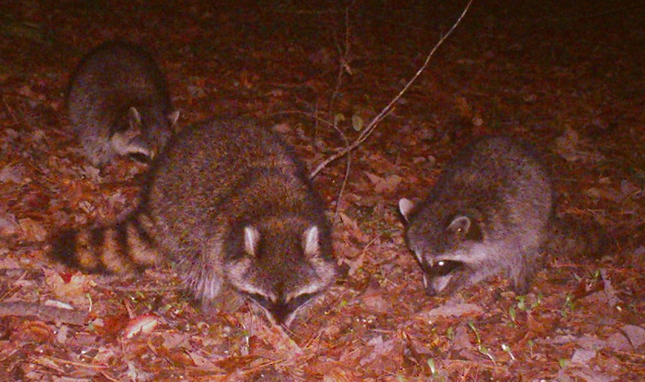
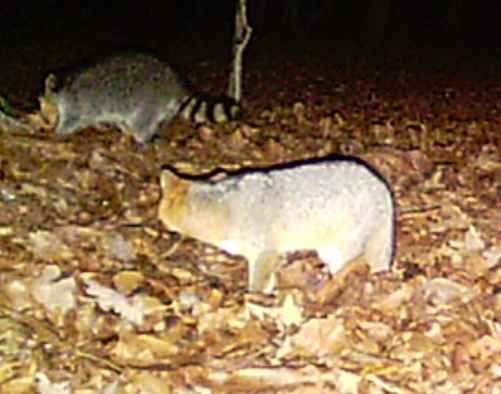
As in his essay, “A Mighty Fortress”, our “woods is headquarters for a family of coons.” And judging by their size, the eats at South Fork are pretty good.

Mighty-Fortress-Raccoons

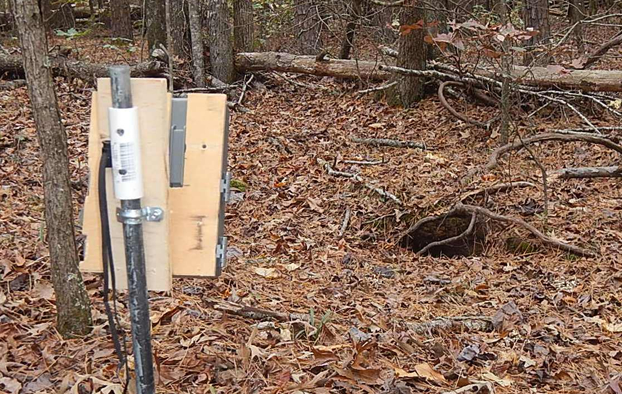
Game cameras were placed near burrows at six locations around South Fork. Most of the burrows are in or under fallen trees that “… offers an impregnable fortress for coon-dom.”

Mighty-Fortress-Burrow

Over a two week period in mid November images were collected of some burrow inhabitants along with other nightly browsers.

Clockwise from top left: Virginia opossum, White tail deer, Armadillo, Grey squirrel, Grey fox

On your next hike through our woods take note of those mighty fortress oaks. Who pays rent in downed pines? Will negotiations work out so everyone wins or is all Hell going to break out? Our mighty fortresses are full of mystery and political intrigue written in the landscape of the South Fork Nature Center.

(A Mighty Fortress is a November essay in Aldo Leopold’s A Sand County Almanac)

Mighty-Fortress-Wildlife2

Winter Invitation

Winter Invitation SFNCThe holiday season is upon us! When all the bright colors have gone, the woods take on a beauty of their own with the intricate silhouettes of intertwined branches. In winter, we catch sight of small things that the more dramatic displays of the other seasons hide from view.

Amid all the hustle and bustle, we encourage you to take a moment of tranquility here at the Nature Center’s walking trails. Winter in the Ozarks is often generous with mild days – excellent opportunity for quiet walks that nourish our souls as we appreciate the subtle rhythms of nature.

South Fork Nature Center is open year-round, with approximately two miles of marked public walking trails on the Greers Ferry Lake shore. When the gates are closed, you can enter by foot through the rock entrance. Parking is available across the street.

Entrance: 962 Bachelor Rd. off Hwy 330
GPS Coordinates Latitude 35°33’25.54″N Longitude 92°23’3.66″W

For questions about guided tours with our docents, or facilities offered to students and educators, please contact Program Director, Dr. Don Culwell at 501-358-2095.