2017 Weather in Review

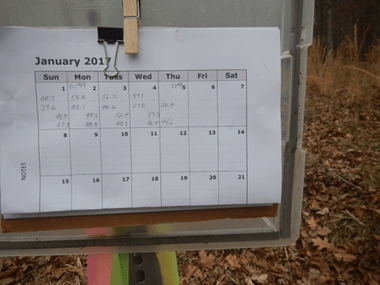
A study compiled by Marc Hirrel

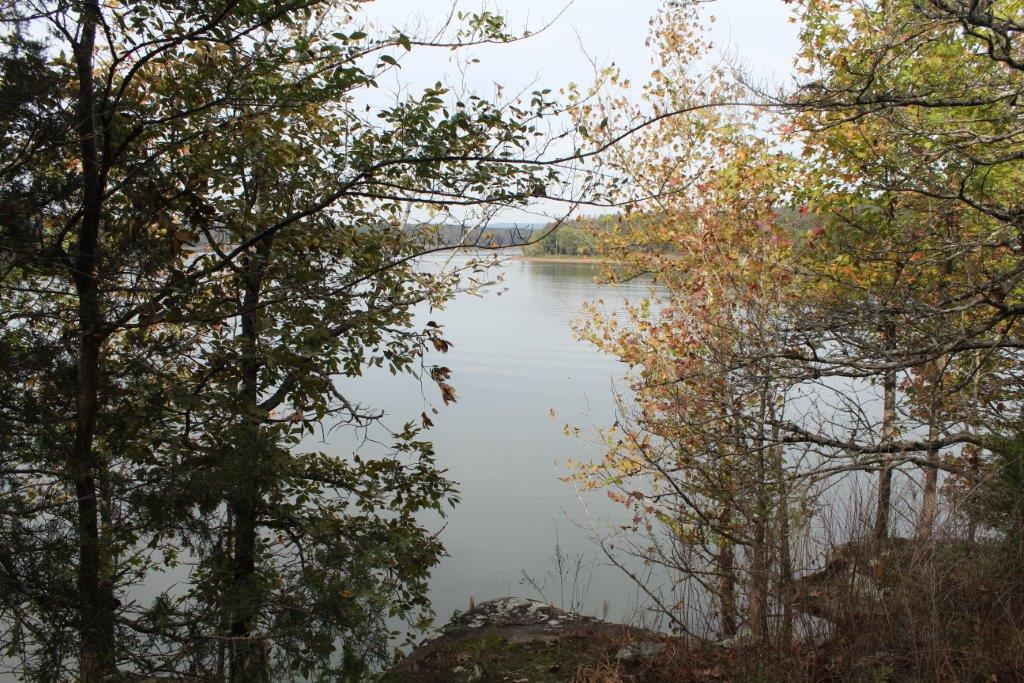
Station Location: South Fork Nature Center (SFNC), on Greers Ferry Lake, near Clinton, AR
GPS N 35 33.436 W 092 22.820

Weather Highlights

July was the warmest month with air temperature reaching 101.4 F and soil temperature of 80.5 F.
January was the coldest month; 16.3 F for air, but December had the coldest for soil at 39.2 F, two degrees below the January low of 41.1 F. However, January average soil temperatures were slightly below December’s.
Total rainfall for the year was 48.33 in. with May having over 10 inches. From March through August, monthly rainfalls were above three inches. September was driest with less than 0.25 in. Likewise, November was the only other month with under one inch of rainfall.

View/Download the full report in PDF →

Bluffton Preserve Trail Building Day

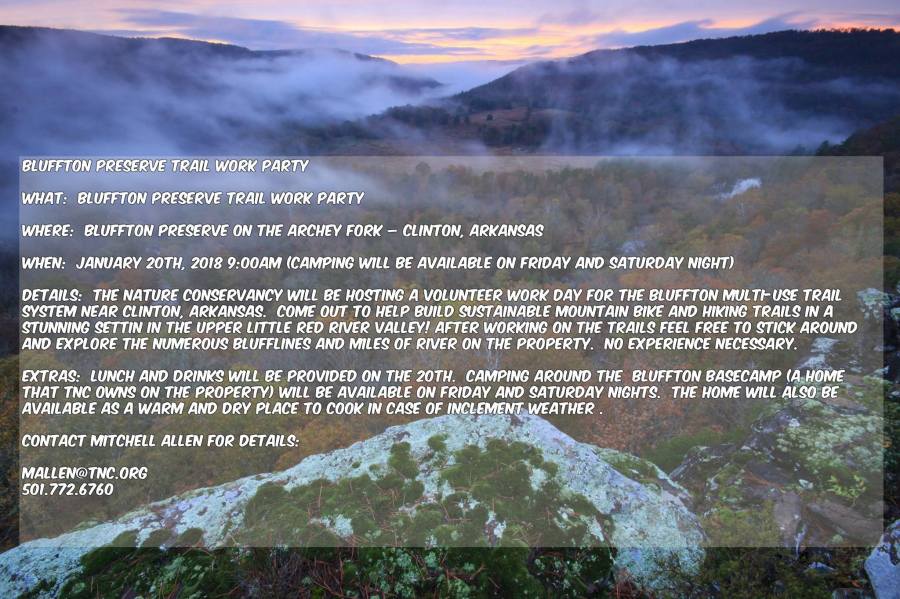
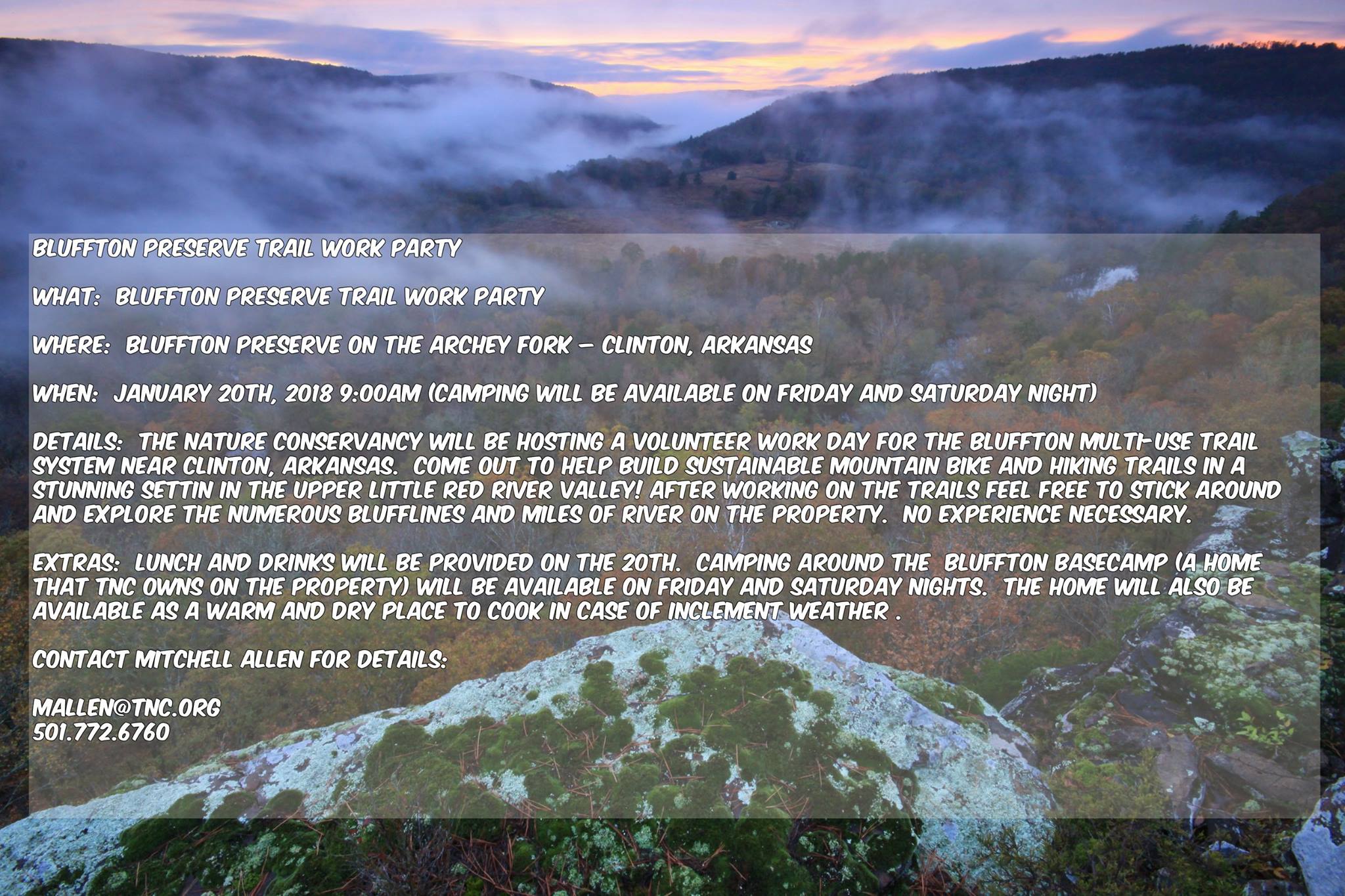
The Nature Conservancy has done phenomenal work in our community to develop the natural beauty of our waterways & trails. Join their team on Saturday, Jan. 20 as a Trail Volunteer! They will be working around the Bluffton Preserve site just north of town. Details included in below. Please contact Mitchell Allen for more information or to sign up at mallen@tnc.org or 501.772.6760.

Part 2: A Healthy Forest is a Managed Forest

Meet Joe Krystofik, Fish and Wildlife State Coordinator, U.S. Fish and Wildlife Service, Arkansas Field Office.

Joe has been instrumental in providing guidance and funding for SFNC’s recent Glade Restoration Project and our Monarch Butterfly Habitat restoration program. We are thankful for his expertise and never-ending support of SFNC.

The Southeast Region Partners for Fish and Wildlife Program provides technical and financial assistance to private landowners interested in improving habitat for migratory birds, endangered, threatened and at-risk species. They particularly emphasize projects with the potential to provide habitat for rare, threatened and endangered species. The “Partners” program is helping SFNC in their forest enhancement through mid-story management and prescribed burning.

According to the SFNC Woodlands Restoration Plan,

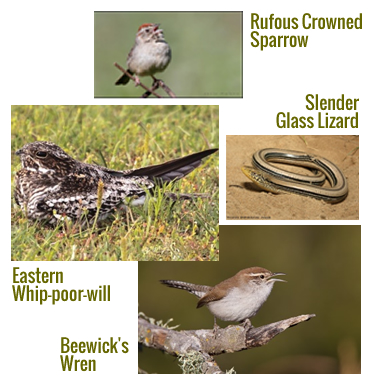
“The expected benefit to Federal Trust Species is to improve habitat conditions for the Northern long-eared bat, which is listed as a threatened species, several at-risk species including Monarch butterfly and Texas Frosted Elfin, as well as the species of greatest conservation need identified in the Arkansas Wildlife Action Plan: Bewick’s Wren, Eastern Whip-poor-will, Rufous-crowned Sparrow, and Slender Glass Lizard.”

Tree stand management is the latest development in our SFNC Woodland Restoration Plan. The Foothills Master Naturalists (FAMNs) and Clint Johnson with the Arkansas Game and Fish Commission have worked hard keeping our trails and structures cleared of leaves, as these trails will serve as fire lines for the prescribed burns scheduled at SFNC. An attempt to burn was made in early November but was unsuccessful. The TNC Burn Team will try again when all the conditions line up for a perfect prescribed burn. Afterwards, forester Wade Hargrove will supervise a selected commercial harvest to improve the health of our tree stand and open our canopy to improve ground herbaceous growth, which improves the habitat for many native species.

Please stay tuned for our third article about this restoration project. We look forward to reporting on the latest progress.

Gates-Rogers Outdoor Classroom Dedication

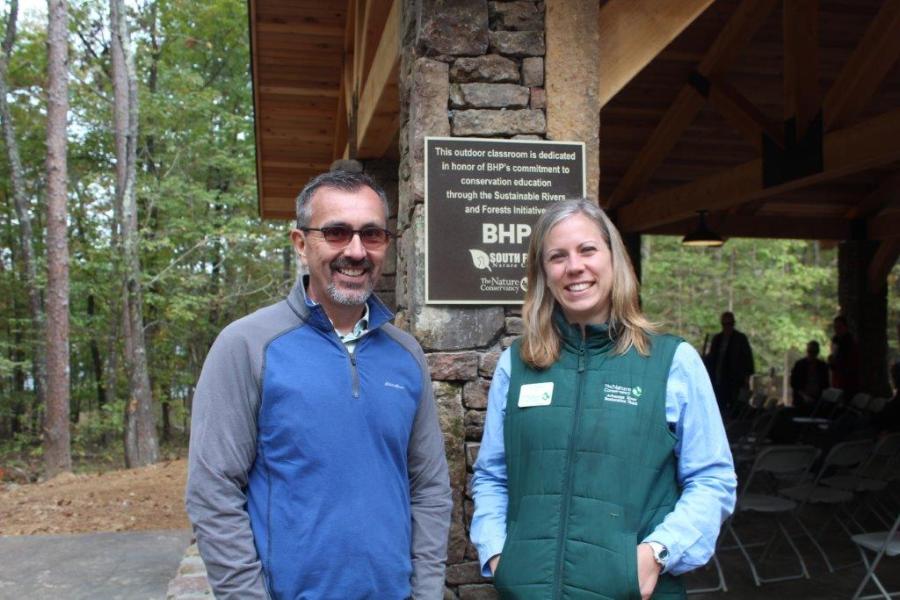
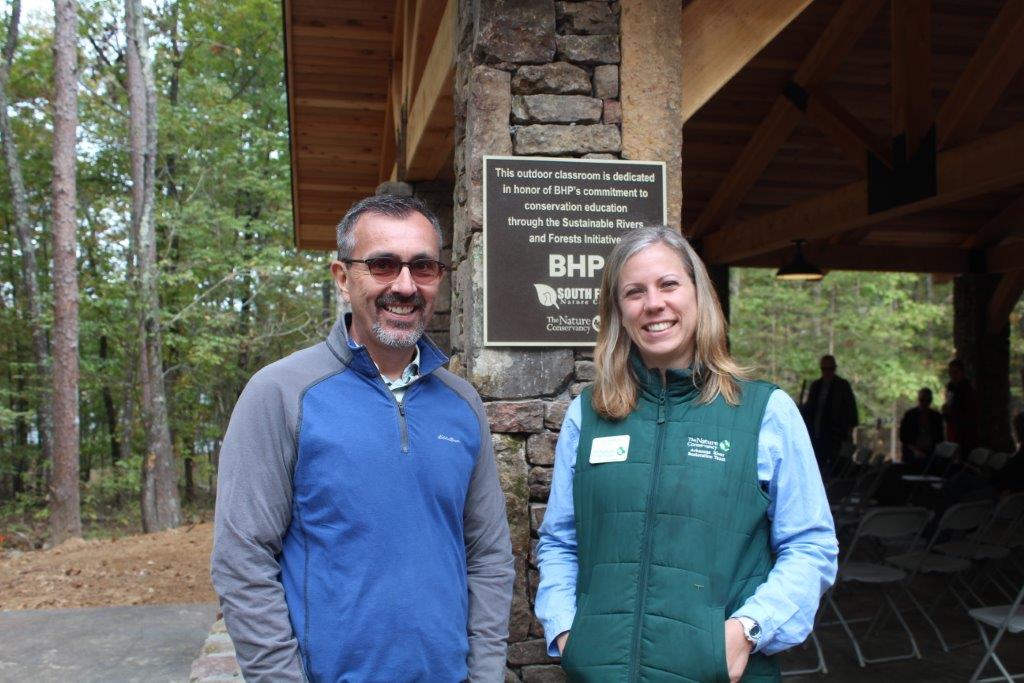
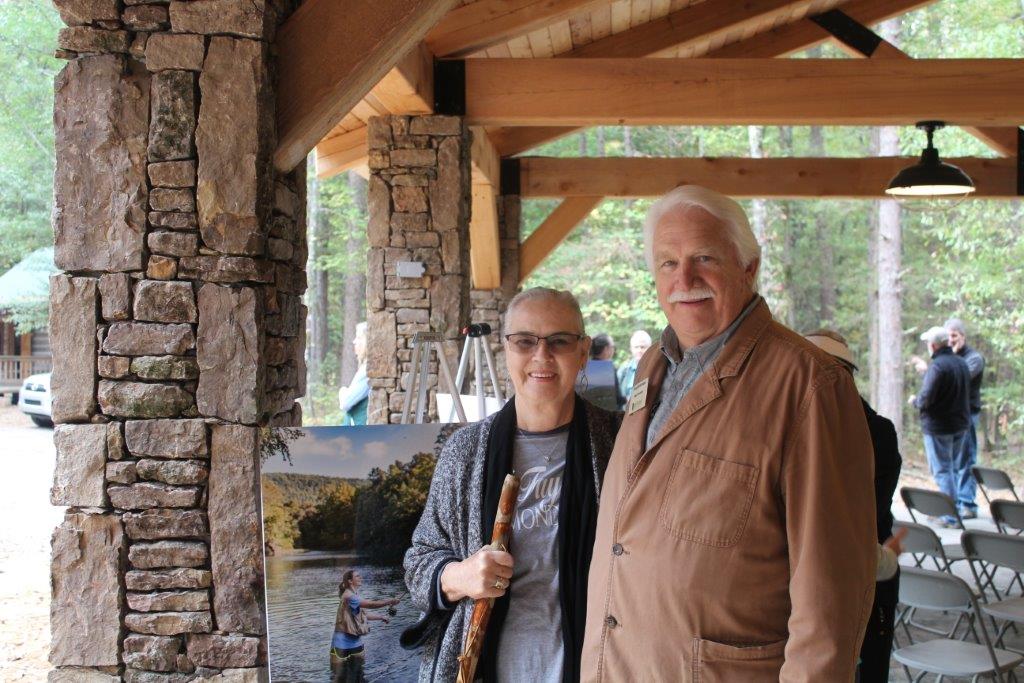
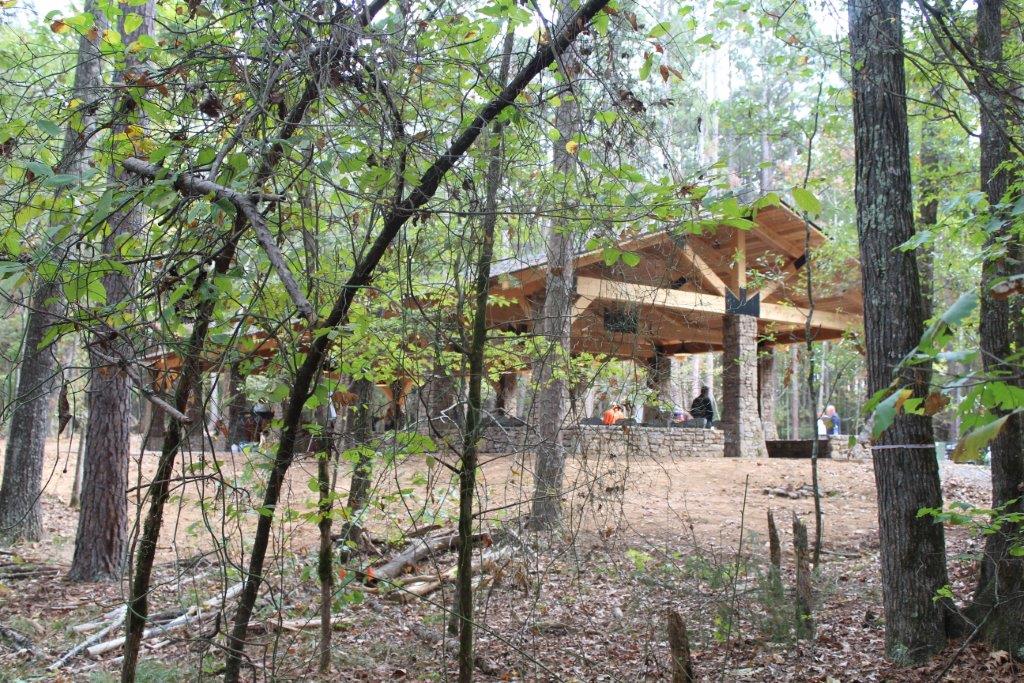
On October 20th, 2017 The Nature Conservancy hosted an event to dedicate the Sustainable Rivers and Forests Initiative (SRFI) funded outdoor classroom at South Fork Nature Center. The event focused on engaging the community and thanking the partners for their commitment to conservation in the Greers Ferry watershed. Gates Rogers Foundation is very grateful for the support of BHP Billiton through their generous grant to build the beautiful, 70’ outdoor classroom. The native stone pillars and northwestern red cedar beams insure the “pavilion” blends beautifully into the native environment. The building of this outdoor classroom will ensure a safe and beneficial location for our classes and organizations to meet. South Fork Nature Center will now, more than ever, be able to work towards their mission of providing enhanced, outdoor educational opportunities to our surrounding communities and schools.

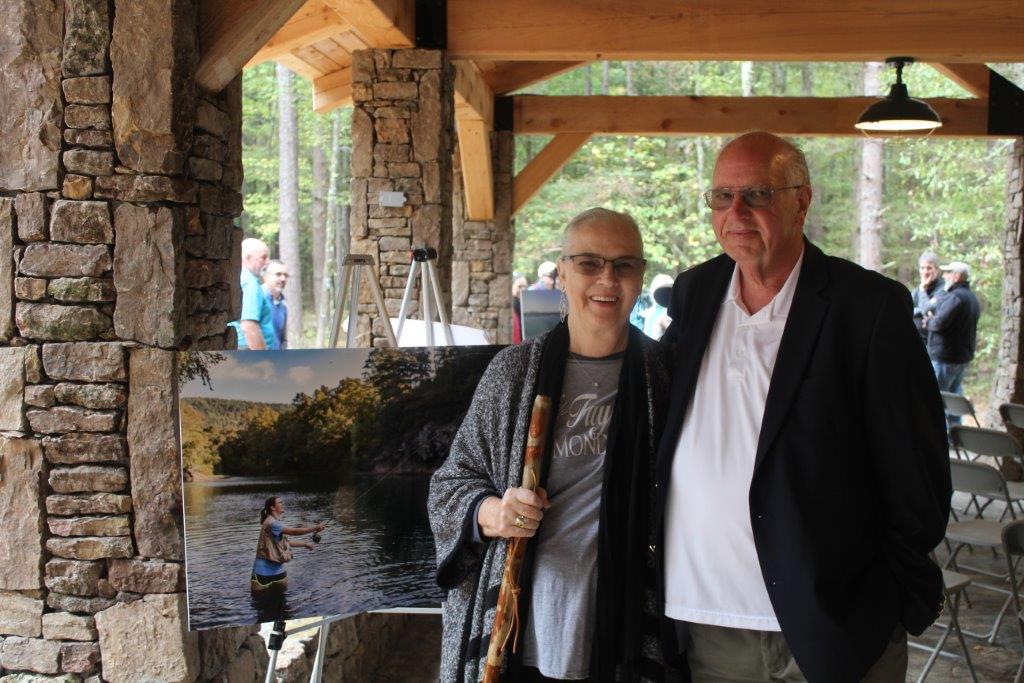
Faye Rodgers & Judge Hooper

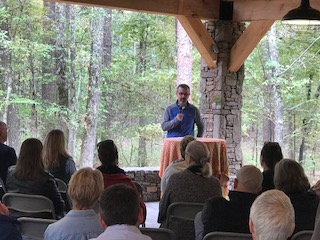
The event started at 10:00 with remarks from Scott Simon and Joy Wasson from The Nature Conservancy. Judge Roger Hooper spoke on the community’s behalf. Doug Bannerman, Manager Community, Shale and Minerals, spoke for BHP Billiton and Janet Miron, President of Gates Rogers Foundation, spoke for South Fork Nature Center. The audience consisted for many community leaders and visitors from Texas and Louisiana. Jeff Weigal, Director of Strategic Initiatives Texas TNC, was present as were representatives from the Mayor’s office and Congressman Hill’s Office. After the informal outdoor ceremony, held in the outdoor classroom, the visitors participated in a ceremonial wildflower seed planting event.

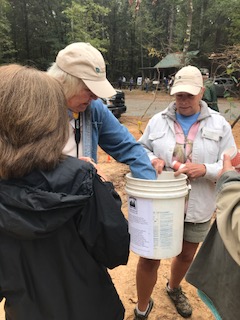
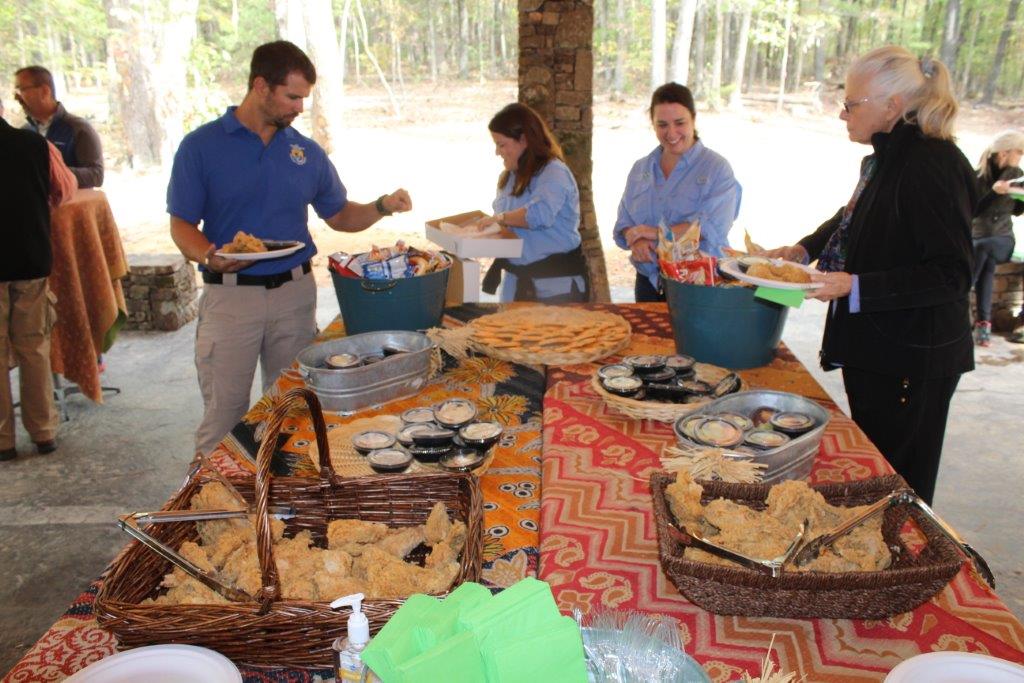
At around 11:00 our visitors were invited to participate in an organized trail walk led by South Fork Nature Center’s Docents. There were approximately 30 hikers divided into three groups. They hiked to different glades and learned about our glade and woodland restoration project. At 11:30 the hikers returned to the pavilion to a beautifully decorated table of fried chicken and all the fixin’s offered by TNC. The visitors were encouraged to visit our information table, learn about SFNC and sign-up for membership and for the SFNC newsletter. The SRFI information was also available with maps and TNC employees available to answer questions. Docents, Marc and Suzanne Hirrel, also set up a “Conservation through Technology” display focusing on water resource conservation. After lunch, the event concluded.

Doug Bannerman, BHP & Joy Wasson, TNC
Faye Rogers & Don Richardson

We at South Fork Nature Center are so excited and grateful for our new partners The Nature Conservancy and BHP Billiton. The genuine care and expertise that they bring to our partnership is truly felt and appreciated. We strive to move forward in our mission knowing that we are working as a team to increase the awareness of the need to protect our natural environments!

The Batmen (& Batwomen!) of South Fork

Article & Photos by Joyce & Bob Hartmann

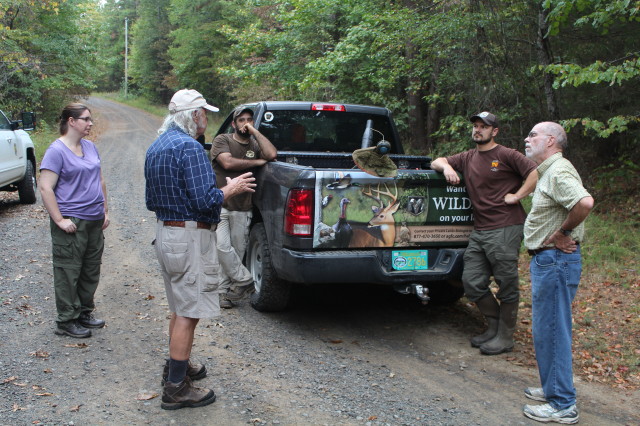
A Pre-Glade and Woodland Restoration survey was conducted at the Nature Center by Tommy Inebnit who works for the USF and Wildlife. Following this two-day session, he will return in the spring to conduct a “post” survey to see how the restoration affected the population.

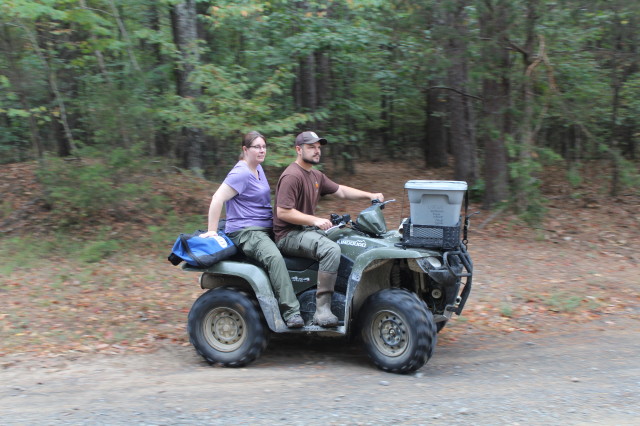
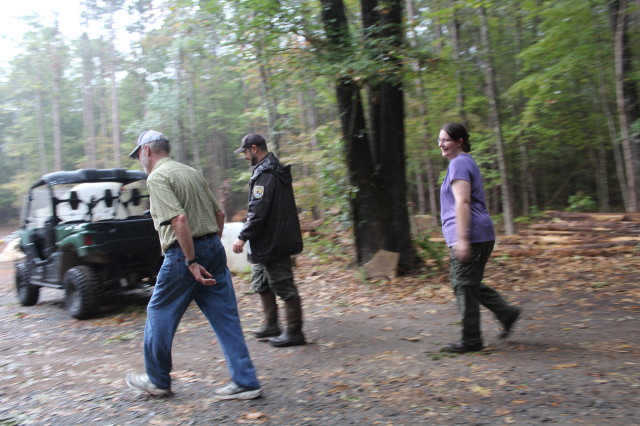
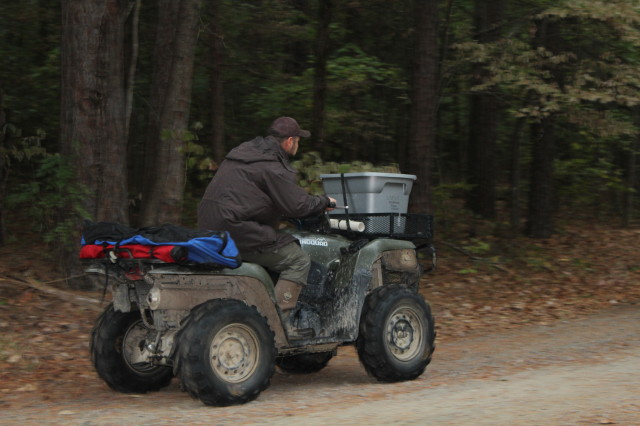
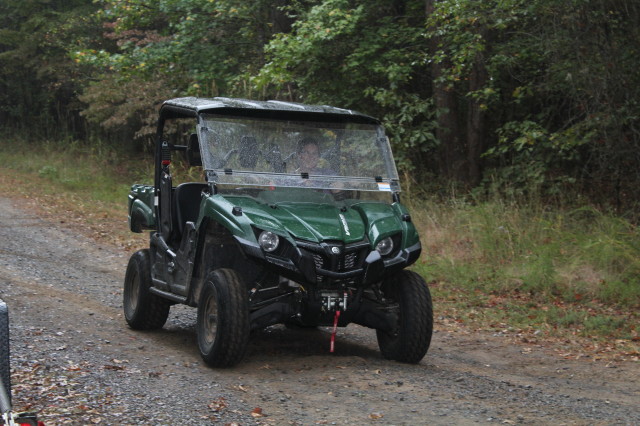
Melissa and Thomas used four-wheelers to speed up the scouting process and look at more sites. It hadn’t rained for weeks; there was even a burn ban for the whole county. Then suddenly it started to rain…and rain…a real downpour. Three soggy people decided to continue to scout, and just set out the poles in several sites and put the nets up the next day. Everyone sure got soaked!

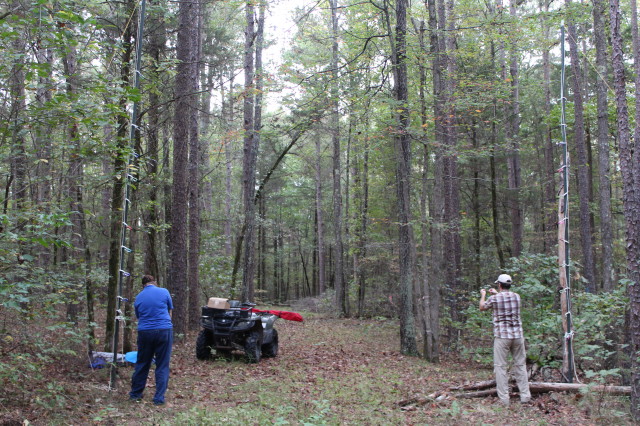
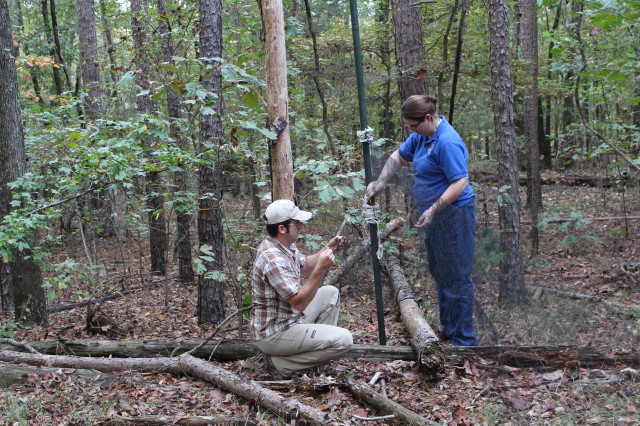
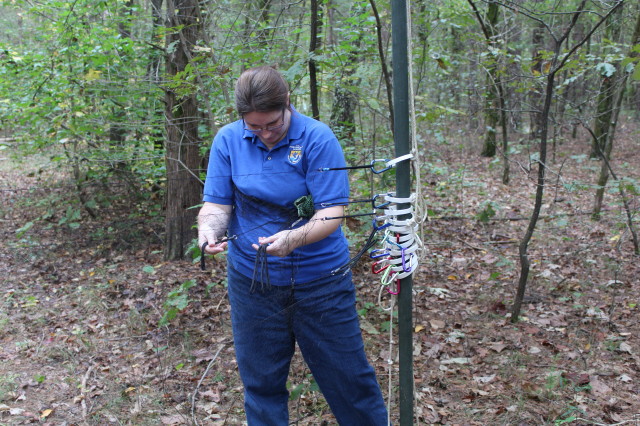
Mitch and Melissa set up a triple net across the old logging road as a second site. The poles had been set up the night before. Untangling and keeping the net free of leaves took a while. They attached the net to the clips and then raised it up to the top of the poles; the nets were invisible, practically, but with the bat’s sensitive echolocation systems, some could detect it. They set it up late in the afternoon but then a little before dark they lowered the net all the way to the ground, to prevent catching land mammals that would be out in the daytime.

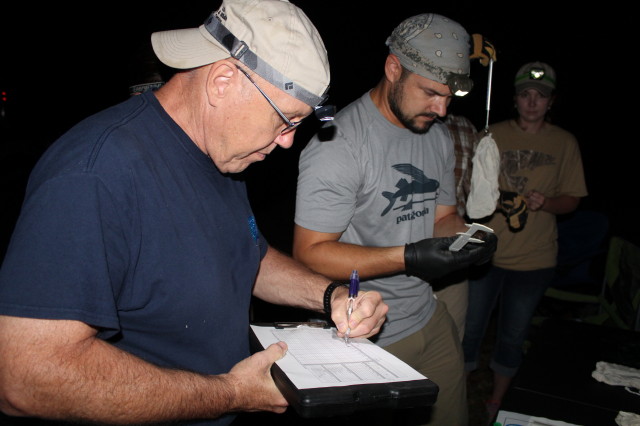
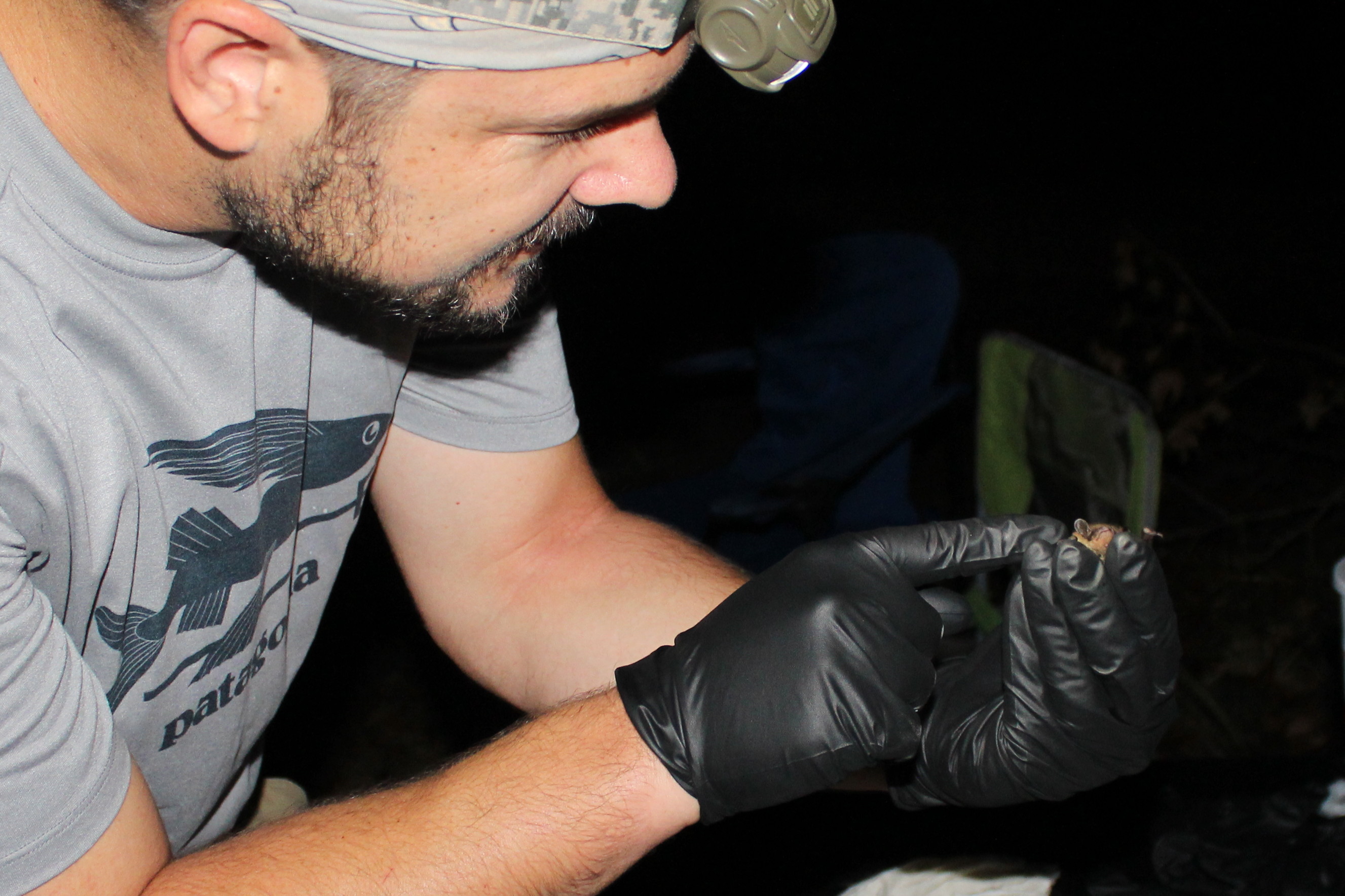
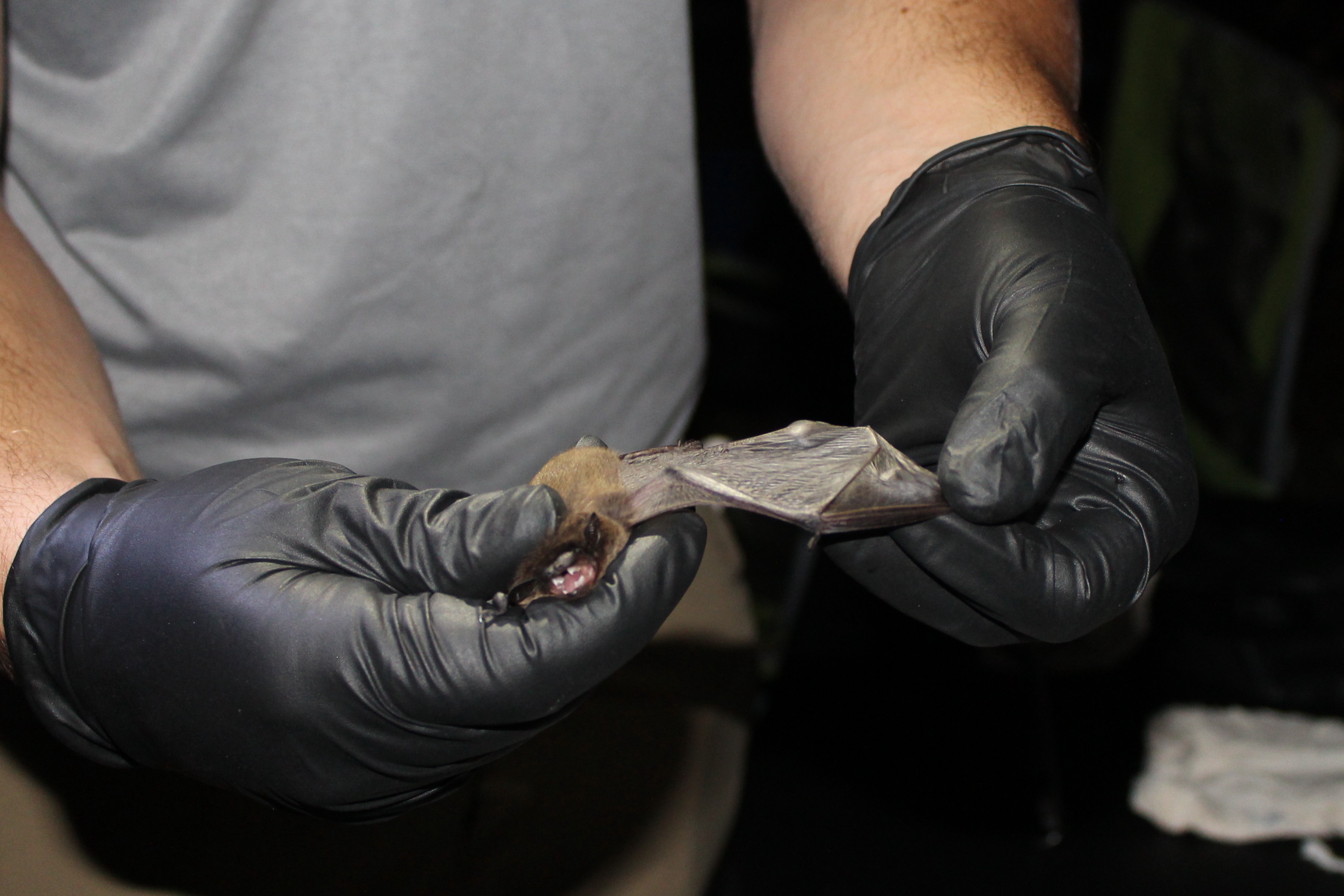
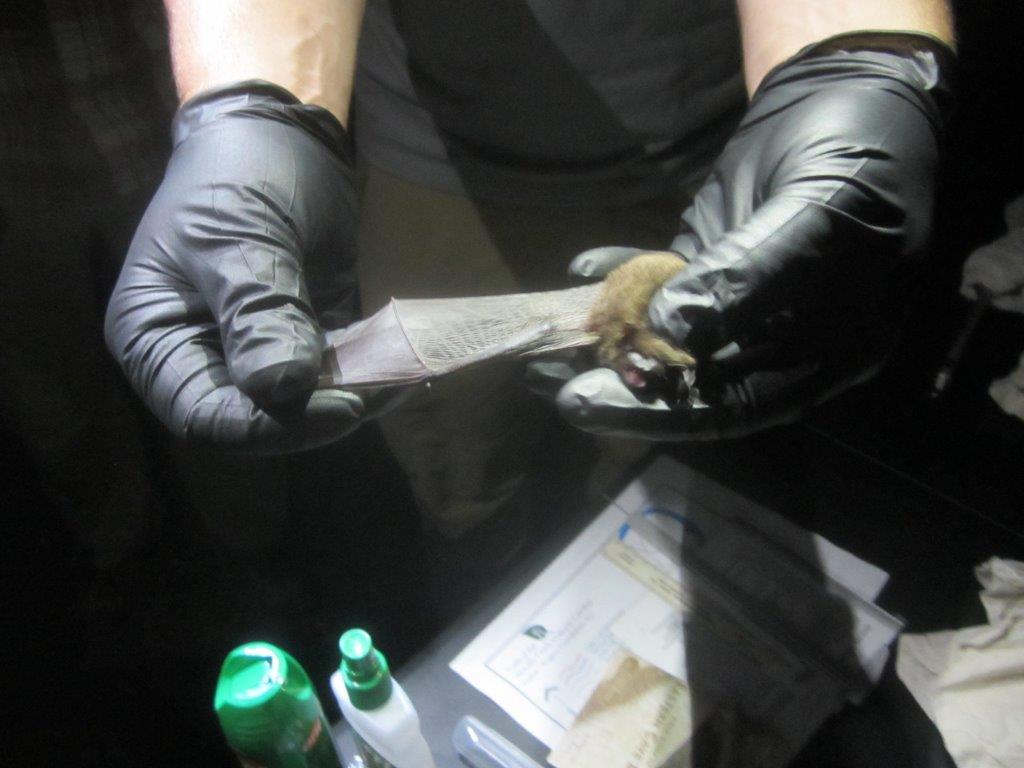
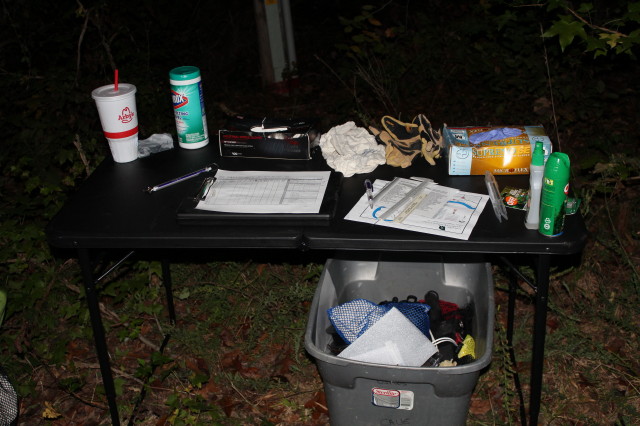
Joe recorded the data, Tom (in the tee-shirt) is using calipers to measure a wing bone length, and Mitch (in plaid shirt) is holding a bag on the portable scale to weight the 2nd bat they brought in. Tom is displaying the wing; its “fingers” are connected by a web that appeared transparent in the bright lights. The portable lab consists of a simple table, data sheet, scale, calipers, bags to transport the bats in (each one gets their own, which is used only once), insect repellent. The bugs weren’t bad at all, though – that might have been not good for the bats…we did hear crickets and katydids galore, though…such a beautiful evening, so enjoyed visiting with all those biologists!

Part 1: A Healthy Forest is a Managed Forest

(First of a Three-Part Series on SFNC Glade and Woodland Restoration Plan)

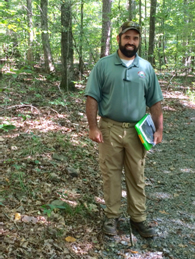
Gates/Rogers Foundation, owner of South Fork Nature Center, would like to introduce you to Clint Johnson, Private Lands Biologist, Central Region Private Lands Section, Wildlife Management Division, Arkansas Game and Fish Commission. Clint has been working hard on developing a Glade and Woodland Restoration Plan for South Fork Nature Center.
We are very excited about partnering with the Arkansas Game and Fish Commission (AGFC), US Fish & Wildlife (USFW), and The Nature Conservancy (TNC). We are so grateful for the knowledge and support offered to us by these partnerships. Gates Rogers Foundation has been awarded a grant from the AGFC through their “Acres for Wildlife” Program and a grant from USFW through their “Partners for Fish and Wildlife” Program. The Gates Rogers Foundation will pay for approximately 1/3 of the initial phase of the restoration project. Our members, donors and partners help to make this possible.

This introductory article will outline the overall goals and timeline for the initial phase of the Restoration Project. Historical forest composition of SFNC area was shortleaf pine, hickory, post oak, white oak and black oak. The first step we took was to meet with the land biologist to establish an overall restoration plan. After meeting with Clint Johnson we learned that our tree canopy was too dense due to overgrowth of mid-story, faster-growing, shade tolerant trees such as maple, elm, and cedars. This occurs often in Southeastern forests. The exclusion of forest management practices such as fire has allowed the existing trees to flourish, leading to an overstocked stand of trees. The native oaks and short leaf pines are being squeezed out by these shade tolerant species listed above. This is the tip of the iceberg. Under-story is being affected and the natural habitat of several species is in danger.

The summary of Clint’s Glade and Woodland Restoration Plan is as follows:

GOAL: To restore natural conditions for most of the plant communities at SFNC, with a top priority of connecting and expanding the existing glades.

Forest Management Tools:

  1. Prescribed burns (sometime after November 1st and before the end of the year) SFNC has previously partnered with TNC and has contracted to have their professional burn team carry out this part of the plan.
  2. Commercial thinning (this will occur after the prescribed burn. SFNC has hired professional Forester, Wade Hargrave, to supervise this and the Timber Stand improvement phase.
  3. Timber Stand improvement This process has already been started in our existing glades and woodlands by our Forester. Clint Johnson is carrying out the TSI on the Corp’s property.

Clint states in our restoration plan,

“From a wildlife standpoint, benefits of this work will include an open over-story, promoting nectar-producing plants to benefit pollinators (like monarch butterflies). Open woodlands benefit numerous species of songbirds that are experiencing population declines due to lack of suitable habitat, and even the standing dead trees from TSI treatment will create foraging and roosting habitats for bats and woodpeckers.”

Article number two, next month, will focus on these benefits and the role of our partner, Joseph Krystofik (Partners for Fish and Wildlife State Coordinator). Read about the expected benefits for the federally listed species, the Northern long-eared bat, and at risk species including the Monarch butterfly and the Texas Frosted Elfin. Also we’ll discuss other species of greatest conservation need identified in the Arkansas Wildlife Action Plan that will be helped by our restoration plan.

Stay Tuned. We’ve got a lot going on at South Fork Nature Center.