A Day in the Life of a Nature Center Volunteer

A short story about enjoying and maintaining the trails at Southfork Nature Center: Leaf removal

Phil Wanz

“…Many people wouldn’t understand why, on my only day off, would I be out working away my afternoon. In many cases if people ask that question, they wouldn’t understand the answer. For me, I can think ahead, all the young children who will be walking these paths, they won’t know who or even think about somebody who blew all the leave off the trails, but I know…”

To get to the nature Center, Larry Price and I drove I-40 to Morrilton and took the hwy 9 north exit. For me this has always been a very scenic drive, through many twists and turns. We made our way through the town of Solgohachia, I have wanted to stop here many times and take photos. We arrived at Choctaw and crossed over hwy 65 onto hwy 330. Before we knew it, we were parked by the cabin at the Nature Center.

We quickly unloaded a bacpac blower and one handheld blower. In the cabin we got out another bacpac blower Larry was going to use. We decided to start on the most used trail, he went one way, I went the other. It was slow going at times with very deep layers of leaves that took many attempts to blow off the trail. Also at the bottom of some piles was a heavy mat that resisted being blown away. Other places it was much quicker going.
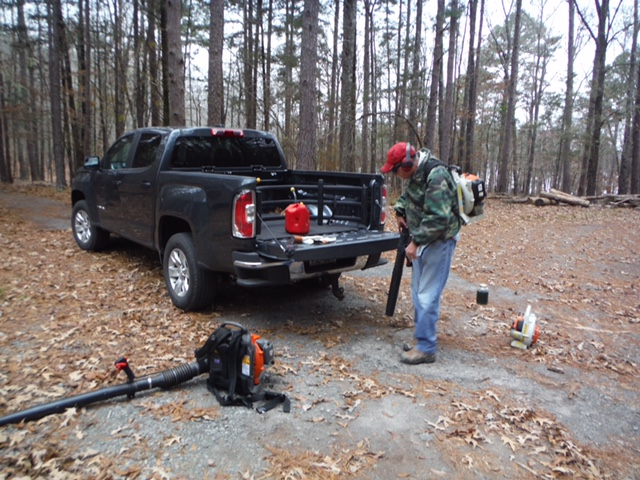
South Fork Trail Maintenance - Leaf Blowing

I soon met up with Larry, with the lake on one side and a pretty glade on the other. I saw Larry had his handheld blower, he said the other one quit working, bummer I thought. We shut down both blowers and started back towards the cabin and more gas. I asked Larry, do you hear that high pitched noise, or I’m going crazy. He told me he heard it also, whew I thought. Back at the cabin I suggested we pour out the old gas in the bacpac blower that quit and try it with new gas, presto, it worked. We had to search for a suitable container for the old gas, we finally found an old glass container with a working lid. I realized I still heard the noise, it was coming from me, what the, turns out it was my camera. Larry suggested to take out the battery and of course the noise stopped.

Another note I want to bring up, Larry forgot any type hearing protection. I was happy to tell him I brought two ear muffs. Me, I wore ear plugs plus the ear muffs. If you attend a event such at this, bring ear protection for yourself and maybe extra. if you have it, for others. I try to always have extra gloves also, hats, water etc…

We got both blowers going again and started up another trail, this time he was in the lead, I followed. I was able all during this to admire the many beautiful sights. All this time rain was wanting to fall but held off (it drizzled on us driving to the center.) I ran out of gas while Larry pushed on. We got back to the road, turned off Larry’s blower. I joked that he got better mpg with his then the one I had. Mine was pushing out at 40 mph while his somewhat less. As we walked back to the cabin we talked of many things.

One was how many people wouldn’t understand why, on my only day off, would I be out working away my afternoon. In many cases if people ask that question, they wouldn’t understand the answer. For me, I can think ahead, all the young children who will be walking these paths, they won’t know who or even think about somebody who blew all the leave off the trails, but I know, and that is the key to the understanding of why.
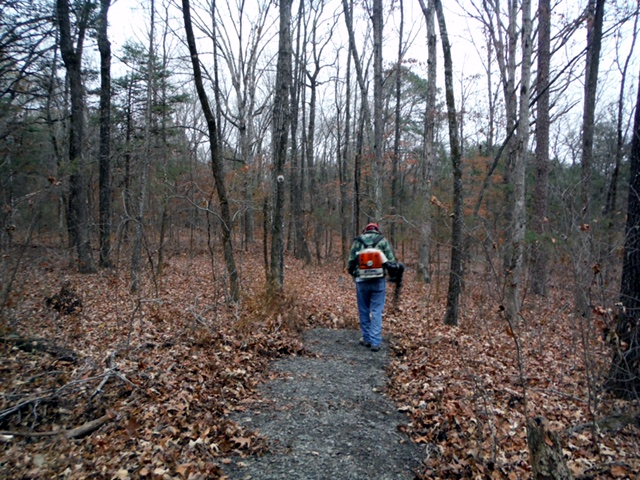
South Fork Trail Maintenance - Leaf Blowing2

As we packed up, secured the cabin, a drizzle started which on the drive home turned into heavy rain. We had to very carefully pack that glass container, Larry joked it was like packing nitro, yikes I thought, wouldn’t want that in the back of his truck. He got it tied in and boxed-in so it wouldn’t move. As we started back the day was beginning to fade. We made our way through Solgohachia in the dark. Back on the great I-40, it quickly got us home. I know Larry will agree with me, a great time it was, good fellowship and we can pat ourselves on the back for a deed well done.


A look inside our efforts…


• Public walking trails (2 mi.)
• Nature appreciation programs & Docent-Guided Tours, Spring-Fall
• Historic conservation (Almeda Riddle cabin)
• Habitat initiatives (Pollinator meadows & Milkweed cultivation)
• Data collection for plant & animal species & climate records
• Outdoor Classrooms & Field-Based Education Framework
• Regional school outreach
• Annual Greers Ferry Lake shoreline cleanup (Sept)
• Annual Butterfly release (Spring)
• Building partnerships with regional conservation initiatives
• So much more!

Interested in pitching in? Get a little exercise & fresh air, get to know more about the nature programs in action, and help the trails & facilities in tip-top shape! Ask about docent & volunteer opportunities. 
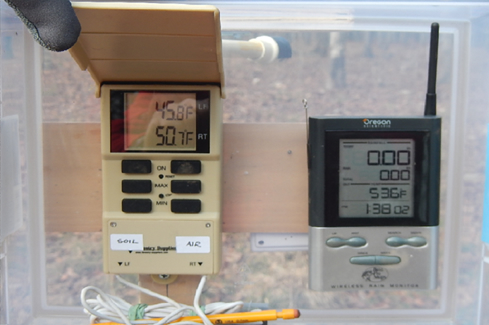
Weather Station Upgrades

We’re a little proud of our new & improved Weather Station!
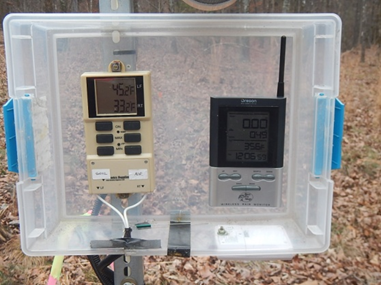
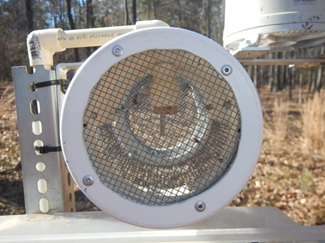
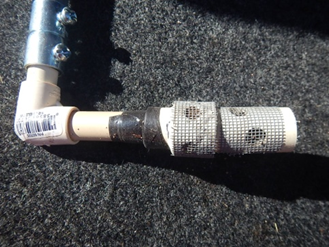
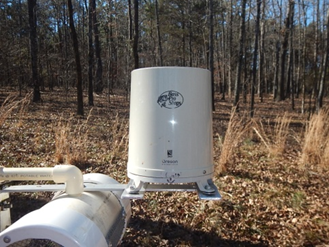
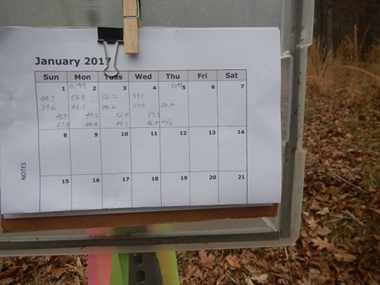
It’s been moved to a new location. The sensors are now attached to an aluminum frame and the wiring for the soil thermometer is enclosed in metal conduit to prevent fire damage. The new location is between the NE most milkweed plots because of good milkweed stands last year. Instructions on how to record weather data are attached to the data clipboard. The GPS location is N 35⁰ 33.436 W 092⁰ 22.820.

A Word from the Leopold Project

Marc C. Hirrel, Leopold Education Project State Coordinator, SFNC Docent

A plaque on the stone archway leading to the Jewel Moore Nature Reserve reads,

The objective is to teach the student to see the land, to understand what he sees, and enjoy what he understands. – Aldo Leopold, 1942.

Like Jewel Moore and hundreds of other nature reserves and centers such as ours, Leopold’s philosophy and teachings are the nutrients our roots draw from the land that is South Fork. Teacher, above all and foremost, Leopold taught through “the Land”. He was all about turning kids loose to read the landscape. At SFNC, we say,”Teach Outside, No classroom required!!” There’s curricula in a turned over log, a textbook under every tree, and a quiz in the dust of a set of tracks.

So now that I’m in the autumn of my years as the song goes, tell us about Leopold and South Fork, which is easy, and yourself, which is not. The short, to the point story is great teachers, mentors, and the Boy Scouts. I’ve taught with and without classrooms, in and outside of Arkansas, and had students from grades 2-college and adults of all ages.

W. C. Fields advised, ”Never follow the animal act!” Don’t go into outdoor education, if you can’t stand being upstaged by Nature….Get Used To It! In nearly 50 years of teaching that started in the Boy Scouts, I’ve been turned invisible by a 12 point mule deer dining on prickly pear about 30 feet behind me and struck mute by a Coopers Hawk having a park pigeon for lunch during my birdsongs of Leopold activity. I suspect there will be more. So learn when the teachable moment is upon you and let Nature take over.

1st Rule to Teaching Outside- Know when to Shut Up! and do it often.

South Fork Nature Center is committed to providing enhanced, outdoor educational opportunities on a regional basis. We can do this because of the Gates-Rogers Foundation commitment to protecting and preserving Arkansas native flora and fauna in a manner that ensures and encourages public access,…that’s us! And this happens because the Foundation is dedicated to the development, application, and dissemination of ecologically sound land management practices that further this mission. To Aldo Leopold, this is a Land Ethic.

In striving to find harmony between men and land, through A Sand County Almanac and sketches here and there, Leopold crafts The Land Ethic and his challenge , There is as yet no ethic dealing with man’s relation to land and to the animals and plants which grow upon it. Land, like Odysseus’ slave-girls, is still property. The land-relation is still strictly economic, entailing privileges but not obligations. Our mission states the obligations to our Land Ethic. The Aldo Leopold Foundation’s mission is to foster a land ethic through the legacy of Aldo Leopold with a vision to weave a land ethic into the fabric of our society; to advance the understanding, stewardship and restoration of land health… Great Foundations think alike!

To learn more about the Aldo Leopold Foundation go to www.aldoleopold.org.

Obviously, education is required to develop ones Land Ethic. For Leopold, it was a “liberal education in wildlife…” What is less obvious is how it starts. The when it started is when you were young and in your favorite place to play. The instant you finished the last sentence that place came front and center in your mind. You saw yourself in that place. You could feel it, hear it, smell it. The games you played were unstructured except by your imagination and you were in Nature. Whether it was woods behind grandpa’s farm or a vacant lot in an inner city, you found Nature on your own and through play your land ethic education began.

Research over decades continues to support improvements in student achievement when nature experiences are the contextual frame for learning. Why do school districts in Southern Illinois have nearly 50 years of camp and outdoor education as part of the middle school curriculum? Because it works!

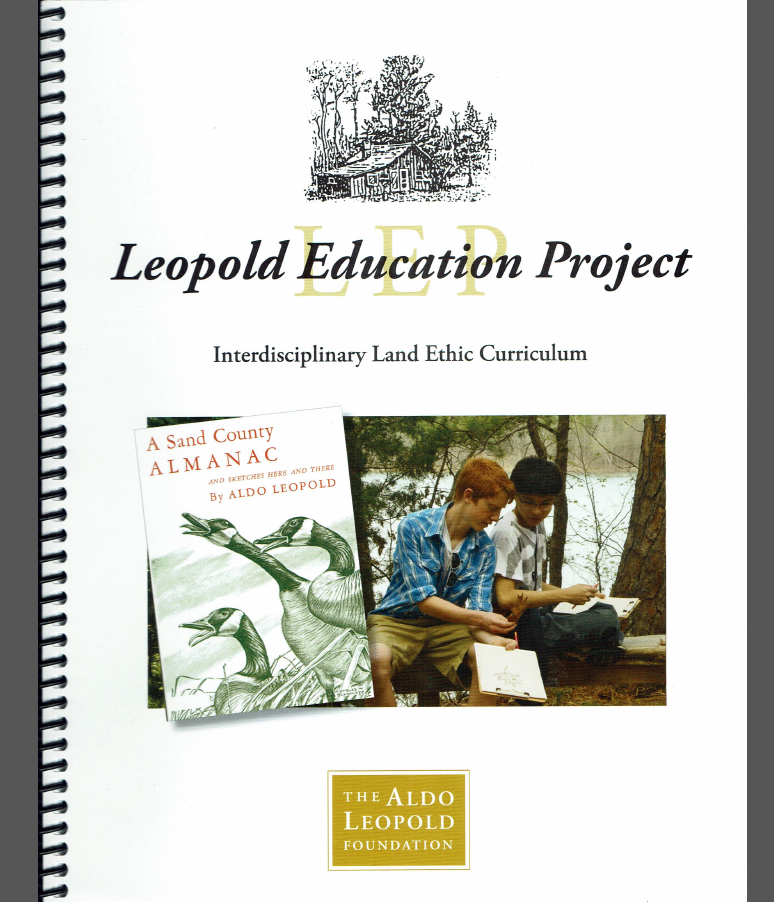
The Aldo Leopold Foundation through its education arm the Leopold Education Project (LEP) has released a new set of activities to help educators shape the land ethic for future generations. Along with other materials, the new Interdisciplinary Land Ethic Curriculum, is based on Leopold’s conservation philosophy. But the LEP curriculum should not stand alone. It needs integration into the excellent natural resource curricula that have been around far longer. These curricula focus on forest resources, Project Learning Tree-PLT; water resources, Project WET; and wildlife resources, Project WILD. All these curricula are taught through one day workshops year round in Arkansas. We will have dates in 2017 at SFNC to get you started and hit the trail teaching.

2nd Rule to Teaching Outside- All great curriculum is stolen. Steal some, Get trained!

The cover of the new LEP curriculum is our Mission Image: It’s not my, or your Land Ethic that needs developing; it’s those two kids. Our two, South Fork kids. In the July essay, Prairie Birthday, Leopold laments the sorry condition of land health when once extensive populations of compass plant are relegated to the unmowed strip of an 1840’s graveyard, and will anyone ever again care about loss of fauna, flora, or habitat. What a thousand acres of Silphiums looked like when they tickled the bellies of buffalo is a question never again to be answered, and perhaps never asked. Never asked….It will be at South Fork!

Our brains come pre-programmed and wired for the natural world. No additional apps or software upgrades are needed. Updates are 24/7. Overtime we have evolved a sixth sense to the five biological ones. The sense of Wonder. Nature makes us wonder in two ways. We wonder because we are curious (left brain) and we wonder because we are in awe of Nature (right brain). Nature Deficient Disorder is very real, very prevalent, and very damaging to our brains and sense of Wonder. The objective to teach the student to see the land, to understand what he sees, and enjoy what he understands falls in all our laps. It’s one of those obligations to give back to the land. Your love of nature is all you need to share with a child.

So no one should be surprised that many of our docents as well as nature centers nationwide, are educators, some never stood in front of a blackboard. Too many would be docents have the desire, but lack the “knowledge” to go into nature with our youth. If this is you, then let me assure you that it’s 99% desire and 1% knowledge, which is the easiest to acquire. Aldo would say to you that a, Liberal education in wildlife is not merely a dilute dosage of technical education. It calls for somewhat different teaching materials and sometimes even different teachers. The objective is to teach….

3rd Rule to Teaching Outside- Share your sense of Wonder with a child.

Volunteer to be a South Fork Nature Center docent!!

Get started!

Call us at (501)745-6444 or e-mail to grf@artelco.com

One of our favorite South Fork photos is featured on the cover of this curriculum guide!

Marc Hirrel & Greenbrier Sci Club

Greenbrier Middle School Science Club Visits South Fork Nature Center

marc-hirrel-lep-tour

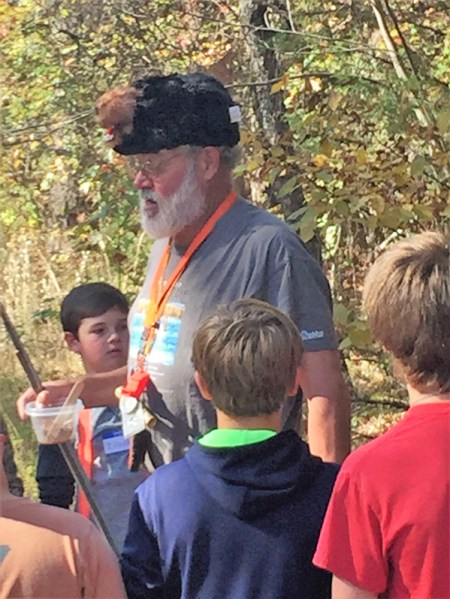
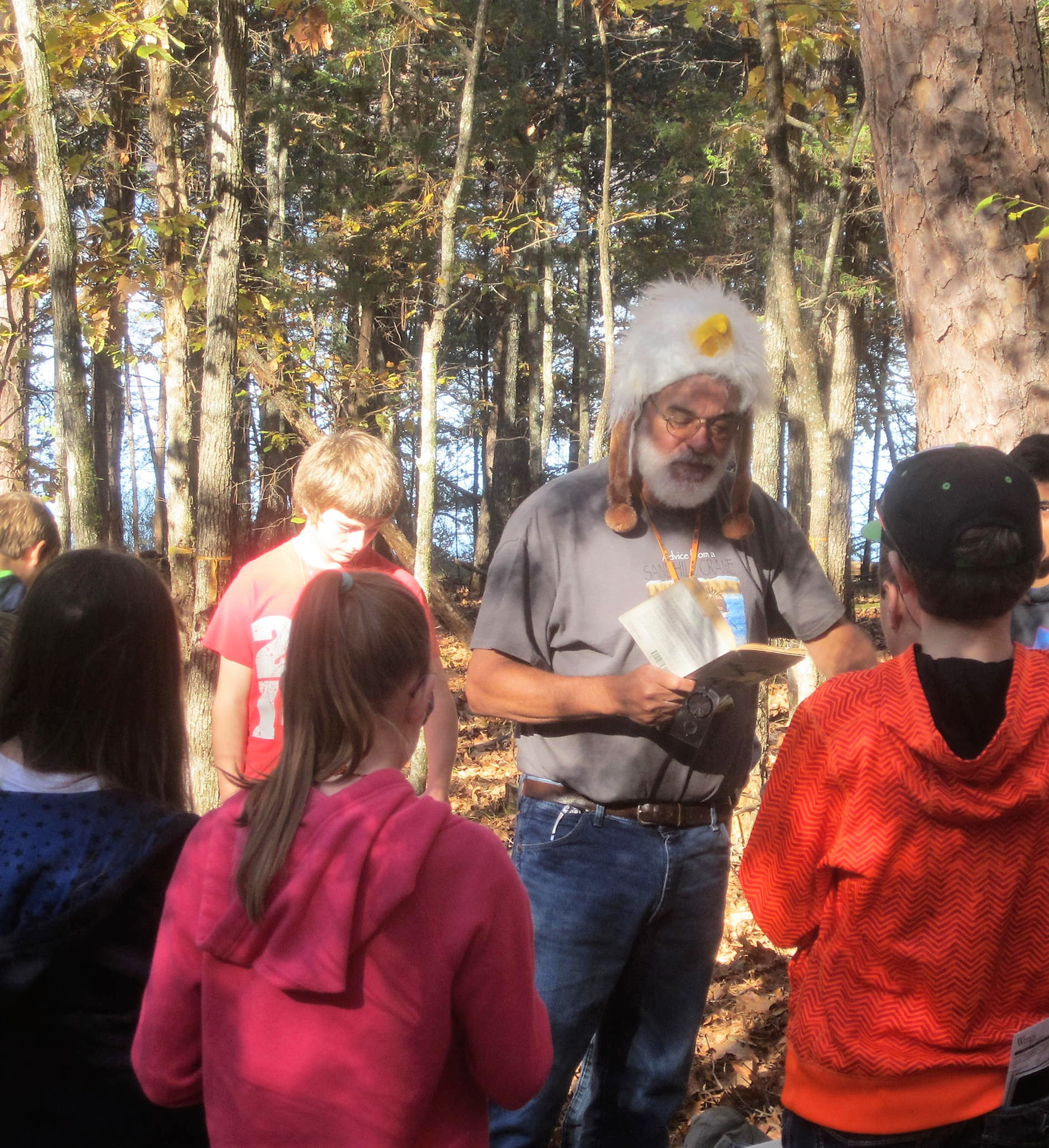
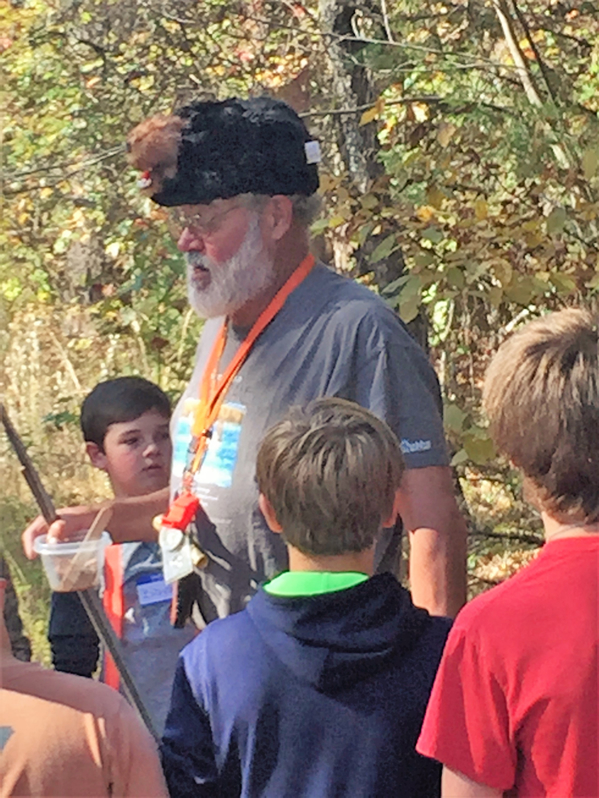
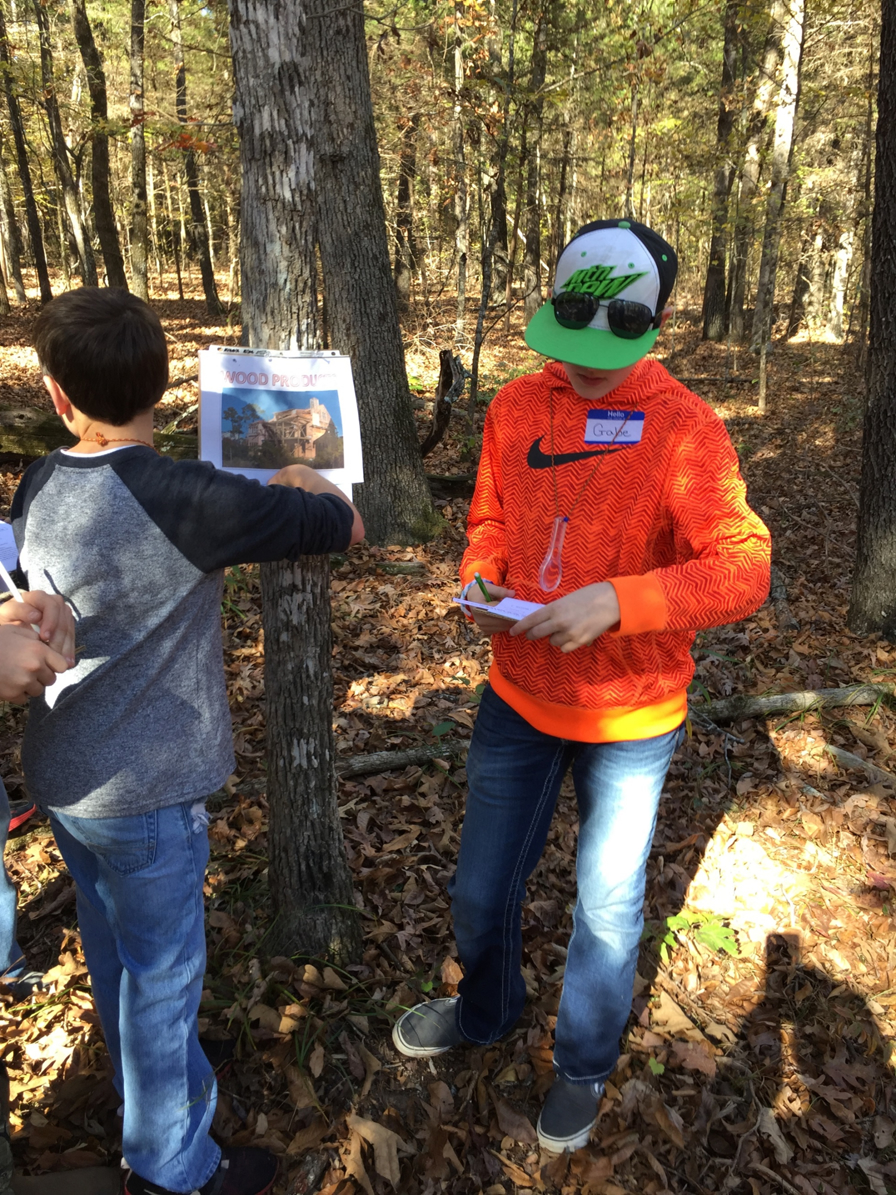
Eighteen middle school science club members, together with teachers Pam Shirley and Amy Evans from Greenbrier School District, visited the Nature Center at South Fork on November 16th. Docent Marc Hirrel PhD., State Coordinator Leopold Education Project, led a “standards based” program including hands-on, field-based study. The day’s program consisted of interactive trail hikes with activities integrating math, science and literature. He was assisted by docents Bob Hartman and Janet Miron.

marc-hirrel-lep-tour-3
Readings from “A Sand County Almanac” by Aldo Leopold started the students’ thought processes as they created a “Sound Map”.

Further along the trail they created a beaded bracelet while participating in the “Atom Adventure” & “Leopold’s Odyssey” learning more about unhealthy land practices, soil nutrient distribution, concentration of freshwater and saltwater on the earth’s surface and how we can change our land use practices to keep nutrients in the soil.

marc-hirrel-lep-tour-1
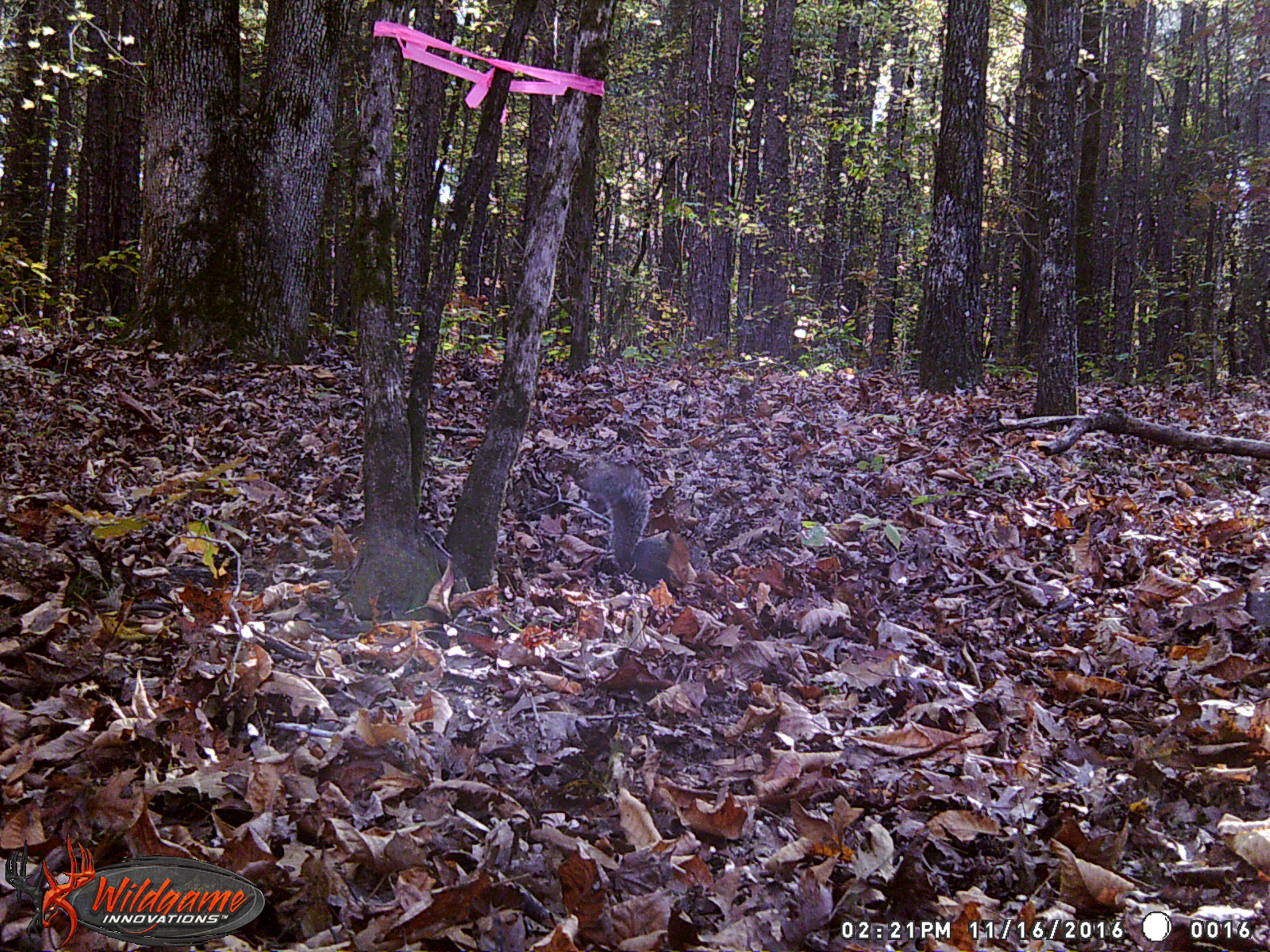
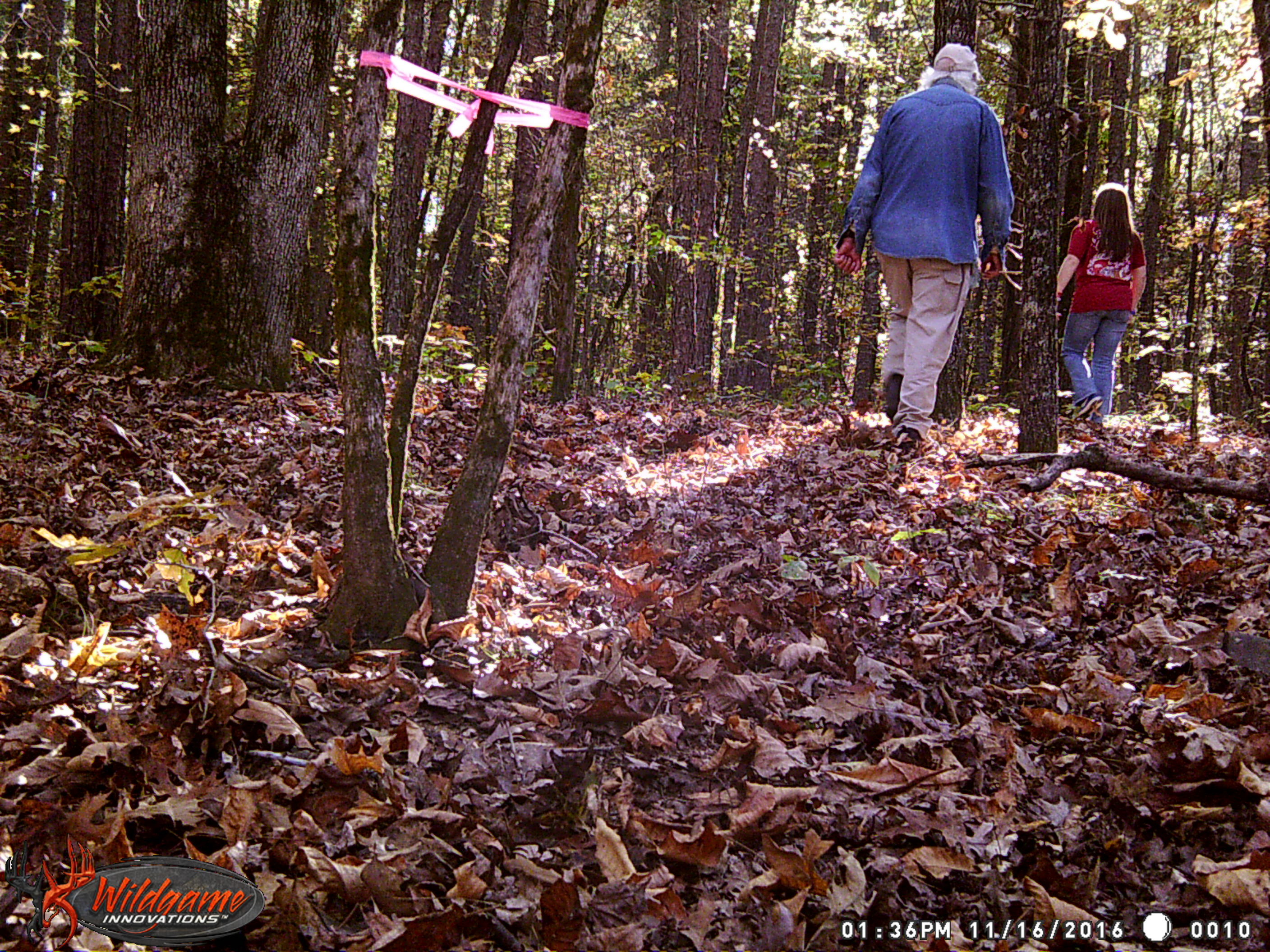
Docent Marc Hirrel baiting the game camera

Students also could reinforce their classroom studies of how herbivores, carnivores and decomposers play a part in the nutrient flow. As the Students continued their hike they were led off the trail to a “Multi-Carbon Pool Site”. They talked about “Carbon Fluxes” such as photosynthesis, respiration, ocean mixing, waste production, burns, dissolves, leaves solution, sequestration, eaten, and breaks down.

At the end of the exercise the students addressed such questions as:

  1. How could we change these pools to remove more carbon from the atmosphere?
  2. What are the implications of removing the trees from a piece of land and developing it so that trees no longer dominate the landscape?

The next activity on the trail hike was the construction of a “Climate Timeline” using data supplied consisting of factual events happening in history. The focus of the exercise was for the students to learn about levels of atmospheric CO2 dating back to the 1800’s and to differentiate the reason for the levels between “Scientific events” and “Policy Events”. The students graphed the historical levels of atmospheric CO2 in their individual workbooks as Docent Marc Hirrel recreated their results on a poster.

sfnc-weather-station-doc

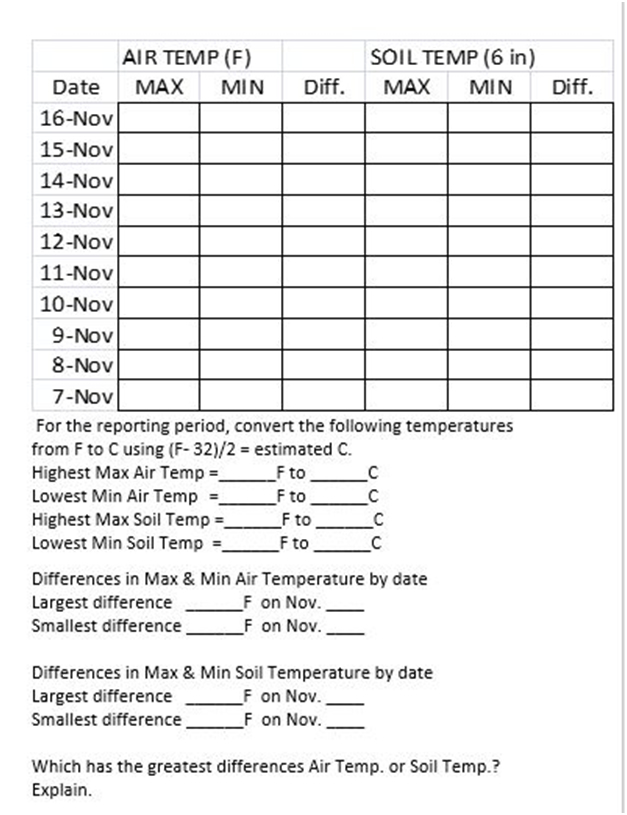
The last trail activity before lunch was a visit to SFNC’s weather station. The students collected data of air temperatures, soil temperatures and calculated the differences between the maximum and minimum temperatures. They practiced converting the readings from Fahrenheit to Celsius. A discussion on the differences in air and soil temperature followed.

field-based-edu-at-sfnc

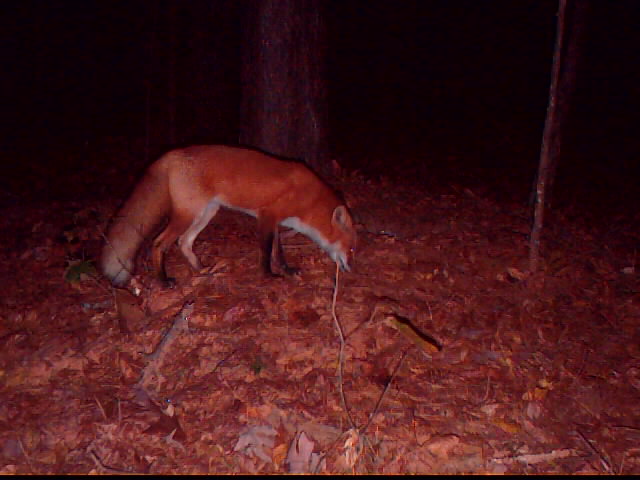
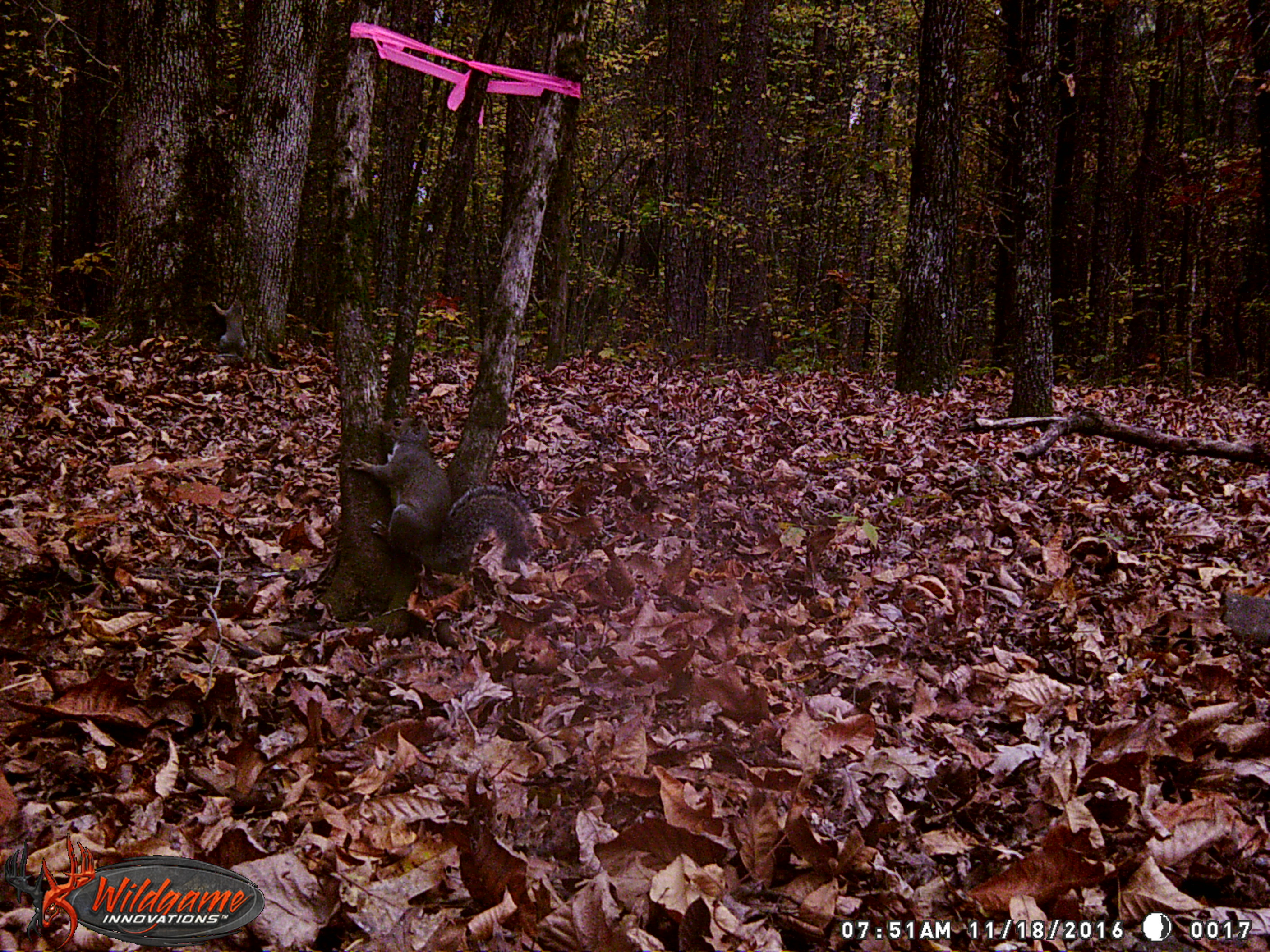
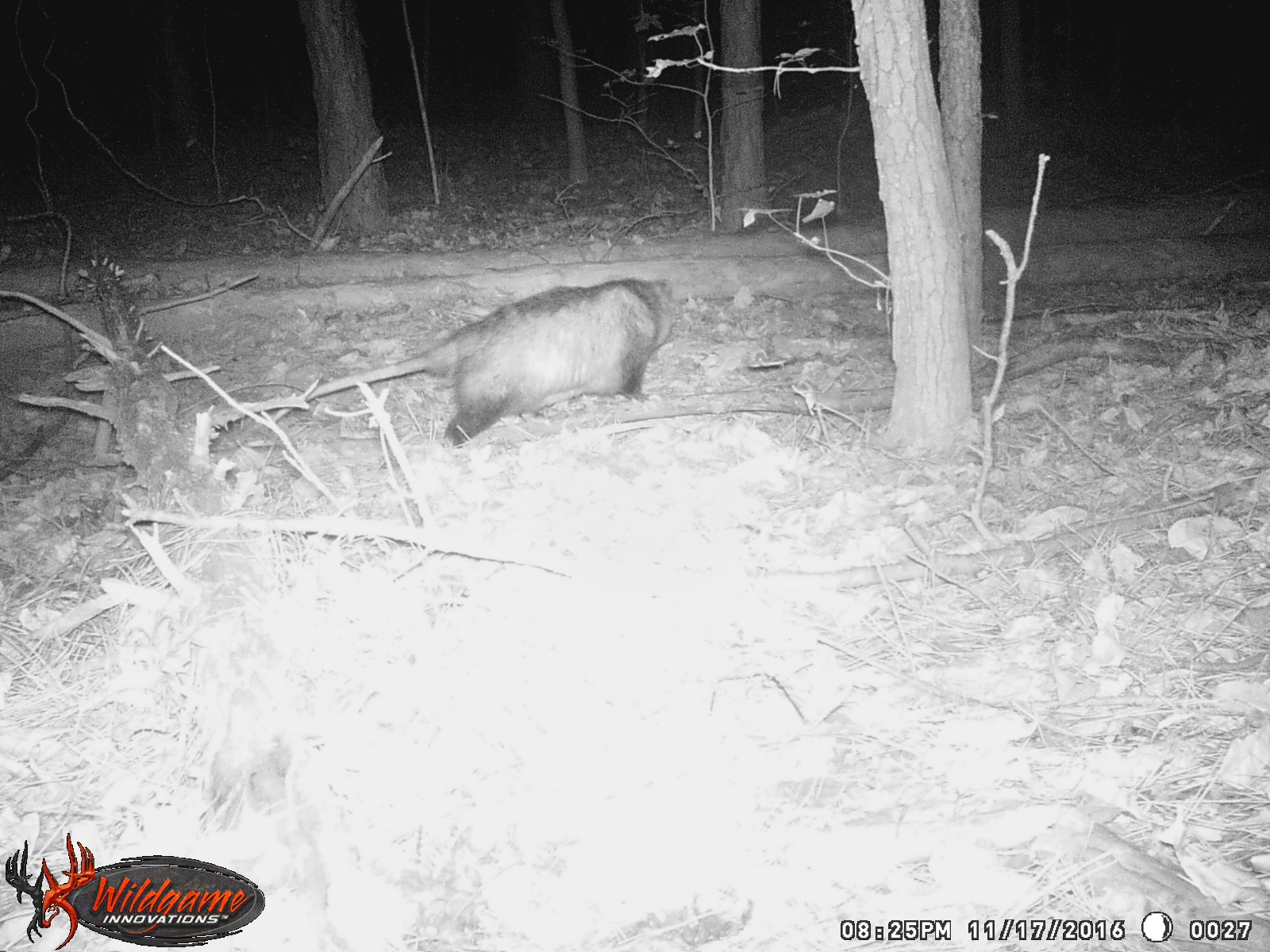
After lunch the students and the docents hiked a different trail back to the waiting school bus. On their way, they stopped to set up game cameras to monitor the wildlife activity at the Nature Center. They hoped to observe different naturally occurring species in their habitats.

We want to thank our docents and the Administrators at Greenbrier School District for approving this field trip for the science club. The weather was perfect, the students and teachers were awesome and the standards-based, hands-on curriculum provided all participants with an interesting, intellectual and fun day outside!

#GivingTuesday

South Fork Nature Center Joins the Global #GivingTuesday Movement

dirt-plant-hand

South Fork Nature Center has joined #GivingTuesday, a global day of giving that harnesses the collective power of individuals, communities and organizations to encourage philanthropy and to celebrate generosity worldwide.

Occurring this year on November 29, #GivingTuesday is held annually on the Tuesday after Thanksgiving (in the U.S.) and the widely recognized shopping events Black Friday and Cyber Monday to kick-off the holiday giving season and inspire people to collaborate in improving their local communities and to give back in impactful ways to the charities and causes they support.

South Fork Nature Center is committed to providing enhanced, outdoor educational opportunities on a regional basis. It is the premier conservancy project of the Gates Rogers Foundation hosting a nature trail network at the western end of Greers Ferry Lake in the Ozarks of north-central Arkansas.

The Gates Rogers Foundation is committed to protecting and preserving Arkansas native flora and fauna in a manner that ensures and encourages public access, esthetic appreciation, and an understanding of the importance of biodiversity preservation. The Foundation is dedicated to the development, application, and dissemination of ecologically sound land management practices that further this mission.

South Fork Nature Center has joined the #GivingTuesday movement for local citizens to have a chance to give back to their community and local causes, to build and strengthen partnerships across sectors, and to share Clinton, Arkansas’ hidden gem, South Fork Nature Center, with new audiences which brings attention to philanthropic opportunities locally during the holiday season.

Those who are interested in joining South Fork Nature Center’s #GivingTuesday initiative can visit www.givingtuesday.org.


I would like to donate now!

Your contributions are appreciated!

If you would like to make a donation to benefit the South Fork Nature Center’s conservation efforts, trail management & educational programs, please fill out the printable form below and mail or drop off to our office. You may contribute by check or by making a convenient, secure online payment via PayPal below.

SFNC Membership Form (PDF) →

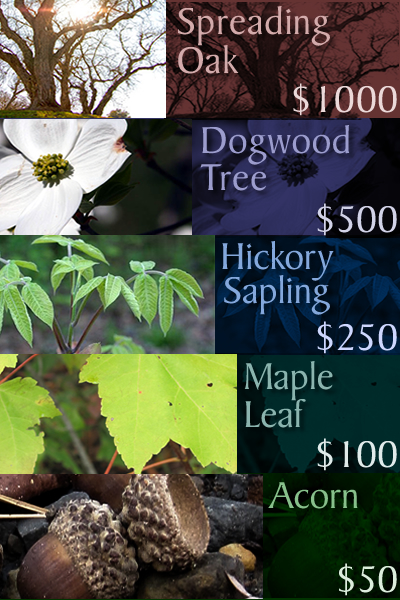
Levels of Support:

South Fork Nature Center Contribution Levels

Any amount is appreciated!

Questions? Please call 501-745-6444 or send us an e-mail at grf@artelco.com.