Announcement! Outdoor Pavilion Groundbreaking


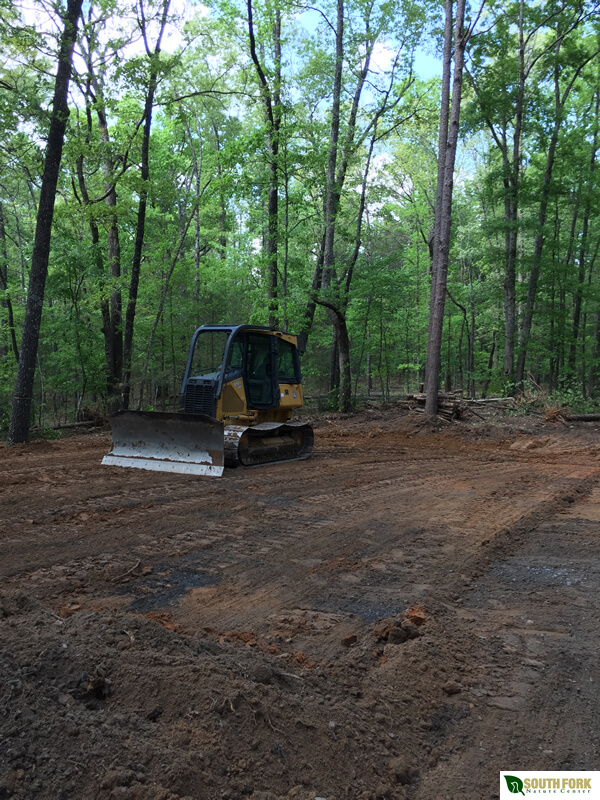
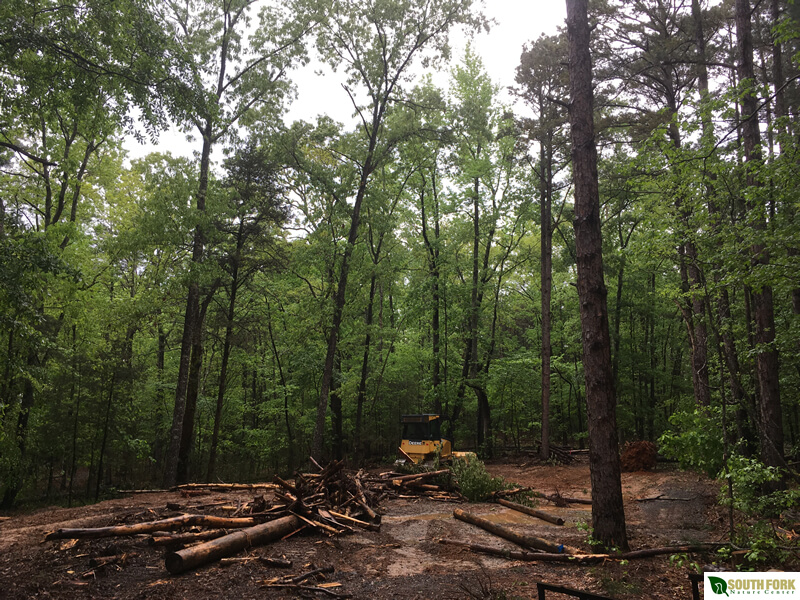
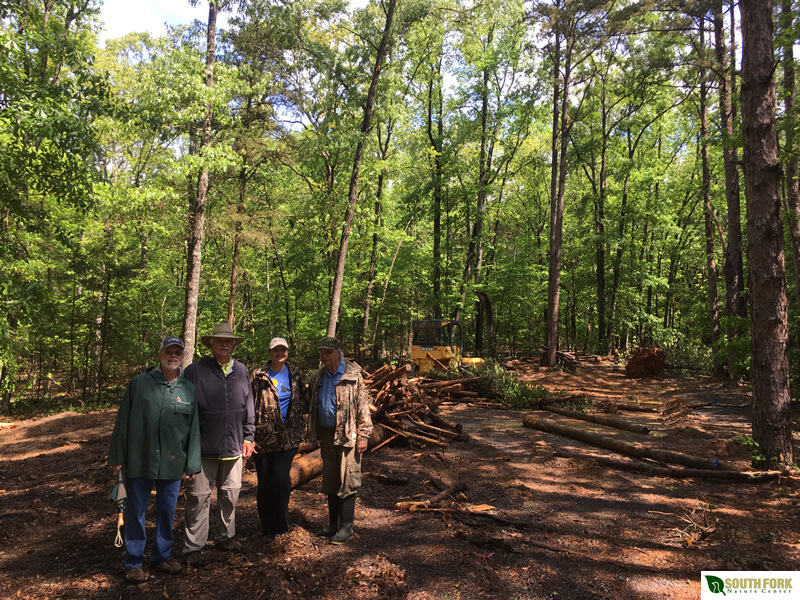
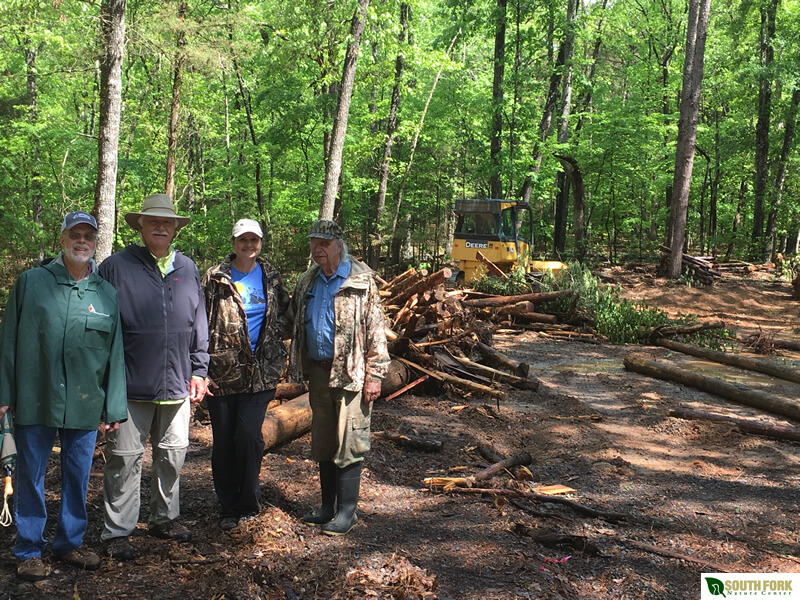
We have some exciting news to share! As part of the Sustainable Rivers and Forest Initiative with BHP Billiton announced last October, a new outdoor classroom pavilion is under construction at the South Fork Nature Center for the community to use.

Builders broke ground this week and expect to complete the project by this fall. The Nature Conservancy and BHP Billiton are both committed to identifying large-scale conservation opportunities and business strategies that enhance the resilience of our natural environment and improve community livelihood. Stay tuned for details about a dedication when the pavilion is complete this fall!

Read more: “Cheers for Greers” & the BHP Initiative →

Master Naturalist Trail Study

Bob Verboon

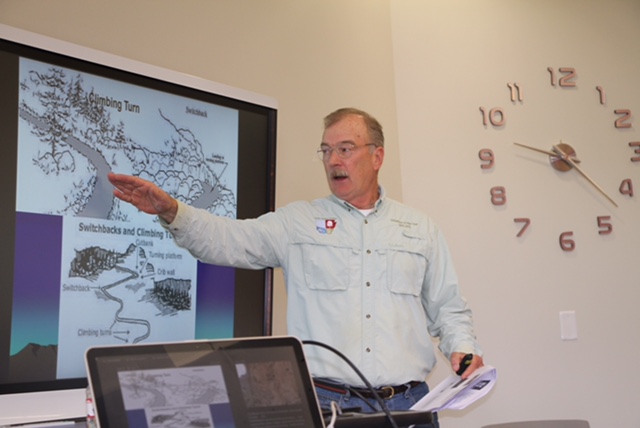
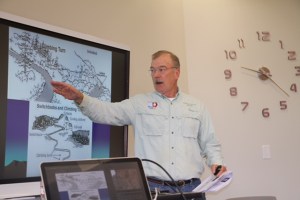
On Saturday, March 25th, the Foothills Chapter of Arkansas Master Naturalists met in Clinton for training on Trail Construction and Maintenance. The day started early at the Van Buren County Library with a presentation by Roy Stovall, Trail Boss for North Central Arkansas Master Naturalists. Roy has hiked and studied trails in the United States, Canada and other parts of the globe and brings a lifetime of experience with his training program on Trail Science. Roy and his “Trail Patrol” construct and maintain over 50 miles of trails a year in the Bull Shoals State Park, Norfork Lake, Leatherwood Wilderness and surrounding areas. He is an active hiker and is involved in forming a chapter of the Ozark Highlands Trail Society. OHTS is the volunteer organization that built and maintains 230 miles of the 240 mile (as of 2017) and growing Ozark Highlands Trail, and pioneered the 15 mile Ozark Highlands Trail Lower Buffalo Wilderness Route in northwest Arkansas.

Normally, we wouldn’t think of a trail as a part of our wilderness experience needing much thought. We just need to follow a wildlife trail, right? However much pre-planning is needed before construction begins. When you start thinking about specifications for switchbacks, sheet flow, grade reversals, knicks, rolling grade dips and water bars, we quickly realize that a lot of planning needs to go into the construction of a trail. Gravity is a natural force that determines which way the dirt and water flow. A good rain can destroy a trail quickly, or make it impassable for a period of time. Gravity has a partner: the critter. Critters include pack animals such as mules and horses, pocket gophers, humans, bears, deer, cows as well as others that use the same trails. Critters burrow and plod through the tread (trail). Trail strategies are only as good as understanding the critter’s mind. Trail construction requires good teachers and experience to lay out and design sustainable trails. Roy is one of the best.

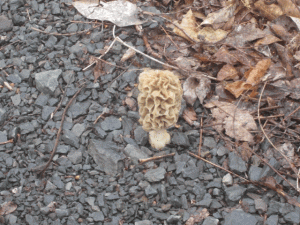
Then we have maintenance of these trails to contend with. The “Naturalists in Training” continued the day at South Fork Nature Center, where we met up with Bob Hartmann, Vice president of South Fork. Bob stopped his activity of moving logs around to take time to point out some of the flora and fauna at South Fork. Over 500 native species of plants have been identified and documented on the 75 acre preserve. We even ran across some Morel Mushrooms on one of the trails. And yes, we also have a few invasive species at South Fork, so some of the NiTs used their limb loppers to remove new growth from the trail.

Roy demonstrated some of the equipment used for trail maintenance such as limb loppers, leaf blowers, chain saws, as well as tools for chopping, grubbing, digging and tamping. He finished the day by making sure each student had a copy of the “Trail Construction and Maintenance Notebook” by the USDA Forest Service.

The Foothills chapter is the newest of the 7 Master Naturalists chapters in the state. The chapter draws members from Clinton, Conway, Russellville, Heber Springs, Fairfield Bay and Greers Ferry areas.

The course for “Naturalists in Training” concludes with graduation on May 6. The application form for next year is available on this web page:

http://wordpress.arkansasmasternaturalists.org/how-do-i-join/.
(Scroll down to “FAMN”)

  • New NiT classes will begin again in January 2018.
  • New members have a lot of fun learning about everything from rocks to plants and animals found in the Ozarks.
  • Experts teach classes in eco-regions, geology, astronomy, mammals, interpretation, entomology, herpetology, ornithology and botany.
  • Lessons also include practical skills like stream monitoring and trail maintenance.
  • You do not have to have a college degree to participate. Everything you need to know to be an active member will be provided during the training.
  • Students receive a certificate upon completion and must complete 40 hours of volunteer work and 8 hours of advanced training before December 31st to maintain membership in Master Naturalists.

See Also: Foothills Master Naturalists: What is an FAMN?

Spring Training at South Fork

“It was one of those March days when the sun shines hot and the wind blows cold: when it is summer in the light, and winter in the shade.”
~Charles Dickens, Great Expectations

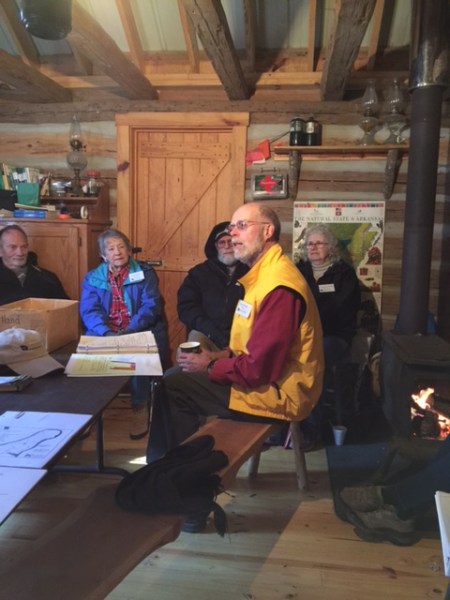
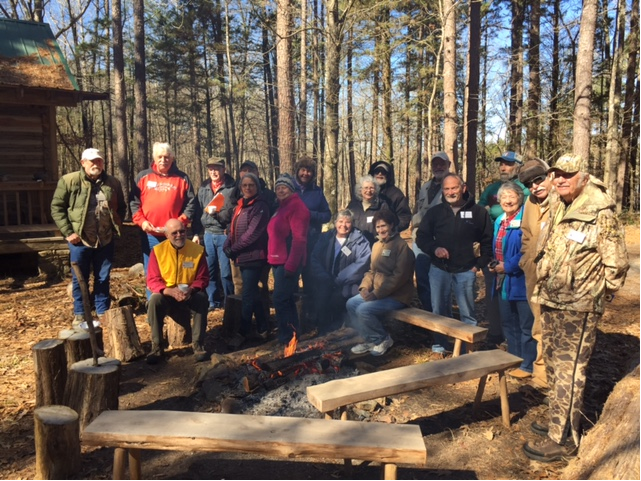
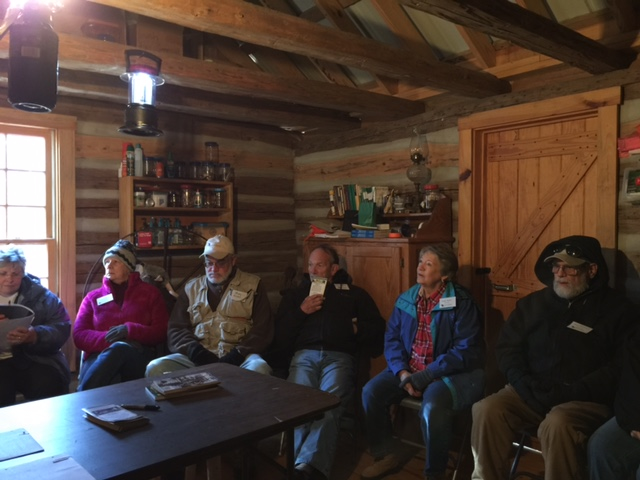
It was a cold, crisp morning (nearly freezing) a bit before nine when 19 docents and South Fork workers gathered for coffee and Dutch oven cakes around the blazing fire in the pit before the Riddle Cabin. It was time to gear up for the coming spring classes of students expected at SFNC as they spend the day stamping out the “Nature Deficit Syndrome” (no cell phones allowed). Don Culwell passed out the new Docent Manuals detailing procedures and ideas to use with groups of all ages as South Fork comes alive showing off the woods, the lake edge, the larger animals, and the butterflies that are anticipated in the glades newly managed for milkweed populations.

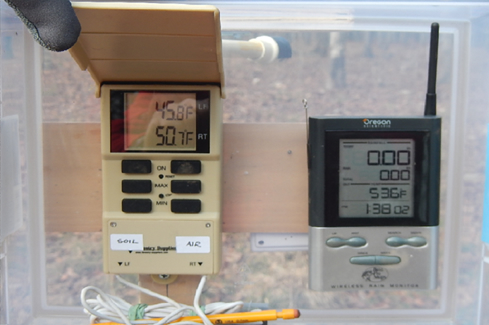
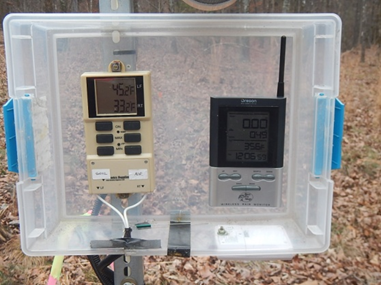
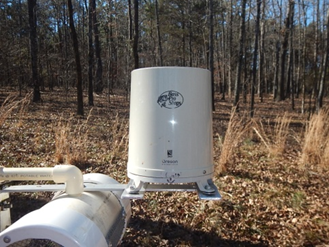
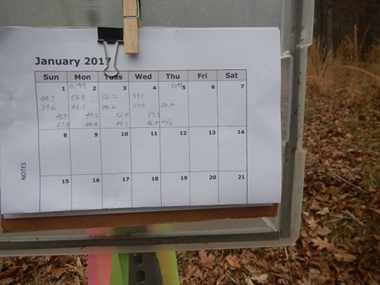
Marc Hirrel gave the group instructions on using and recording data at the new weather station that he and Suzanne had just donated and installed; air temperature, ground temperature, and precipitation are recorded daily each week. On the trail back to the cabin they led an exercise that can be done with groups using CO2 concentrations stated from 1800 to the present noted beside a time line along the trail; the question asked at each stop, after a reading and a given CO2 concentration, was “is this science or policy?” (Time line graphs of CO2 concentrations were drawn from data that was given at each stop.) So, just what is global warming, anyway?

Janet Miron, the new president of GRF (SFNC Board) challenged docents in their work and spoke about new developments on the grounds, namely a large outdoor classroompavilion enhanced for student use that is about to be constructed at South Fork.

Use of the cabin facilities and contents (even lighting of lanterns) was discussed pointing out the use of ID manuals, binoculars, scopes, collections of dried fruits, etc., as groups gather during the year to learn about the environment.

After filing one’s coffee cup several times during the morning from the old porcelain pot, the group broke up just after 12:00. Another fine day in nature!

Winter Birds!

Winter Resident Birds you may like to see at SFNC – NOW by looking closely and listening well.

Bob Hartmann, SFNC Docent

There is a good chance that you may catch sight and/or sound of these three look-alike ‘goldys’. They are small and some are about ready to spruce up in their spring plumage. The season is unduly early and food supply is responding too! That means treetop buds, booth flower and leaf, are becoming prime food for ‘picking’ particularly in red maple and winged elm.

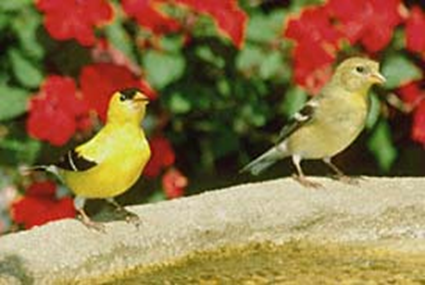
Goldfinch
Goldfinch this time of the year travel in social ‘flights’, groups of a dozen or more and they may ‘chirp’ together while feeding or on the fly. Both males and females look very similar now during the winter months; their paired white wing bars make them easier to recognize. Males become fully ‘decked-out’ in bright yellow and black as the breeding/nesting season starts.

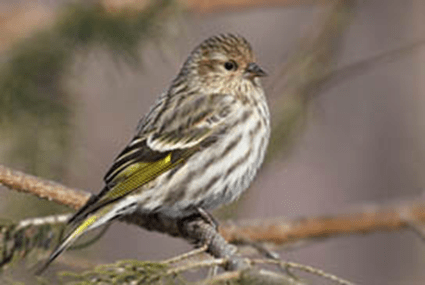
SiskinCurrent Goldfinch groups frequently have a few ‘tag-along’ closely related Pine Siskins. They similarly have two wing bars but theirs are distinctly yellowish rather than all white. Backs and breasts have bold streaked in various tones of brown. Males have a distinct yellowish wash during the breeding season and they communicate with a shallow ‘zzzip’ rather than a Goldfinch-like “chip”. They too may travel in ‘flights’ and generally have a preference for areas with pine trees.

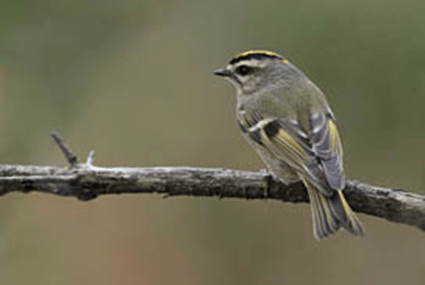
KingletThe other yellow bird at SFNC is the Golden-crowned Kinglet. It is noticeably smaller than either the Goldfinch or Pine Siskin. There is a single bold, white wing bar, gray body with a very lite yellow overtone, a dark gray bar through the eye and around the crown centered with a yellow to ‘orangish’ bar. Therefore – the Crown. Preferred habitats and foods are much different to that of the other two birds. This bird’s movements are quick, short and frequent among the rocks, bluffs, underbrush and understory of lakeside trees, above the panicle’s northwest shoreline. Preferred food appears to be ‘motes’ – items far too small for the human eye to see even with binoculars. Just before a foraging bird takes off there is an almost inaudible, truncated chirp.

Spend an hour or so some pleasant morning or mid-afternoon at SFNC on a quiet day to find and experience each of these “Yellow Birds”! I am confident you will hear, see and enjoy these birds as well as other SFNC resident and visiting wildlife.

A Day in the Life of a Nature Center Volunteer

A short story about enjoying and maintaining the trails at Southfork Nature Center: Leaf removal

Phil Wanz

“…Many people wouldn’t understand why, on my only day off, would I be out working away my afternoon. In many cases if people ask that question, they wouldn’t understand the answer. For me, I can think ahead, all the young children who will be walking these paths, they won’t know who or even think about somebody who blew all the leave off the trails, but I know…”

To get to the nature Center, Larry Price and I drove I-40 to Morrilton and took the hwy 9 north exit. For me this has always been a very scenic drive, through many twists and turns. We made our way through the town of Solgohachia, I have wanted to stop here many times and take photos. We arrived at Choctaw and crossed over hwy 65 onto hwy 330. Before we knew it, we were parked by the cabin at the Nature Center.

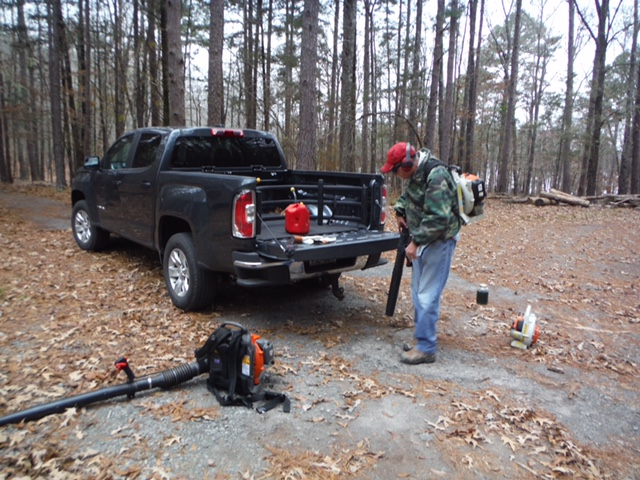
We quickly unloaded a bacpac blower and one handheld blower. In the cabin we got out another bacpac blower Larry was going to use. We decided to start on the most used trail, he went one way, I went the other. It was slow going at times with very deep layers of leaves that took many attempts to blow off the trail. Also at the bottom of some piles was a heavy mat that resisted being blown away. Other places it was much quicker going.

South Fork Trail Maintenance - Leaf Blowing

I soon met up with Larry, with the lake on one side and a pretty glade on the other. I saw Larry had his handheld blower, he said the other one quit working, bummer I thought. We shut down both blowers and started back towards the cabin and more gas. I asked Larry, do you hear that high pitched noise, or I’m going crazy. He told me he heard it also, whew I thought. Back at the cabin I suggested we pour out the old gas in the bacpac blower that quit and try it with new gas, presto, it worked. We had to search for a suitable container for the old gas, we finally found an old glass container with a working lid. I realized I still heard the noise, it was coming from me, what the, turns out it was my camera. Larry suggested to take out the battery and of course the noise stopped.

Another note I want to bring up, Larry forgot any type hearing protection. I was happy to tell him I brought two ear muffs. Me, I wore ear plugs plus the ear muffs. If you attend a event such at this, bring ear protection for yourself and maybe extra. if you have it, for others. I try to always have extra gloves also, hats, water etc…

We got both blowers going again and started up another trail, this time he was in the lead, I followed. I was able all during this to admire the many beautiful sights. All this time rain was wanting to fall but held off (it drizzled on us driving to the center.) I ran out of gas while Larry pushed on. We got back to the road, turned off Larry’s blower. I joked that he got better mpg with his then the one I had. Mine was pushing out at 40 mph while his somewhat less. As we walked back to the cabin we talked of many things.

One was how many people wouldn’t understand why, on my only day off, would I be out working away my afternoon. In many cases if people ask that question, they wouldn’t understand the answer. For me, I can think ahead, all the young children who will be walking these paths, they won’t know who or even think about somebody who blew all the leave off the trails, but I know, and that is the key to the understanding of why.
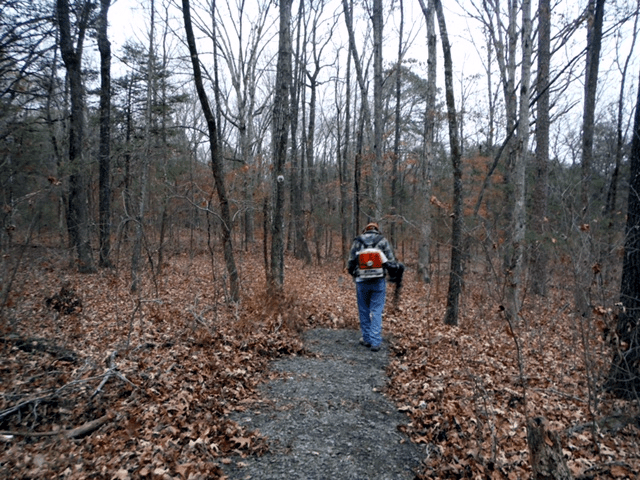
South Fork Trail Maintenance - Leaf Blowing2

As we packed up, secured the cabin, a drizzle started which on the drive home turned into heavy rain. We had to very carefully pack that glass container, Larry joked it was like packing nitro, yikes I thought, wouldn’t want that in the back of his truck. He got it tied in and boxed-in so it wouldn’t move. As we started back the day was beginning to fade. We made our way through Solgohachia in the dark. Back on the great I-40, it quickly got us home. I know Larry will agree with me, a great time it was, good fellowship and we can pat ourselves on the back for a deed well done.


A look inside our efforts…


• Public walking trails (2 mi.)
• Nature appreciation programs & Docent-Guided Tours, Spring-Fall
• Historic conservation (Almeda Riddle cabin)
• Habitat initiatives (Pollinator meadows & Milkweed cultivation)
• Data collection for plant & animal species & climate records
• Outdoor Classrooms & Field-Based Education Framework
• Regional school outreach
• Annual Greers Ferry Lake shoreline cleanup (Sept)
• Annual Butterfly release (Spring)
• Building partnerships with regional conservation initiatives
• So much more!

Interested in pitching in? Get a little exercise & fresh air, get to know more about the nature programs in action, and help the trails & facilities in tip-top shape! Ask about docent & volunteer opportunities. 
Weather Station Upgrades

We’re a little proud of our new & improved Weather Station!
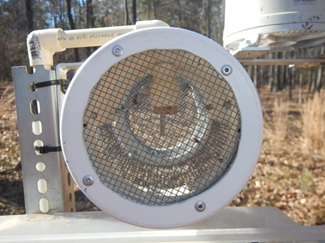
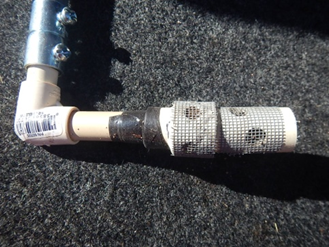
It’s been moved to a new location. The sensors are now attached to an aluminum frame and the wiring for the soil thermometer is enclosed in metal conduit to prevent fire damage. The new location is between the NE most milkweed plots because of good milkweed stands last year. Instructions on how to record weather data are attached to the data clipboard. The GPS location is N 35⁰ 33.436 W 092⁰ 22.820.