We’re Branching Out

by Janet Miron

South Fork Nature Center’s Educational initiative is moving in new directions this spring. We have hosted many classes at SFNC in the recent years. Our docents, along with area educators, have offered many hours of educational outdoor classroom instruction and adventure. We hope to continue making a difference in the scientific education of area students, as well as enriching their experience in nature’s classroom, by crossing the curriculum through combining nature with journaling and art. We strive to work with our visiting classroom teachers to align the SFNC programs with state frameworks. SFNC’s docents include several licensed teachers and university professors as well as many professionals from all walks of life.

This year we are hoping to branch out our educational endeavors by applying to become an “Approved Professional Development Provider” with the Arkansas Department of Education. This will allow us to offer courses to area licensed educators enabling them to receive credit toward the minimum annual requirement of CEU for licensure renewal. This is a lengthy application procedure but preliminary work has started. Our initial areas of interest for this endeavor will most likely be botany, environmental science and incorporating field research/discovery into classroom curriculum.

SFNC is also researching a new area of education that we feel the local communities will embrace and benefit from. We feel that the docent staff and facilities at SFNC could help support field research at Community Colleges in the area. With almost 50% of the undergraduates in the United States starting in Community Colleges, early undergraduate, natural science field research experiences could help direct more undergraduates into the science, technology, engineering and math related professions. This is also in the early stages of planning. We are initiating contact with our local community college professors to see if there is an interest in field studies and research.

The SFNC staff of docents and board members strives to keep current of all the changes in the diverse areas of natural science education. Our efforts to support education in our local communities are never ending. We’re excited about our new directions and hope to continue being a great resource for area educators.
March 21: Spring at the Nature Center

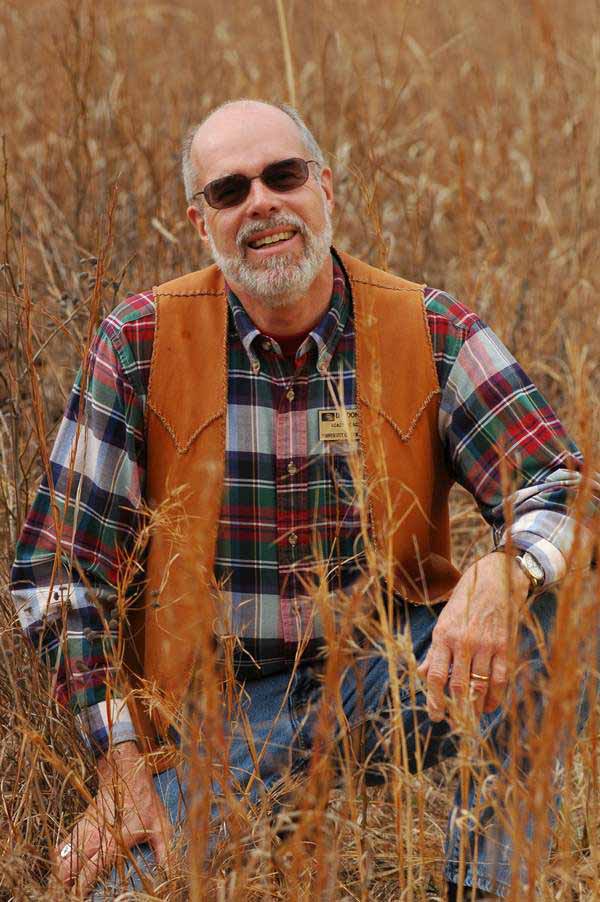
Dr. Don CulwellSPRING IS HERE?? MAYBE!
The South Fork Nature Center forest is alive in spite of a bit of ice and snow, alive with chemical processes, processes of decomposition, processes of reproduction…some of the forest’s life happens unobserved by the casual observer. But, WOW, some bits of life in the forest are bustling with activity right now! Join Retired Botany Professor Don Culwell at 9:30 AM on March 21st at the Riddle Cabin for coffee and hot chocolate to wash down some Dutch oven peach cobbler. Drive through the iron gate front entrance and follow the signs to the cabin. We’ll see you there.

The Mighty Oak…The Magnificent Moss

by Don Culwell

As I walk along the trail cut into the side of the steep hill among the farkleberry shrubbery, I take note of a few dried, blackish-blue berries the size of my well-worn pencil eraser…they catch my eye; few hungry mocking birds or straggler cedar waxwings must have alighted here…maybe the fare was better on down the peninsula nearer the lowland and the water.

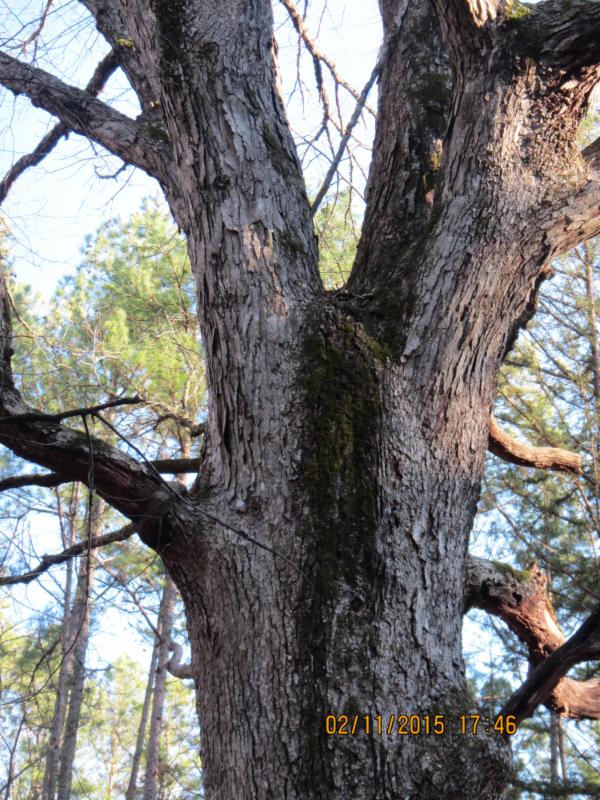
Anyway, there’s a tall, white oak well anchored at the trail’s edge here…its stout, majestic ashen-white limbs of bark covered wood cells arch gracefully into the forest, as oaks do, away from the trunk…I must stop. Some species of moss has grown a firm hold on that ashen-white bark, its rhizoids (not roots, for they have no vascular tissue) have attached to the bark surface of that mighty oak…rhizoids grow from the moss stem-like branches (not true branches, for they, too, lack vascular tissue)…moss branches bear leaves (not true leaves…)…leaves two or three cells thick. And they are brilliant green in their winter dress after the moisture of the recent drizzle.

I’ve always liked mosses and their miniature plant-like look (I recall placing some moss alongside a few rocks and a small ebony spleenwort fern in a gallon mayo jar for a terrarium back in second grade). I pull out my hand lens and peer into that splendid, green, velvety moss right at eye level on the oak’s trunk. Tiny leaves now become larger so I can indeed see their small midvein and toothed margins…this brilliant green color tells me that moss cells loaded with chlorophyll molecules are busy at work turning light energy of the day into chemical bond energy binding together molecules of carbon, hydrogen and oxygen into some carbohydrate form, a sugar that the moss uses as it grows (or provides a nutritious meal for any hungry snail or insect chewing on it).

The white oak where I had stopped is a vascular plant with cells all stacked up making its roots, trunk, limbs, and leaves conducts water up from the soil and then, too, this vascular system conduct sugars (made by the same photosynthetic process found in the moss)…the oak conducts sugars away from the green leaves where they are made, both up and down, to the growing tree tissues (root tips, stem tips, flower buds, vascular and cork cambia that make more wood and bark). This oak is a massive, handsome tree on the hillside here amid the farkleberries.

The tiny moss, which caught my attention causing me to pause on my trek through the woods, is a dainty, most intricate growth of green just living out its existence so easily, maybe even more so than the giant oak that makes use of (and even needs) much larger root, trunk, branch and leaf structure.

Oh, the grandeur of the woods this time of year! Have you felt it? Have you paused, even for a second, to marvel at the beauty held there in the structure and activities of the oak and the moss? Just stop for a minute and try it today!

Those Magnificent Milkweeds: Food and Beauty

by Don Culwell


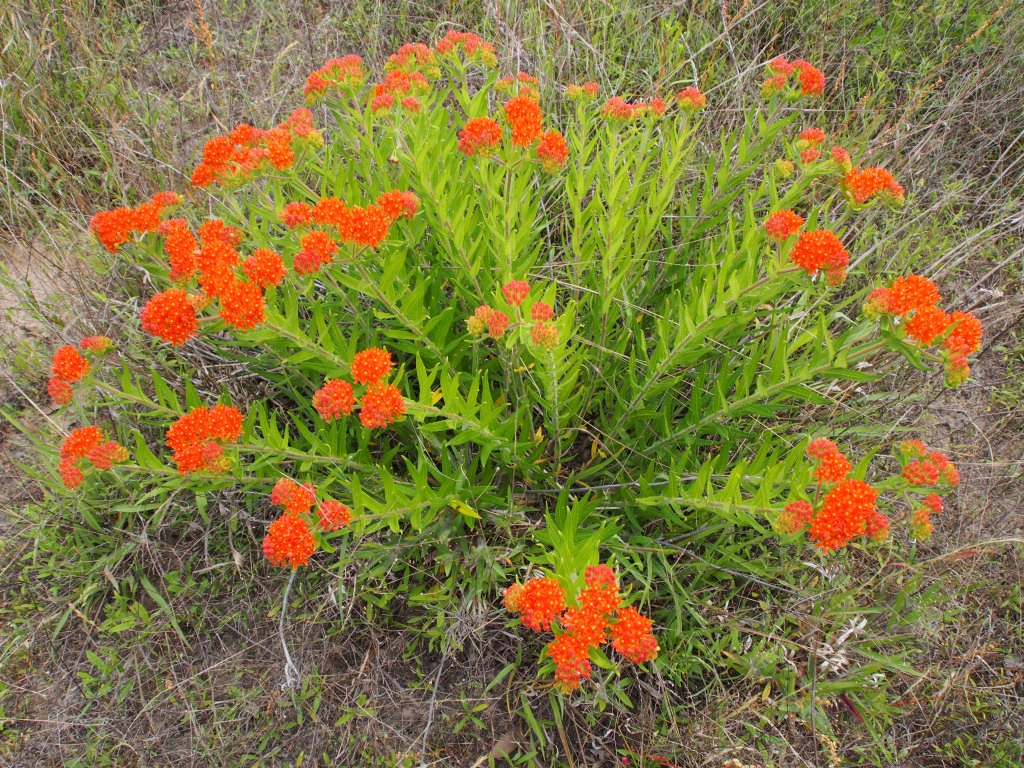
Photos by botanist Brent Baker of the Arkansas Natural Heritage Commission. Milkweed plants will soon be planted as part of the habitat at South Fork.

Beautiful, OH, YES! Certainly for my eye to behold. But food? Not in MY salad, but for a butterfly they are quite the meal…yes!

South Fork habitat restored? Yes, the nearly 10 acres of glade on the South Fork grounds are close to having many of the trees removed, removed to enable light to reach the shallow glade soils where there lies a myriad of seeds ready to germinate under the right environmental conditions. Light on the soil will allow these seeds to break dormancy sending up the young plants of flowers and grasses that usually grow in such areas, areas that are often quite wet from spring rains but tend to dry out during the summer months…what a flower garden we can observe then! Since cedar trees are a species that also grows well in this habitat, many cedar saplings, and a few large, old ones of considerable age, have developed into a forest on this ground that has not recently experienced the low light requirement for typical glade development.

Restoration of the South Fork glades has been possible due to a grant from the U.S. Fish and Wildlife Service. This restoration, or clearing of some of the forest from glade areas, began in November of 2012 and is being completed now in 2015…open soils of our glades will be able to grow the flower and grass flora that we are seeking. Glade flowers are attractive to butterflies which we may see in larger numbers. Other grant monies from the U.S. Fish and Wildlife Service have been granted South Fork to plant several species of milkweeds that will enhance the glade habitat for monarch butterflies (which have a special attraction to milkweeds)…in fact, 500 or more live plants of several milkweed species are on order, and are now being grown, for planting either this spring or early in the fall.

Drawn to milkweed flowers, monarchs will lay their eggs on the plants. Eggs will hatch, larvae will grow into mature caterpillars, produce their pupal stage, and in due time of development, each will hatch out of its chrysalis as a mature adult capable of laying more eggs…so goes the life cycle of the monarch. And it can all occur in the glades of South Fork!

New Year Renovations

Happy New Year and Welcome to 2015!

Restoration work is still going on at South Fork Nature Center, which means more trees being cleared. To that end, the Nature Center will remain closed for walks and tours until further notice. This closure is primarily for guest safety. We will send out an “all-clear” when the logging has been completed.

We apologize for any inconvenience and thank you for your understanding.