A few sneak peeks from our Nature Cam! How many creatures can you spot?

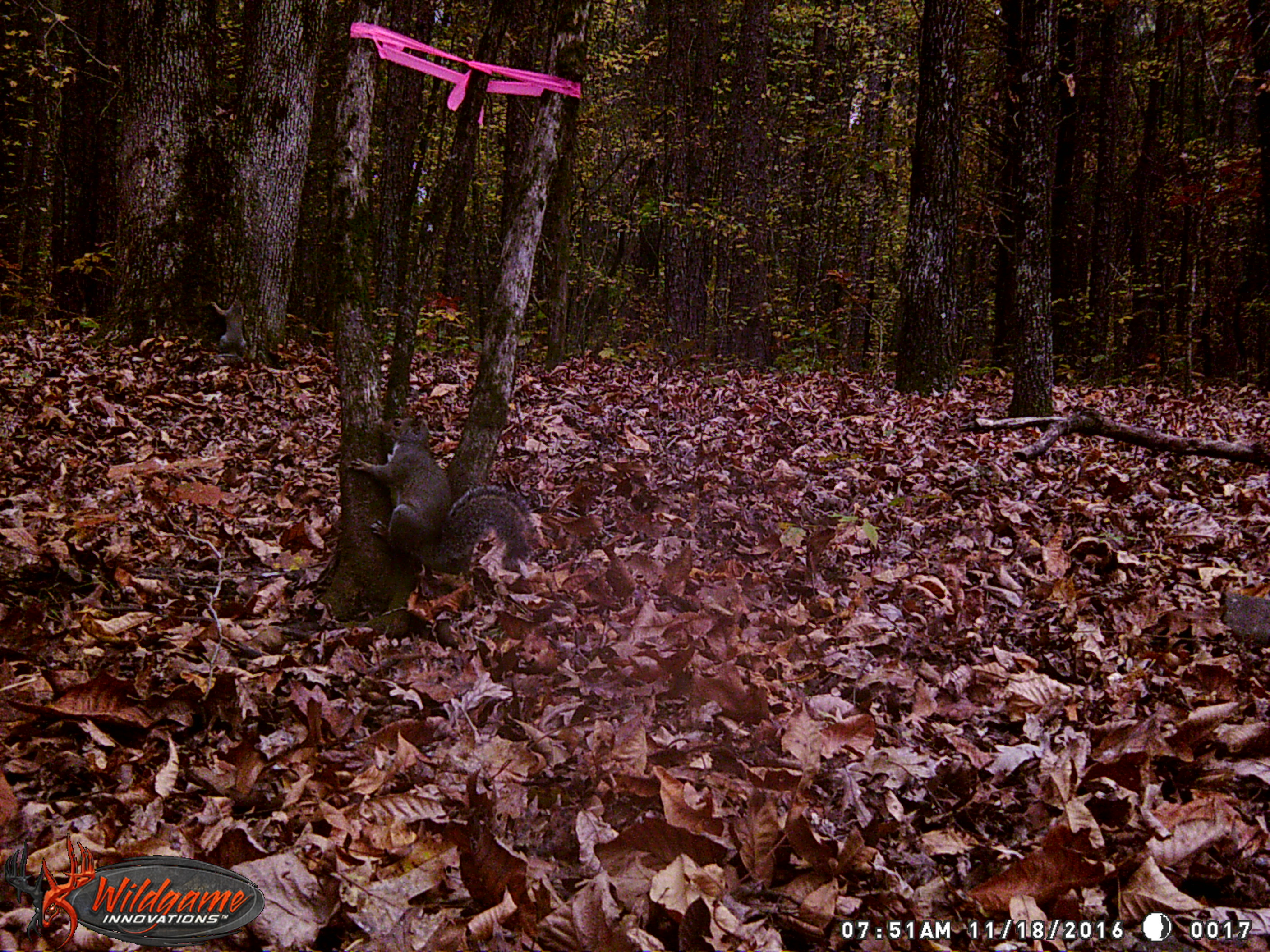
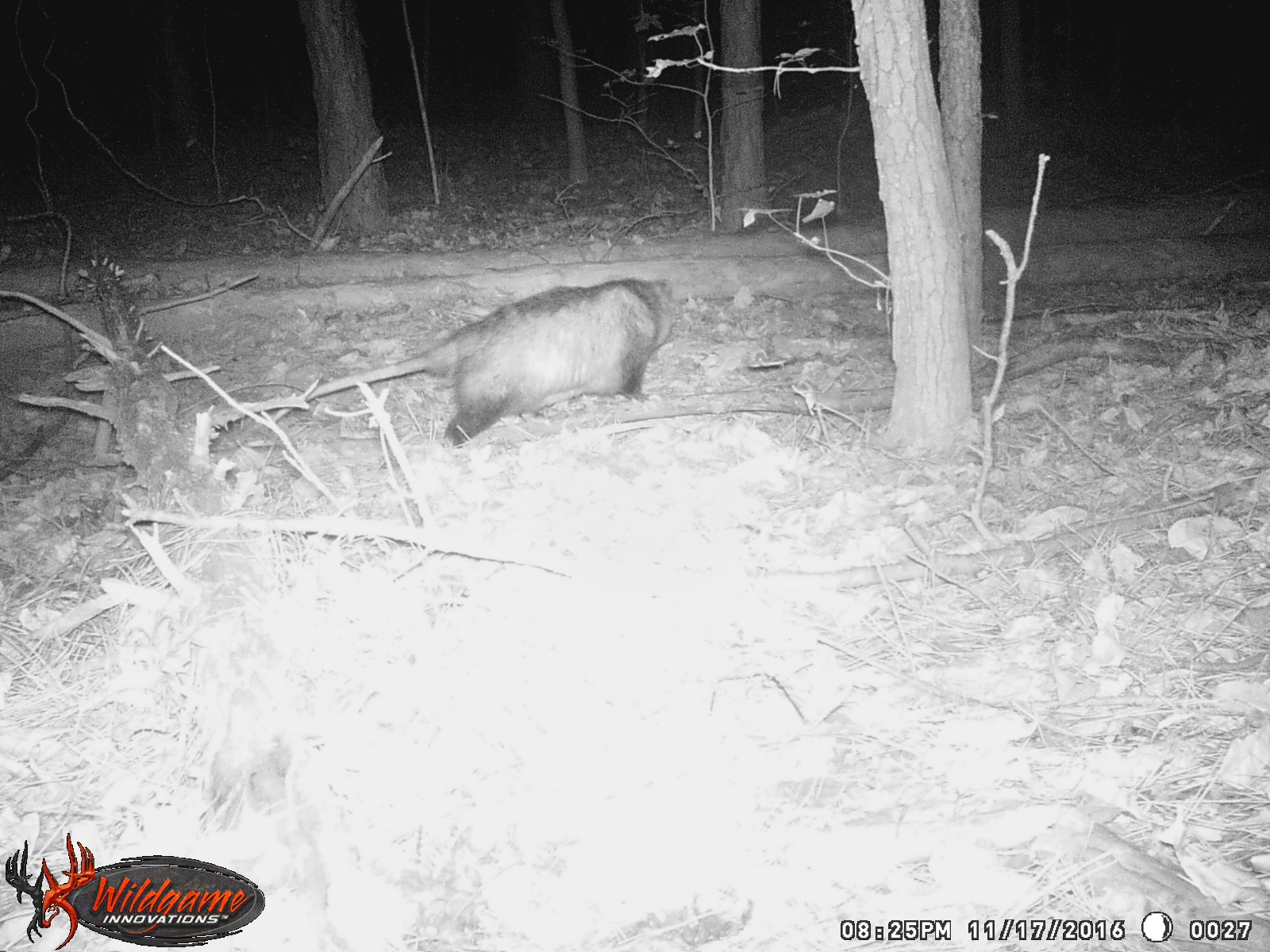


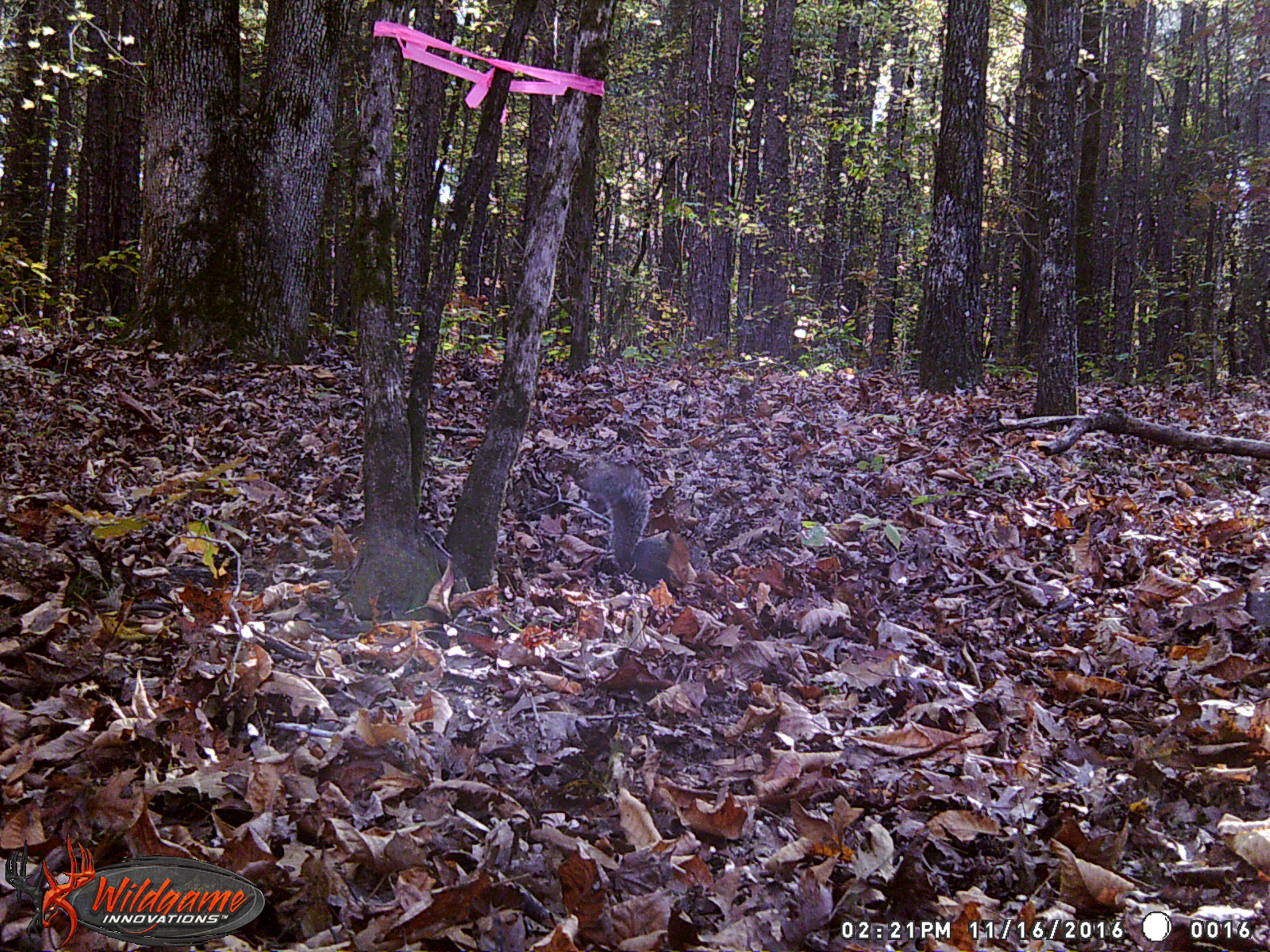
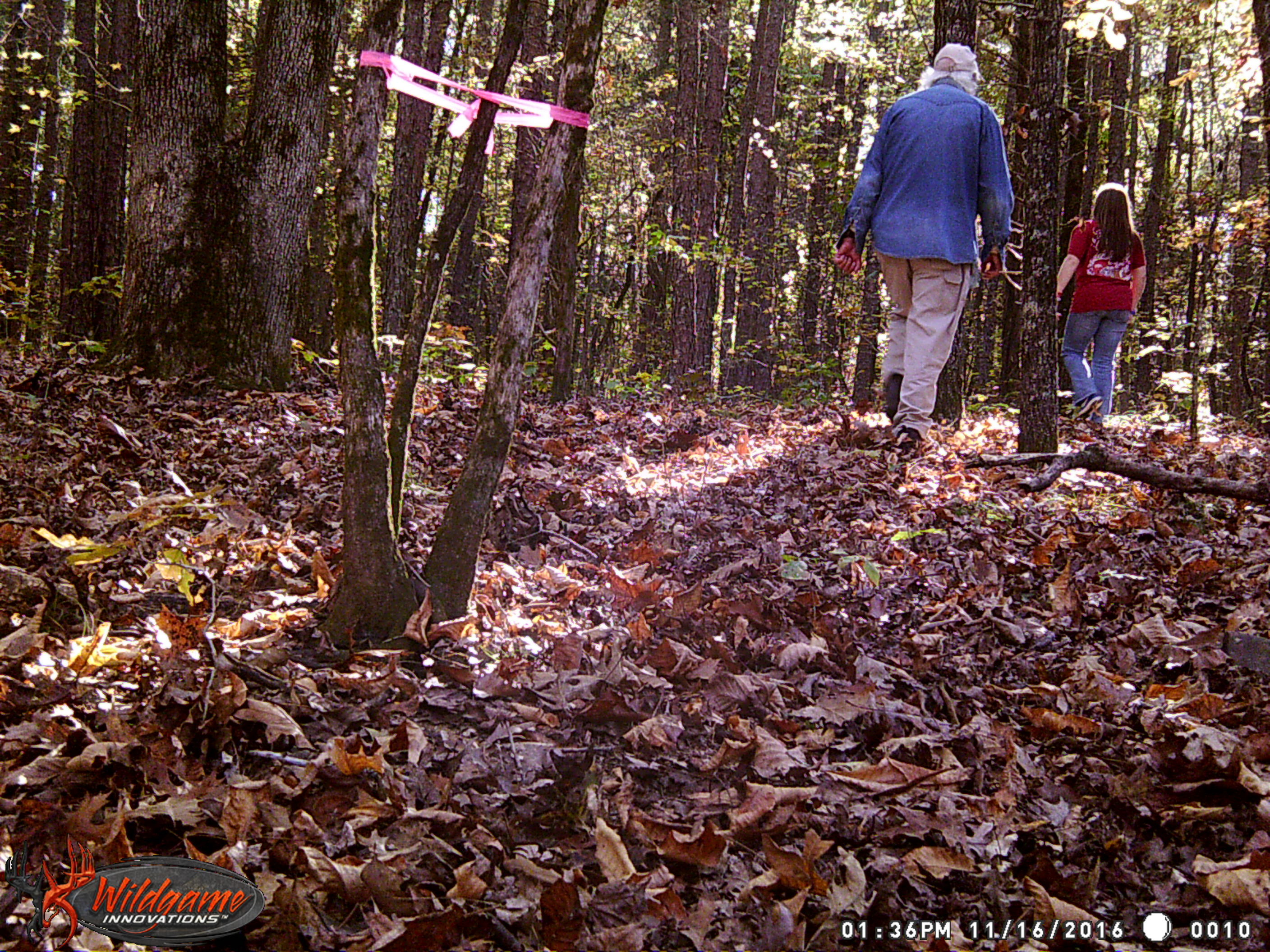
Photo galleries from the South Fork Nature Center
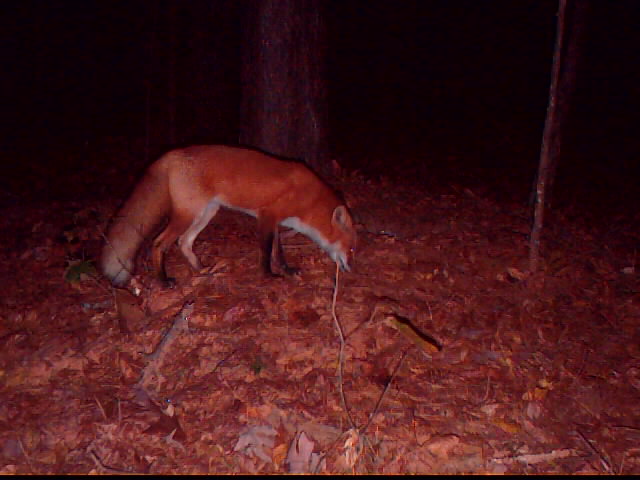
A few sneak peeks from our Nature Cam! How many creatures can you spot?
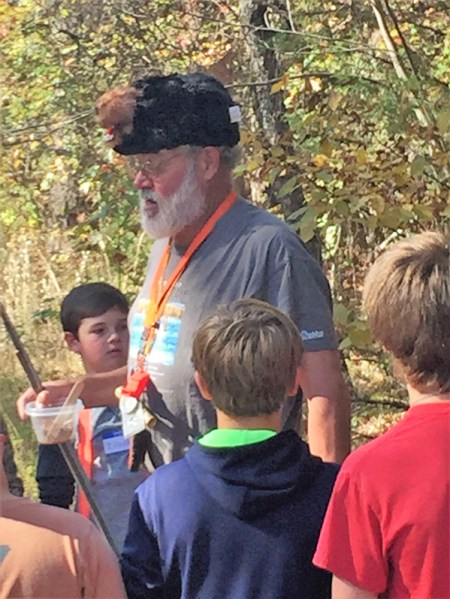

Eighteen middle school science club members, together with teachers Pam Shirley and Amy Evans from Greenbrier School District, visited the Nature Center at South Fork on November 16th. Docent Marc Hirrel PhD., State Coordinator Leopold Education Project, led a “standards based” program including hands-on, field-based study. The day’s program consisted of interactive trail hikes with activities integrating math, science and literature. He was assisted by docents Bob Hartman and Janet Miron.
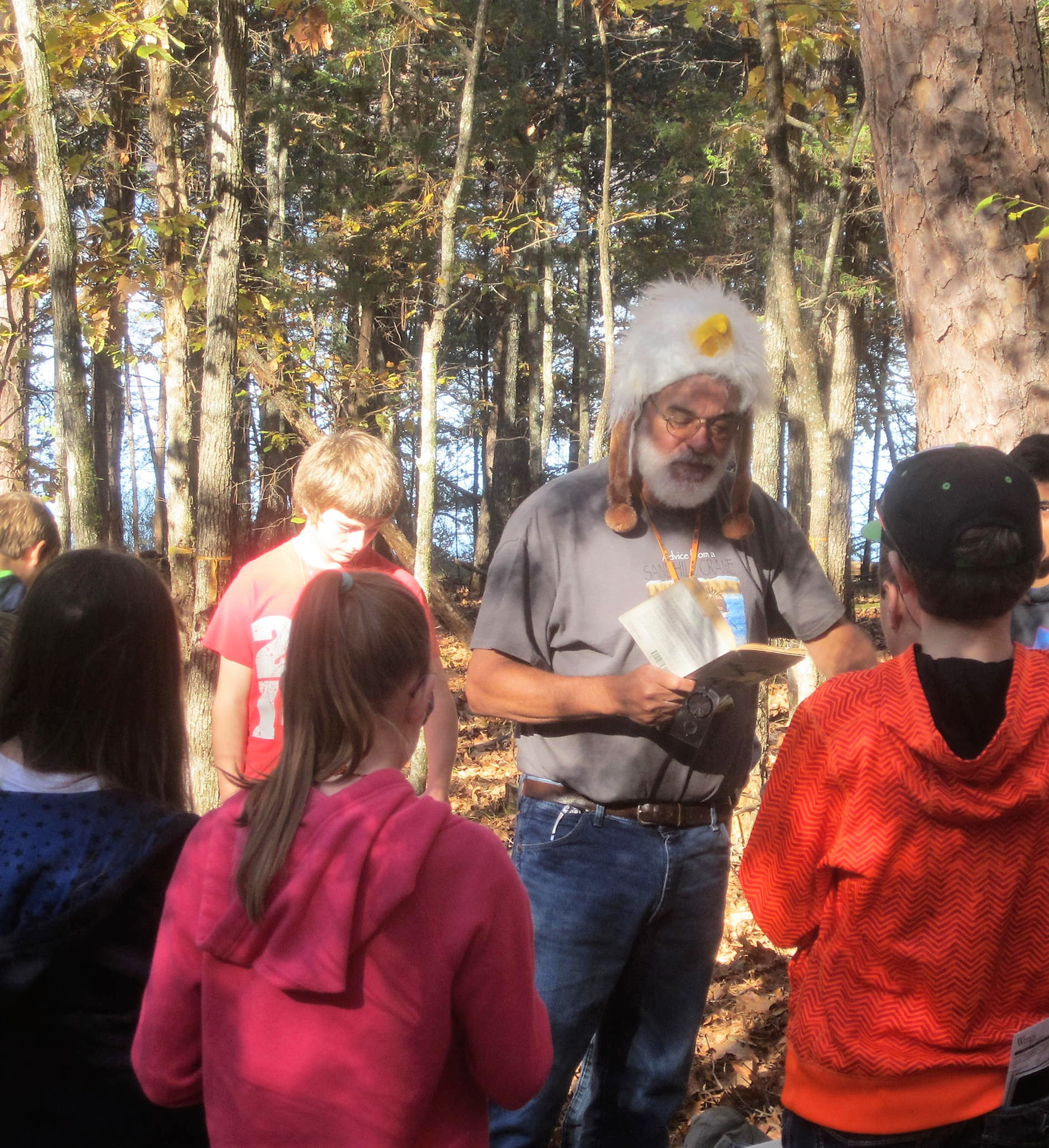
Readings from “A Sand County Almanac” by Aldo Leopold started the students’ thought processes as they created a “Sound Map”.
Further along the trail they created a beaded bracelet while participating in the “Atom Adventure” & “Leopold’s Odyssey” learning more about unhealthy land practices, soil nutrient distribution, concentration of freshwater and saltwater on the earth’s surface and how we can change our land use practices to keep nutrients in the soil.
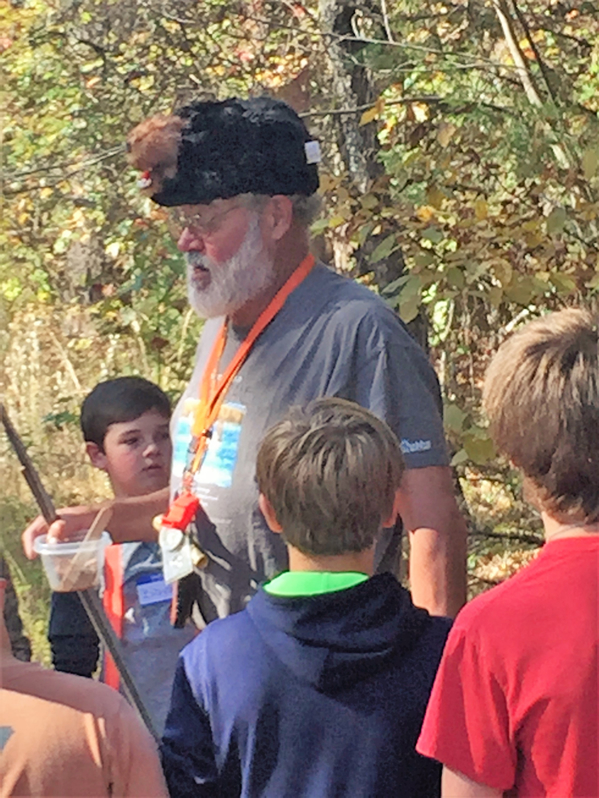
Docent Marc Hirrel baiting the game camera
Students also could reinforce their classroom studies of how herbivores, carnivores and decomposers play a part in the nutrient flow. As the Students continued their hike they were led off the trail to a “Multi-Carbon Pool Site”. They talked about “Carbon Fluxes” such as photosynthesis, respiration, ocean mixing, waste production, burns, dissolves, leaves solution, sequestration, eaten, and breaks down.
At the end of the exercise the students addressed such questions as:
The next activity on the trail hike was the construction of a “Climate Timeline” using data supplied consisting of factual events happening in history. The focus of the exercise was for the students to learn about levels of atmospheric CO2 dating back to the 1800’s and to differentiate the reason for the levels between “Scientific events” and “Policy Events”. The students graphed the historical levels of atmospheric CO2 in their individual workbooks as Docent Marc Hirrel recreated their results on a poster.

The last trail activity before lunch was a visit to SFNC’s weather station. The students collected data of air temperatures, soil temperatures and calculated the differences between the maximum and minimum temperatures. They practiced converting the readings from Fahrenheit to Celsius. A discussion on the differences in air and soil temperature followed.
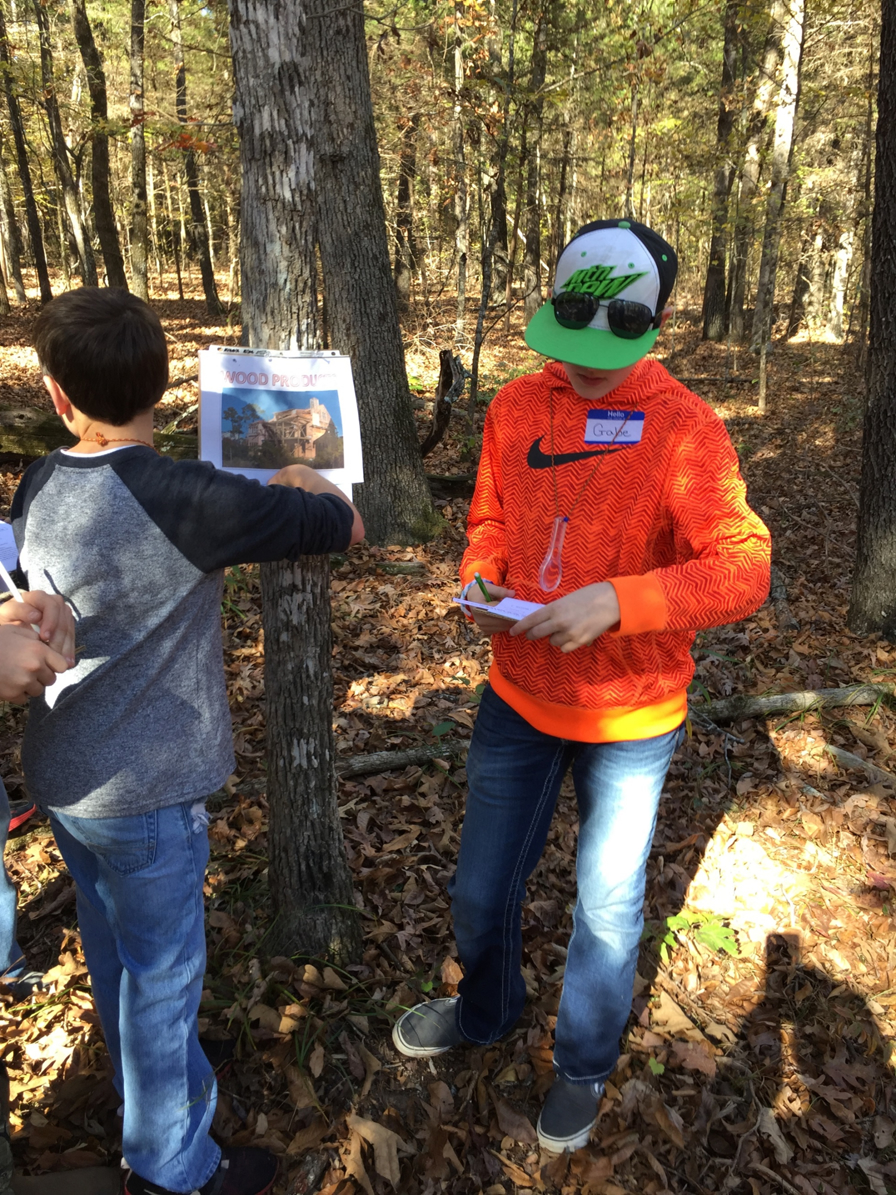
After lunch the students and the docents hiked a different trail back to the waiting school bus. On their way, they stopped to set up game cameras to monitor the wildlife activity at the Nature Center. They hoped to observe different naturally occurring species in their habitats.
We want to thank our docents and the Administrators at Greenbrier School District for approving this field trip for the science club. The weather was perfect, the students and teachers were awesome and the standards-based, hands-on curriculum provided all participants with an interesting, intellectual and fun day outside!
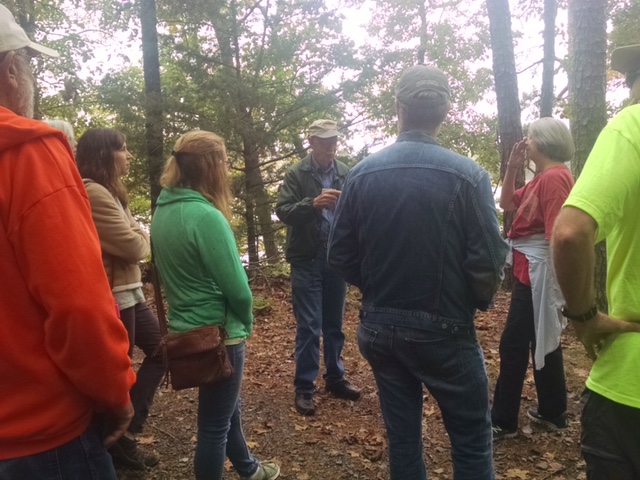
Docent, Bob Verboon
On Saturday, October 15th, eight members of the newly formed Foothills of Arkansas Master Naturalists met at Southfork for a trail walk and tree planting. Arkansas Master Naturalist state president Katherine Becker presided over a brief meeting with the group and then Bob Verboon, Southfork docent and Master Naturalist in North Central Arkansas, covered the history on how the Gates/Rogers Foundation came to be and how Southfork developed into the Nature Center it is today.
The day began with a trail walk led by docent Dr. Jim Solomon. Jim captured the attention of the group with his vast knowledge of both beneficial and damaging insets of the forest. After a picnic lunch, part of the group stayed to plant 10 black walnut trees on the south end of the peninsula. The trees were donated by board member Bob Hartmann.
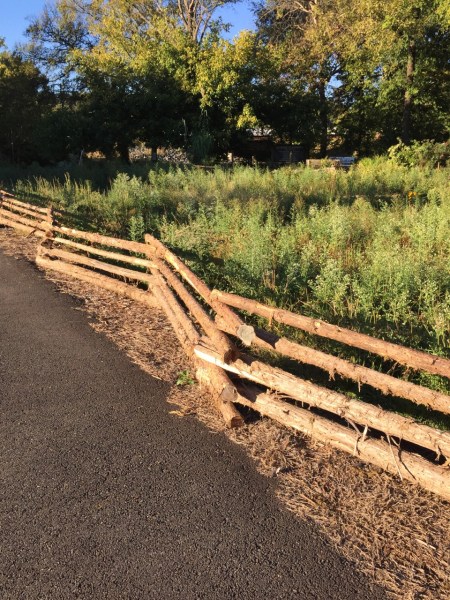
Carol Corning has continued enhancing the Clinton City Park with log rail fencing around the pollinator meadow. Ten foot logs of smaller diameter were cut from wooded areas at South Fork where glade ecosystem habitats were being restored enhancing the growth potential for herbaceous plants at South Fork; here many flowers can grow that butterflies can visit for their needed nectar food supply.


Assisting the in the City Park project funded by the US Fish and Wildlife Service, partners for the Fish and Wildlife Program, on September 9 were Joe Krystofik and Jonathan Baxter from the USFWS, who carried the logs from SFNC to the park. Trips on two different days brought over a hundred logs for use along the park trail. Glade restoration currently in progress at SFNC has also been done through a grant from the US Fish and Wildlife Service.

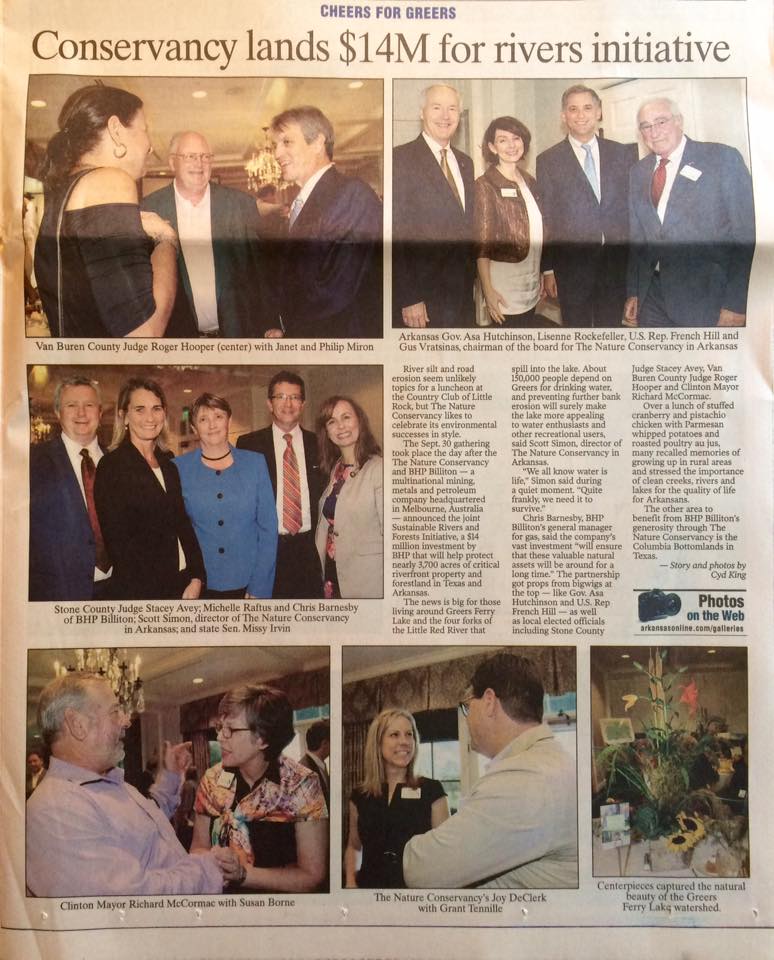
That was the headline of a recent feature in the Arkansas Democrat Gazette, highlighting a Nature Conservancy banquet held in honor of a new partnership with BHP Billiton. Representatives of the Nature Center & the Greers Ferry Lake area were present to commemorate the $14mil conservation grant that will help preserve water quality & habitat in critical areas of Arkansas and Texas. Stay tuned for more exciting news from the hard working Nature Conservancy team!
Joint initiative with The Nature Conservancy targets globally important conservation priorities.
Little Rock, AR | September 29, 2016
Today The Nature Conservancy and BHP Billiton announced the joint Sustainable Rivers and Forests Initiative, which has led to the protection of nearly 3,700 acres of critical riverfront property and forestland in Texas and Arkansas.
Funded by a $14 million donation from BHP Billiton, the program has helped the Conservancy renew conservation efforts near Houston, the fastest growing metropolitan area in the United States, and will enable nearly a dozen restoration and water quality improvement projects to benefit drinking water, fishing habitat and rare species in Arkansas.
“BHP Billiton is excited to partner with The Nature Conservancy on this critical conservation initiative. We look beyond our operations to identify opportunities that enhance the resilience of our natural environment because we recognize that watershed protection through critical habitat conservation has a far reaching impact,” said Steve Pastor, president Petroleum Operations, BHP Billiton.
In 2013, BHP Billiton approached The Nature Conservancy about making a lasting commitment to conservation in the two states. The selected sites, the Columbia Bottomlands in Texas and Arkansas’ Greers Ferry Lake watershed, were natural choices—each area is considered a national conservation priority and the work will benefit both people and nature.
“For decades, The Nature Conservancy has recognized that the private sector has an important role to play in advancing conservation,” said Laura Huffman, Texas state director for The Nature Conservancy. “We applaud BHP Billiton’s leadership for pursuing conservation as a business strategy and for a level of investment that will make a lasting difference in both states. We have a shared commitment to improving our communities and protecting the natural systems that we all depend on.”
In Texas, the Conservancy has purchased close to 1,900 acres of forestland on the Brazos and San Bernard rivers, in a region southwest of Houston known as the Columbia Bottomlands.
Protecting and restoring the old-growth forests in this region protects water quality in the Brazos, San Bernard, and other important rivers and streams. The Columbia Bottomlands are also one of the largest and most important migratory bird stopovers in North America, supporting more than 200 species of birds.
In Arkansas, BHP Billiton’s investment has enabled the Conservancy to purchase 1,840 acres along the upper Little Red River. Located in the scenic Ozark Mountains, Arkansas’ upper Little Red River is home to more than 80 native fish and aquatic species; more than a dozen of them are rare, and some are found nowhere else on Earth. The river also supports Arkansas’ robust tourism industry and is a tributary of Greers Ferry Lake, a source of drinking water for more than 150,000 people and a recreational area for millions.
“The health of Arkansas’ rivers, lakes and streams are dependent on good water quality,” said Scott Simon, Arkansas state director for The Nature Conservancy. “BHP Billiton’s investment will play a critical role in shaping the future of Greers Ferry Lake and the rivers that feed it, not only through the initial land purchases, but through the planned water quality improvement projects in the watershed.”
The initiative will fund nearly a dozen water quality improvement projects ranging from reforestation, stream restoration and unpaved road improvement, which will ultimately serve as demonstration sites. The properties will also offer people from neighboring cities and communities, researchers, partner organizations and schools opportunities to spend time in nature and learn about conservation in these important landscapes.
“Working with The Nature Conservancy ensures that BHP Billiton’s contribution will create long-term value for the community and the environment in these areas of national conservation significance. These investments in Arkansas and Texas provide benefits that will outlast our operations for generations to come,” said Pastor.
In addition to funding important conservation work in North America, BHP Billiton has invested in Conservancy programs in Australia and Chile.
Read more from The Nature Conservancy in Arkansas: http://www.nature.org →
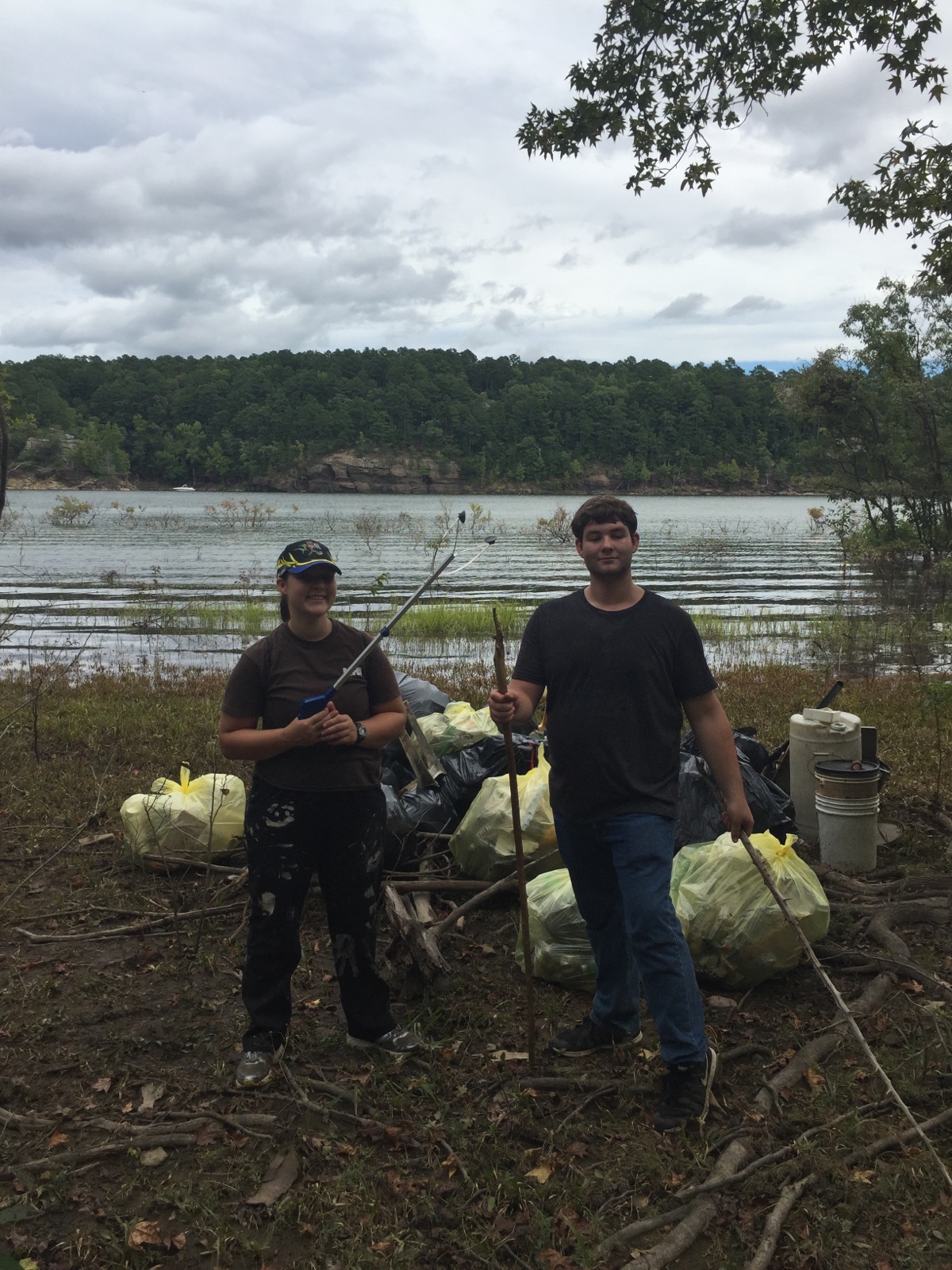
Gorgeous day on Greers Ferry Lake for our double-feature cleanup teamup, at the shoreline & back to the nature trails!
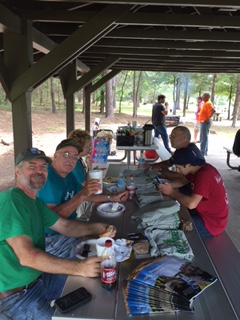
Thanks to the Greers Ferry Lake & Little Red River Tourism Assoc. for keeping this awesome initiative alive, 47 years and counting, and for sponsoring a luncheon at beautiful Choctaw Park on Saturday Sept. 10! Thanks also to Jason Hayes with the Clinton Chamber of Commerce, ECT Web Designs, Phillip Ellis for VBC Clerk, and the great gals at Furgersons Choctaw Marina & the great gals at the Choctaw Park gatehouse.
The Greers Ferry Lake & Little Red River Cleanup is held annually the Saturday after Labor Day. Registration is free and everyone is welcome to join up for a weekend of community fun for an awesome cause! See more at www.arkansasadventures.org.


The after clean up “mini -work day” at SFNC was a success. Trees and brush were cut by Don Culwell, Philip Miron and Kendall Goff. Leslie Goff spent the time weed-eating the parking lot and trails. Julia Goff, Quentin Goff and Janet Miron spent an additional 3 hours cleaning up trash at the nature center. All and all a total of approximately 25 additional volunteer hours were added to morning clean up hours for a total volunteer hours of approximately 65 hours for the day. Thanks to all the board members, docents and friends of South Fork that came out to help.
 South Fork Nature Center
You must be logged in to post a comment.