“The Miniature Moss Forest”

by Don Culwell, SFNC docent

Most all of fall’s color has faded, many leaves have fallen or have been driven downward by the wind, and few living blades seem to be around anywhere…it is what some may call the “dead of winter.” These days are the times when it is exciting to be outside on a pleasant, sunny day looking at the mosses and lichens that are all alive and well.

Without the major green leaves of the forest and the grasses and forbs along the path or in the glade, one can more easily find the little hummocks of green that are mosses or the colorful lichens on bare soil or rock surfaces…they show up now. Bark surfaces of trees provide a place for the microscopic moss spores, blown there by the wind, to germinate and grow into long, branching threads we call protonema. And they cover the bark on trees everywhere, and even can be seen on the surface of the bare ground and rock producing a greenish cast (almost like that of a coating of green algae) for the critically observant eye. It is from this minute matt of moss protonema that small leaves, just several cells thick, grow on tiny stalks as they make a soft, velvety covering of moss plants, the small stalks bearing clusters or stacks of leaves more obvious to the human eye (or, I suppose, that of the observant skink or turtle, as well)…these green mosses are more obvious than the protonema were. Green moss leaves, tiny and thin as they are, photosynthesize just as any other plant structure with chloroplasts…they are “producers” in the ecosystem, producers that are just “going to town” now in the light of the winter landscape…these leaves are more readily seen in winter, and are of such delicate beauty, especially when seen through a hand lens. Can you spot the tiny teeth along the margins of a moss leaf…and the midrib stands out, too!

So many of these tiny leaves all arranged on each moss stalk gather moisture from the dew-fall, from a mist of the wet air, or from a more drenching rain. (You see, mosses have no vascular system with which to transport water from their “roots” up to these “leaves.”) Water soaked in through the leaf surfaces and the carbon dioxide absorbed from the air provide the raw materials from which the photosynthetic machinery of each cell (powered by light) is enabled to assemble molecules of sugar. And it is this sugar that provides the nutrients for life needed by the moss plant itself. The moss hummock or moss covering of the tree bark grows into the soft, velvety surface that always beckons a gentle touch of the hand…just gently feel it…go ahead!

Do go out and enjoy the bryophyte flora we call mosses…do it today!

Archey Creek Restoration Tour

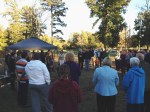
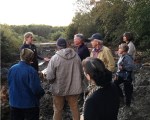
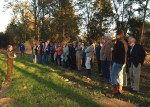
archey Creek RestorationAt the Clinton Area Chamber of Commerce meeting on Tuesday, Oct. 22, the Nature Conservancy team gave a tour of the restoration project which has now passed the halfway mark.

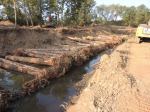
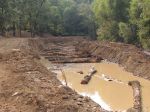
The Nature Conservancy of Arkansas has undertaken a multi-stage stream restoration project of the Upper Little Red River area, headed by Joy DeClerk and sponsored in part by Southwestern Energy. Chamber members and interested residents visited with the team about the process and walked the areas of the stream at different stages of completion.

The conservation work is rebuilding & reinforcing the streambed to prevent erosion & mitigate flooding in the conservation area and along adjacent properties. The improved channel will allow a clear flow to Greers Ferry Lake with reduced sediment.

The program will also focus on replanting the banks with native species and regenerating the eco-system of the river.


<em(Thanks to the Nature Conservancy for photos)

This 3 1/2 minute video shows a time-lapse of a similar restoration done by the NCA team in Garland County.

Read more & see project photos on the Restoration Project Blog:
http://restoringtheupperlittlered.com

Hot time at Downtown Clinton Chili Cookoff

South Fork Nature Center Chili Cookoff 2013
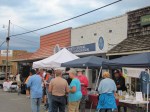
Trish Childers & Daniel Silva at the Chili Cookoff Booth

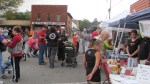
Daniel Silva cooked a MEAN…HOT…Pot of Chili for South Fork at the Chili Cook off Saturday, Oct 5th Downtown Clinton. Unfortunately, it just fell short of winning that trophy. Let’s go for the win next year! Thank you Chef Daniel for all your hard work and those home grown Habanero
Peppers!

A special thanks to Arkansas Bank and Trust for sponsoring South Fork by paying the entrance fee.

Kathy Sherwood

Click here to visit the

Chili Cookoff Photo Gallery →


Greers Ferry Dam 50th Anniversary Dedication

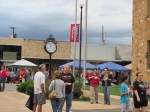
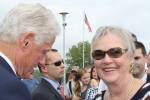
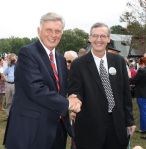
This year marks the 50th anniversary of the dedication of the Greers Ferry Dam by President John F. Kennedy. The dam marked the birth of our beautiful Greers Ferry Lake – the natural centerpiece of Van Buren county. Thousands of attendees joined the celebration at the JFK Overlook in Heber Springs, with music by the 106th Army Band and guest speakers commemorating the event, including Governor Mike Beebe & former president Bill Clinton.

A Florida Sea Shore or Not

Not….considerable fresh water from Greers Ferry Lake laps up on the banks of the peninsula at South Fork, but this is an Arkansas lake shore and not the ocean. A Florida sea shore is much different.

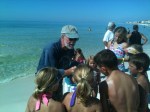
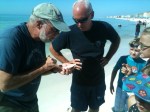
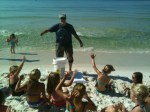
Don Culwell has spent considerable time walking in the surf of the white sand beach around Destin, Florida and he has boxes of beach wrack (shells, mermaid purses, seeds, sand dollars, etc.) that washed up on the beach by action of the tide. This evidence of ocean life tells about yet another ecosystem that is found after a long day’s drive south of Arkansas down on the shore of the Gulf of Mexico.

Don Culwell

Highlights from “The Living Beach” biology class:

  • Mermaid purses: square, black, inflated skate egg cases with a hook on each corner…each purse just had a skate break out and swim away…hundreds of these lie at the high tide line among the washed up Sargassum brown algae, marine worm tubes and shell wrack…

  • Blue crabs, speckled crabs, hermit crabs, ghost crabs…

  • Coquina clams, small, pink, yellow, or cream colored bivalves we see burrow down into the wet sand (a major source of food in the tidal ecosystem), Venus clams of several sorts…

  • Sand dollars all broken into pieces, but one can see “petals” on the tops of the pieces where hair-like tube feet once projected to take in oxygen while other tube feet moved food particles to the mouth opening below…

  • Gastropod shells, thick and strong, are all broken where some hungry crab used its powerful claws to crack into the hard shell for a soft bodied gastropod lunch…

Docent Training, May 18


By Don Culwell

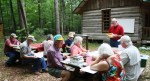
On Saturday afternoon, May 18, South Fork docents who lead a wide variety of activities at SFNC along the trails and at the old log cabin spent time sharing information about flowers, fungi, insects, and such life as is found at the Nature Center. After a lunch of burgers and dogs fresh off the grill the folks that had gathered reveiwed aspects of leading groups like they do at SF by using the SF Docent manual as an informative guideline.

Materials stored in the cabin for use by the docents were examined…these will facilitate their work leading classes and groups coming to South Fork: identification manuals for plants and animals, jars of dry fruits and various skeletons, slice-sections of tree wood, 2 large marker boards, clip boards and pencils, firewood for the old iron stove, first aid kit, name badges, water bottles, bottles of hand sanitizier, a copy of the Master Plan for SFNC, binoculars, dissecting microscopes, hand lenses, a Coleman lantern to light up the cabin on rainy days, and such things.

Docents were encouraged to spread the word about activities they lead at SFNC and recruit interested persons and groups that will join them for their specific activities or walks in the woods along the trails.