Monarch Conservation

SFNC’s Milkweek Project gets Boost for Monarch Conservation

Marc C. Hirrel

The recently held Arkansas Monarch Conservation – Training/Information Session in Conway could not have been scheduled better. It was a resource opportunity for SFNC having made it through the first growing season of our milkweed project. The information and network of agencies both public and NGO will give us time to reflect and plan for next year.

Milkweed flowers - Brent Baker

The November 9th meeting at the Faulkner County Natural Resource Center had six presenters. The experts were split evenly between the butterfly and its plant hosts, specially its brood host, milkweed. Topics ranged from milkweed decline and their species distribution across Arkansas to the natural history and migration patterns of the Monarch.

The Monarch migration miracle lies not in the distance traveled from the volcanic mountain range west of Mexico City to Arkansas and the upper mid-west, but the generational memory embedded in germ cells that pass the route back to a specific fir species in Mexico. The linage of where, when, and how is passed to the 3rd or 4th generation of milkweed feeding caterpillars – the great grand children who never knew their north bound forebears!
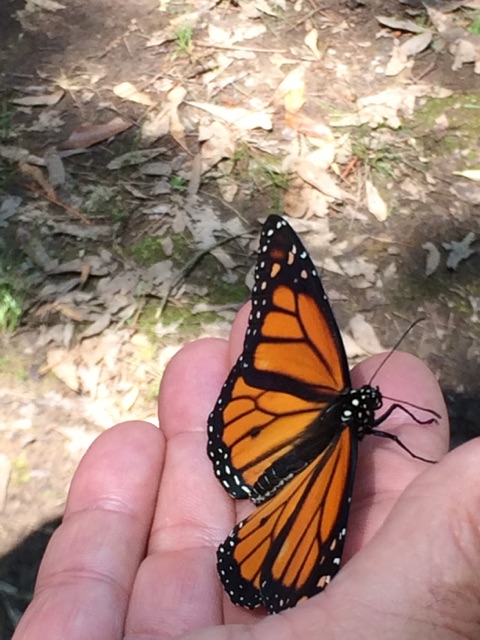
Monarch Butterflies at South Fork in Clinton AR

If the migration message is not etched in the species’ DNA, then this cross generation communication must lie with the milkweed. Only here are parent and offspring connected. The good news is that neither species is endangered from the loss of the other. The bad news is that if the secret of The Return is not conserved, then the migration of the butterfly will vanish.

Conserving milkweeds conserves Monarch migrations. Aldo Leopold wrote,

“For one species to mourn another is something new under the sun.”

He was mourning the loss of the passenger pigeon also known for its migration patterns. Land management practices are to blame. One corridor of concern is along I-35 according to Dr. Jim Edson, monarchwatch.org and UA-Monticello (retired). In Arkansas, Monarch Watch projects are identifying prime monarch/milkweed habitat.

For us at SFNC and our milkweed project, there were two presentations of interest. A milkweed preference study by entomologist, Dr. Donald Steinkraus, UA-Fayetteville. This preliminary work showed that in NW Arkansas, swamp milkweed was best followed by butterfly weed. Avoid planting non-natives like Tropical milkweed, which can vector a protozoan pathogen to Monarchs.

The other presentation by Theo Witsell, Arkansas Natural Heritage Commission, on milkweed species of Arkansas and fall nectar sources. Interestingly, there are about 20 species considered as milkweeds all in the Dogbane family. Most are species of Asclepias (14 spp.); the others are vines and uncommon in the state. Red Ring or white milkweed is one of the more common along with butterfly weed, but it is not a good Monarch host. Whitsell reminds us that fall nectar species are needed for returning butterflies. Tick seed sunflower (Bidens spp.) and late bonset are good fall nectar plants.

Looking for more information? Thanks to The Xerces Society for Invertebrate Conservation, Anne Stein shared some valuable resource material on Monarchs and milkweeds at www.xerces.org.

Photos by Brent Baker.
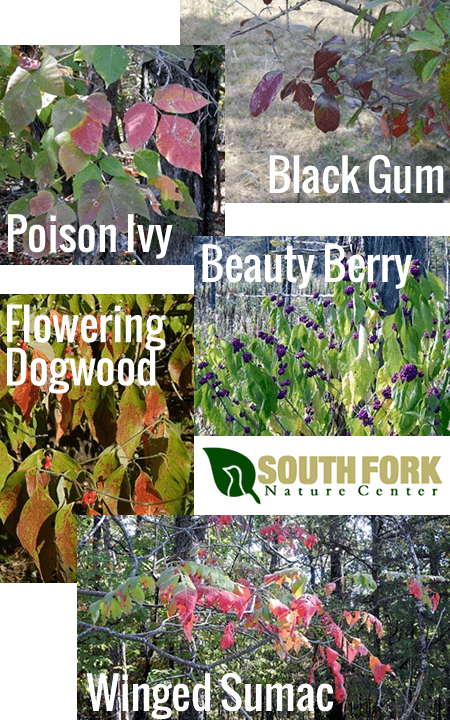
“Red Lanterns” by Marc Hirrel

Marc C. Hirrel, Leopold Education Project

Autumn is the season of the hunter. A good time to venture through the woods of South Fork. Look for red lanterns as you make your way through the yellows, tans, and browns of changing oaks and hickories. Let the red lanterns mark your path.

Red lanterns, to Aldo Leopold in A Sand County Almanac, were blackberry leaves lit by the October sun to mark his trail. Hunting was how he made connections to the land. And those connections was how he read the landscape and crafted a personal ethic on “how to live on a piece of land without spoiling it”, which was Leopold’s conservation cornerstone. And it began with a grouse hunt. In his essay Red Lanterns he is challenged to read the landscape connecting the brambled habitat and the clucking grouse in cover with the dog having analyzed thousands of smells then hitting olfactory gold and going to point.

In Smoky Gold, Leopold challenges us to read the landscape by going on our own hunt. The sweetest hunts are stolen. To steal a hunt, either go far into the wilderness where no one has been, or else find some undiscovered place under everybody’s nose…..like South Fork.

This November go steal a hunt by following the red lanterns of SFNC, like:

red-lanterns-leo-sfnc2

What did you find? What did you read from the landscape to help your hunt? Did those red lanterns help you to return to the trail?

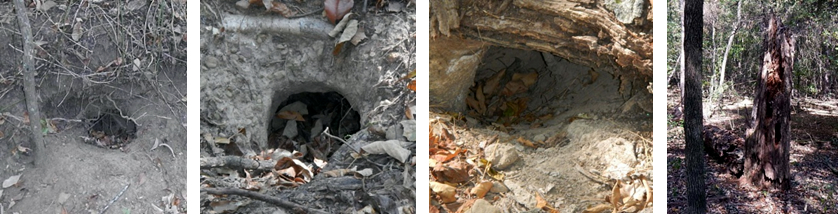
My hunt lead me to these dens and to some questions. Whose den is it? What makes this location so special? Next month we’ll see what my game cameras reveal and what I read from the landscape.

burrows

Nov. 28: Holiday Make & Take!

2015 Holiday Make & Take SFNC

“Holiday Make ‘n Take with Essential Oils”
November 28, 2015, 1:00 pm to 3:00 pm

South Fork Nature Center Riddle Cabin | RSVP requested/ $5 Materials Fee

Come celebrate the Thanksgiving holiday weekend in a beautiful serene natural setting! Learn about the benefits of essential oils while using them to make your own holiday gift for someone special or as a treat for yourself. Meet at the rustic Riddle log cabin at 1:00 pm for an afternoon Make ‘n Take workshop featuring Mala Daggett as she leads the group in making hand and foot scrubs, bath salts, personalized perfumes and more. A small materials fee of $5.00 for each participant will cover the cost of supplies. Participants will go home with their own useful gift, as well as an understanding of the healthcare benefits of essential oil after experiencing them first hand.

Please confirm your spot in the workshop by Friday, November 20 by contacting Mala: 501.626.2720 or mala@terrasential.com


SFNC March 13, 2012 190Following the workshop, if time and weather permit, Shirley Pratt, South Fork Nature Center docent, will lead the group on a brief trail tour near the cabin to showcase some of the medicinal and edible native plants of the nature center. Just as the essential oils contain healing properties, these native plants have also been used for generations for their own healing properties and were held in highest esteem by Native Americans and early migrants and settlers of the region.

Click here for driving directions to the Nature Center

Gallery: Oct. 13 Cooking Workshop

Great fun and interesting cooking techniques were on tap for the “Five-Star Dining around a 100 Year Old Cabin” event held at South Fork Nature Center on October 13, 2015.

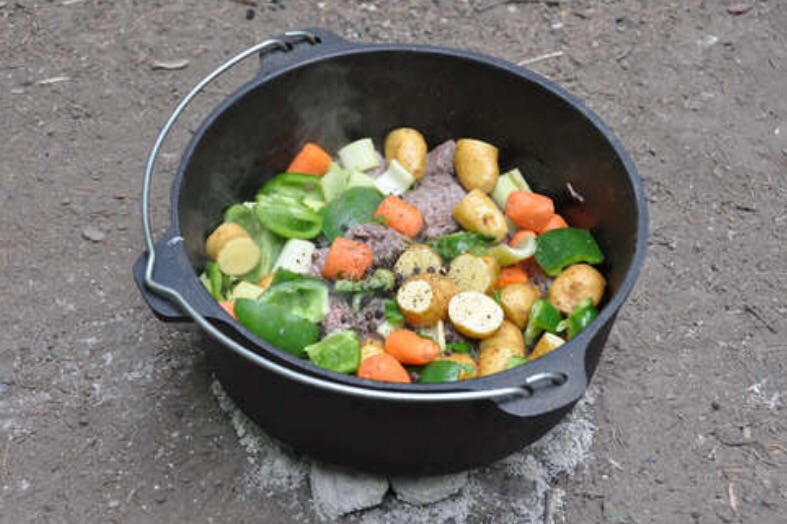
Docent, Krissi Graham and Clinton’s Extension Homemaker’s president, Wendy Russ, worked hard to gather supplies and organize the event. Over 20 people participated in the evening’s program. The menu consisted of vegetables steamed in Kudsu leaves sewn together to make a cooking pouch, chicken or fish cooked on woven- reed (Yucca privet, Russian Olive and Muscadine vine) mats and baskets over hot coals, pine needle tea and Kudzu Lemonade.

One young family with two small children took a hike before dinner collecting pine needles while groups of participants divided up and started creating the sewn leaf packets, vine cooking baskets and woven mats.

Another group of participants mixed the ingredients for peach cobbler and poured it into the waiting Dutch Ovens. The ovens were placed in the fire ring and banked with hot coals. Approximately 1 and ½ hours later the evening’s activities wrapped up as the group devoured the delectable dessert! As darkness fell the last of the food packets were removed from the coals, a lantern was lit and stories started surfacing about “when we use to camp……” etc.

The evening was a great success. Primitive cooking techniques, using homesteader tools (and a little foil), were explored and fun was had by all!

FFB Garden Club visit

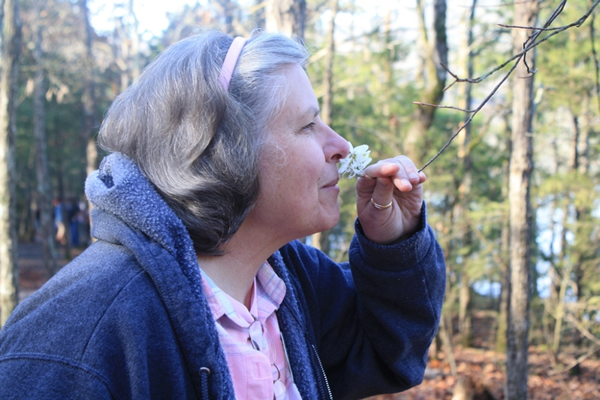
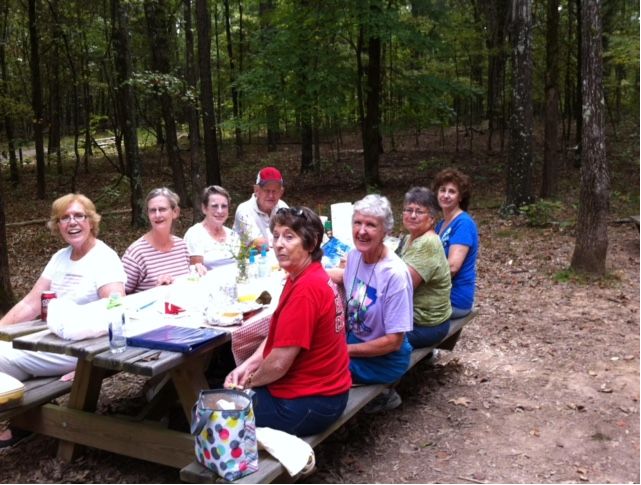
Beth Tucker and the Fairfield Bay Garden Club visited the Nature Center September 29, sharing mutual admiration for the relationship between those magnificent Monarch butterflies and their Milkweed floral counterpart. Our outing featured hiking around those future butterfly zones with a casual assessment of the vegetation viability. Regarding the extensive planting project in June the term ‘nursery’ was clearly embraced as we gently coddled and encouraged the newborn growths. We look forward to our continued partnership and monitoring!

Oct. 13 Dutch Oven Cooking Event

The South Fork Nature Center October Program will be held on Tuesday, October 13th. The Theme is “Five Star Dining in a 100 Year Old Cabin.”

Dutch Oven Cooking at the Nature CenterSFNC docents Kay Verboon and Krissi Graham will join with Clinton’s Extension Homemakers Group on Tuesday, October 13, 2015. The gates will open at 5 pm. The public is invited. Serious food preparation will begin at 6 pm. We will be exploring methods of primitive cooking such as wild crafting your own tools from nature to using traditional homesteader tools such as cast iron. Please Contact Wendy Russ at wendy@wendy.com to make a reservation. Bring a flashlight and lawn chair. (In case of bad weather the event will be re-scheduled at a later date) This program is in place of our “Third Saturday of the Month” Program in October.