Topographical Map & Compass Workshop

GRF Topo

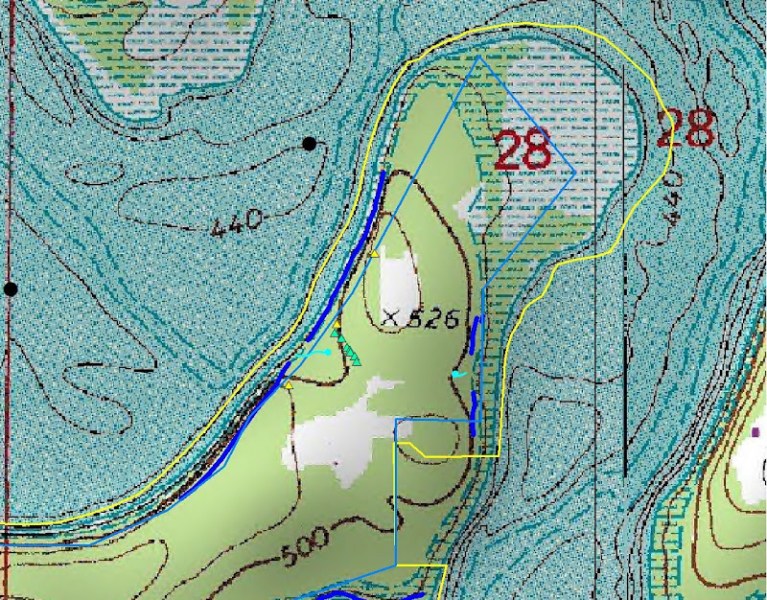
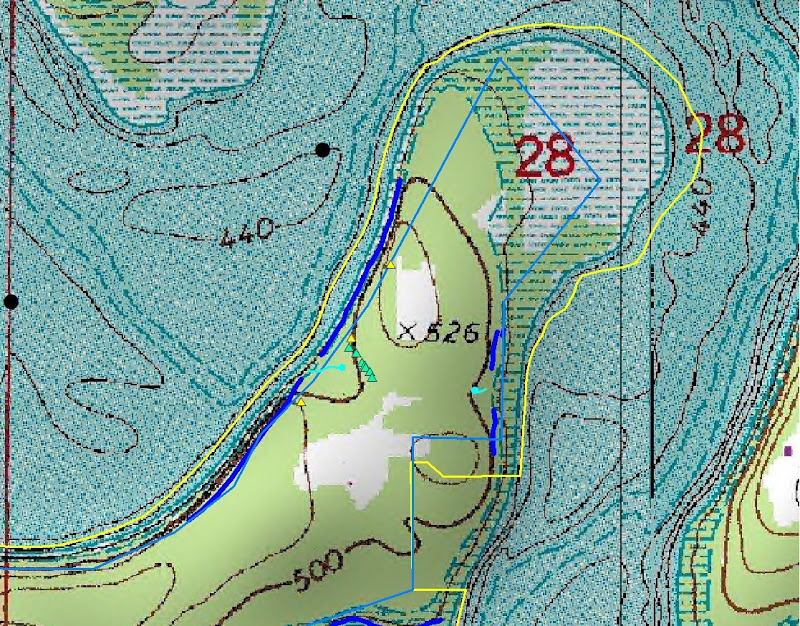
Students will construct and interpret information on topographic maps. GPS and compass use could be incorporated into this program. Students will have the opportunity to utilize these tools and maps in field studies at South Fork.

Framework

  • PD.1.ES.9 – Describe the characteristics of each of the natural divisions of Arkansas:
    • Arkansas River Valley
    • Ouachita Mountains
    • Coastal Plain
    • Mississippi Alluvial Plain (Delta)
    • Crowley’s Ridge
  • PD.1.ES.9 – Construct and interpret information on topographic maps

Go back to previous page →

Food Chains, Foodwebs & Energy Pyramids

butterfly-release3

This program includes games such as “Oh Deer!” and simulations such as “Weaving the Web.” Students can participate in an actual field study of different ecosystems found in our world. They will be able to reinforce their knowledge, demonstrating competition for resources within an eco-system and the interdependence of organisms in an eco-system.

Framework

  • LS.4.4.2 – Illustrate the interdependence of organisms in an Ecosystem.
  • LS.4.5.3 – Design food webs in specific habitats to show the flow of energy within Communities
  • LS.4.5.5 – Examine the role of limiting factors on the carrying capacity of an ecosystem: food, space, water, shelter
  • LS.4.6.2 – Conduct simulations demonstrating competition for resources within an ecosystem.
  • BD.2.ES.1 – Compare and contrast biomes
  • BD.2.ES.2 – Describe relationships within a community (predation, competition, parasitism, mutualism, and commensalism
  • BD.2.ES.4 – Construct a trophic-level pyramid (energy level)
  • BD.2.ES.5 – Construct a food chain
  • BD.2.ES.6 – Diagram a food web
  • BD.2.ES.8 – Describe biodiversity
  • BD.2.ES.9 – Describe how limiting factors affect populations and ecosystems
  • EBR.8.B.4 – Energy Flow through Food Chains and Webs
  • EBR.8.B.5 – Population Control Factors in an Ecosystem

Go back to previous page →

Art Enrichment

Students at SFNC

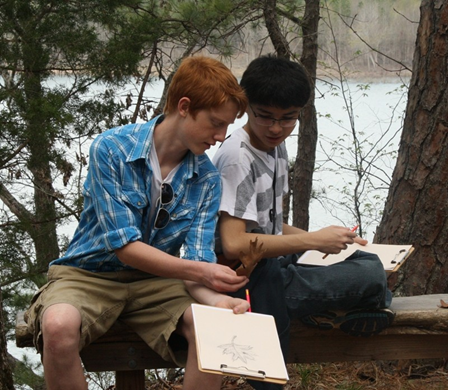
The South Fork Nature Center’s outdoor classrooms are perfect stages for art enrichment activities. Students will gather at various areas of the Nature Center and participate in hands-on creation of tree and leaf structure, texture, and design drawings led by our very talented docents. Additional art programs such as watercolor landscape and natural walnut dye sketching may be arranged.

Framework

  • VA.6.4.1 – Create a detailed representational or imaginary drawing using mark making with various wet and dry media
  • VA.6.4.2 – Combine grade-level appropriate elements of art and principles of design in a 2D product: painting, printmaking, drawing
  • VA.6.4.5 – Produce artwork that involves problem solving (e.g., brainstorming, practice, drafts, sketches, models)
  • VA.6.4.9 – Produce artwork inspired by or connected to content from other disciplines (e.g., social studies, literacy, performing arts, science, math)
  • *This visual art standard is present in grades 4-8th. The applicable numbers are VA.6.5.14, VA.6.6.14, VA.6.7.14, and VA.6.8.14

Go back to previous page →

Woods in Winter

cabot_hs2

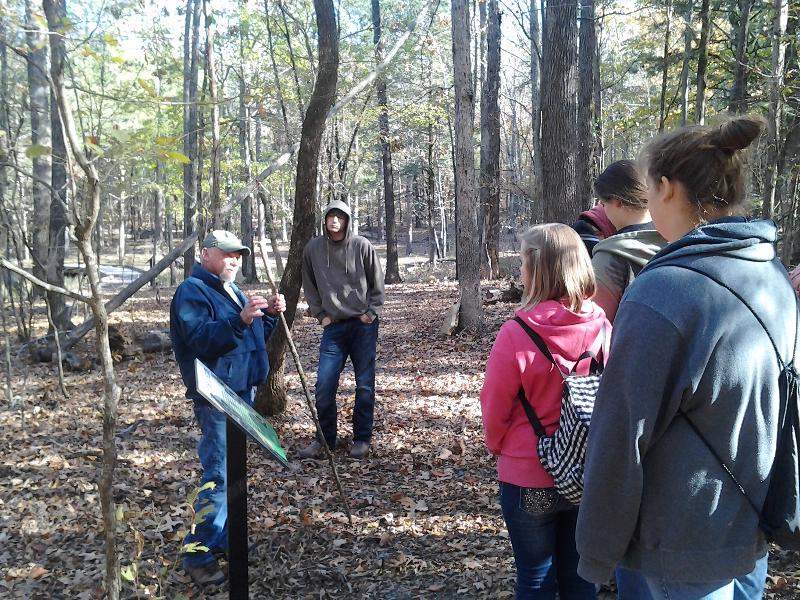
Students are led in field study by various docents, many of whom are trained professional botanists. They will learn to identify trees from fallen leaves and oak patterns. They will use bark patterns, colors, branching patterns, buds, and overall tree crown shapes and silhouettes to identify the “winterwoods” of South Fork.

Framework

  • LS.4.4.1 – Recognize environmental adaptations of plants and animals
  • CDL.7.B.15 – Vascular and nonvascular plant differentiation
  • CDL.7.B.16 – Cycads, gymnosperms and angiosperms differentiation
  • CDL.7.B.17 – Structure and function of the major parts of a plants: roots, stems leaves and flowers
  • CDL.7.B.18 – Relate the structure of Plant tissue to its function: epidermal, ground and vascular

Go back to previous page →

Cabot High School Visits SFNC

cabot_hs

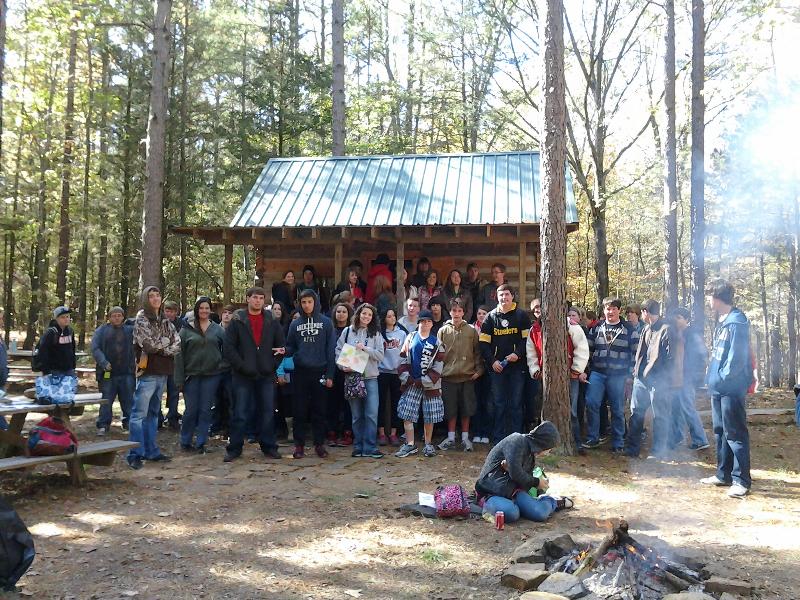
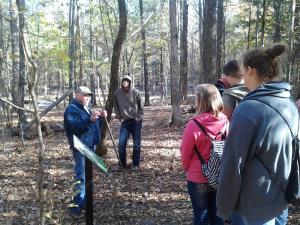
We had a great group tour and meeting on Tuesday, Oct. 30th, when Cabot School’s 11th and 12th grade classes came up for their visit to South Fork Nature Center. Docent Larry Price met and welcomed the group at the gate around 10:00 AM, and walked the trail down to the cabin. The weather was almost perfect, maybe a little cold at first, especially in the shade.

The group of about 60 students, mostly science “kids”, were divided into 6 groups for their sessions with our docents.

Bob Hartmann discussed lake ecology and fish populations, while Steve Smith covered tree identification at South Fork. Dr. Jim Soloman discussed how insects and diseases affect the ecosystem. Glenda Hall’s group wrote about nature and Larry Price talked about the plants and animals living at South Fork.

Larry Bintliff brought an old cross-cut saw and he and a student volunteer cut a section off an old pine log. Larry also brought an Indian grind-stone and explained how the natives used it.
cabot_hs2

Joyce Hartmann tried something new this time with the students, Leaf Stamping. It involved finding leaves with interesting shapes, cleaning them first with soap and water to remove sizing, drying, then applying paint and pressing them onto paper: a perfect activity for fall! She brought a large watercolor and two small cards for the students to look at so they could see the potential. Joyce’s goal was to have the students understand and experiment with the process.

Most of the students enjoyed the art of it but also noticed how much detail is quickly recorded for leaf identification. This was a new experience for them; one student asked her teacher if they could do more of that process in their classes back at school. Some of their leaf stampings were beautiful, and many took them home.

After lunch it was time to say goodbye to the students teachers. They all had positive comments about the SFNC and the activities presented.